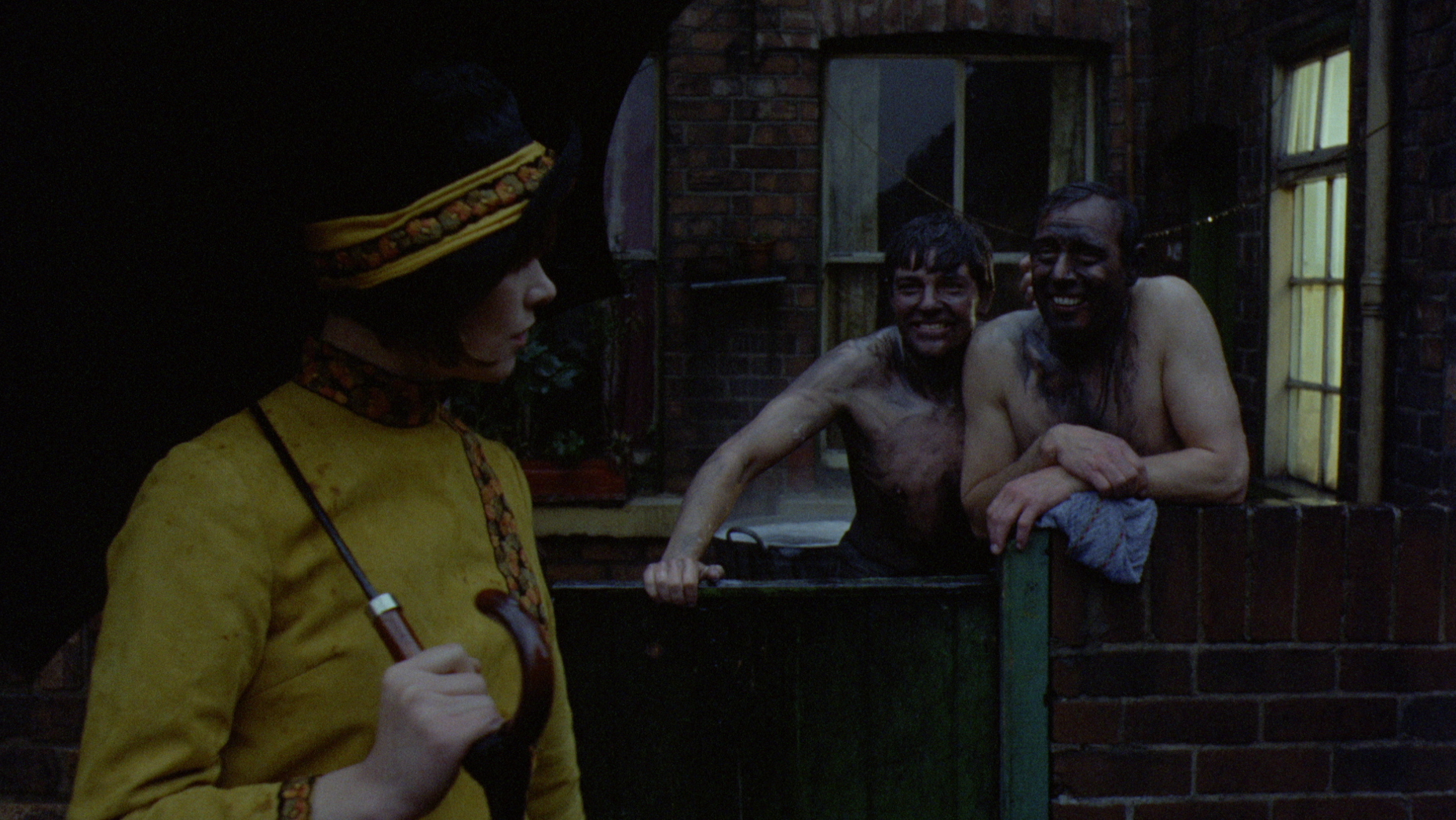
Having made a name for himself in the early sixties as a small-screen documentarian, British director Ken Russell achieved a new degree of success—and notoriety—with his third feature film, the sensual and boldly stylized Women in Love (1969). An envelope-pushing adaptation of a landmark D. H. Lawrence novel, set in the modernizing world of 1920s England, the movie revolves around two independent-minded sisters (Glenda Jackson and Jennie Linden) and the men they fall for (Oliver Reed and Alan Bates)—close friends who turn out to share an erotic bond of their own.
Despite the controversy generated by its unbridled sexuality, Women in Love earned considerable acclaim: Jackson went on to take home the best actress Oscar for her brilliantly extravagant performance, and the film received three other nominations, including one for Billy Williams’s lush and earthy photography. Our bounteous edition of Women in Love, out this week, includes a new interview with the now-eighty-eight-year-old Williams about his experience working on the film nearly half a century ago. In the excerpt above, the acclaimed cinematographer recalls the expressive freedom he felt during production—Williams found Russell “always willing to push things a bit further”—as well as his then-unusual use of color filters in translating the emotional textures of the script to the screen.
Written in 1918, Baal was Bertolt Brecht’s first full-length dramatic work. The play was not performed theatrically until 1923. Over the next thirty years, Brecht (pictured above with his wife, Helene Weigel) had trouble letting go of the material and wrote five versions of it. But it is the first version that garnered the most attention and serves as the text for Volker Schlöndorff’s film.
X è un giovane regista e sceneggiatore di trent'anni alla ricerca del senso della vita. Come dovrebbe essere vissuta la vita? Di estremi o nel mezzo? Sono i quesiti che si pone ogni giorno il protagonista, che si ritrova così in un vortice di situazioni al limite del verosimile, fatto di giovani donne ebree, filosofi alieni forse immaginari, produttori cinematografici falliti, sogni lucidi, ninfomani, morti apparenti, partite di tennis con ultrasettantenni, anziane con il grilletto facile e il ricordo di un amore non sepolto del tutto. Ma tutto inizia quando una notte di metà inverno, X succube dell'insonnia, sente un urlo prolungato di una donna. Si chiama Alessandra, tratti mediterranei e una spiccata tendenza alla fatalità che la rendono ancora più affascinante.
Disney rende contemporaneo un classico del fantasy sull'adolescenza, ma la necessità di stupire espone il film a rischi di credibilità (mymonetro: 1,50)
Il film è tratto da un classico della letteratura del genere, e segue la storia dell'adolescente Meg Murray, del suo geniale fratello di cinque anni e di un compagno di classe che vanno in un viaggio attraverso l'universo per salvare il padre scienziato scomparso. Nel processo incontrano una grande forza oscura che sta assorbendo l'universo, e un pianeta sotto il controllo di un cervello disincarnato chiamato IT.
New York. “Billed as a ‘meta-soap opera,’ Personal Problems is nothing less than an explosion of the television form,” begins Chuck Bowen at Slant. “Directed by Bill Gunn, the two-part, nearly three-hour miniseries was shot on video for a low budget and played on a few stations in 1980. At this time in American culture, it was believed that video might democratize film and TV production in a fashion that was partially realized forty years later by the invention of smartphones and other portable cameras that could fit in one’s hand. . . . The gritty materiality of Personal Problems is initially a shock but soon proves to be a font of exaltation.”
“Mostly conceived by shit-stirring man of letters [Ishmael] Reed and directed by Gunn, the late actor and playwright who directed the cult vampire flick Ganja & Hess,Problems is a DIY middle finger to all those powerful, pale-skinned white folk back in Tinseltown who weren’t trying to make positive, sympathetic stories about black folk back then or give African American writers and directors the opportunity to create those stories,” writes Craig D. Lindsey in the Village Voice.
“This is a work that looks as if it were evolving even as portions of it were completed,” writes Glenn Kenny in the New York Times. “That’s entirely appropriate. For all its rough edges, Personal Problems retains a vitality and an integrity that practically bounds off the screen.”
Personal Problems begins its week-long run tomorrow at the Metrograph, where you’ll find reflections on its making and its legacy from Reed himself.
Back to Glenn Kenny and the NYT: “The movie never addresses it quite so explicitly, but Wilde Salomé is most fascinating as a portrait of a superstar actor who, for all his wealth and privilege, encounters unusual frustrations as he pursues genuine artistic ambitions. By the same token, though, not a lot of documentarians out there have the name-recognition clout to attract Tom Stoppard, Gore Vidal, Tony Kushner and, yes, Ireland’s Artistic Ambassador to the World, Bono, to weigh in on Oscar Wilde for them.” Al Pacino’s 2011 documentary and his 2013 Salomé both open at the Quad tomorrow.
“The legendarily bleak ending of the 1968 spaghetti western The Great Silence—in which everybody dies, including anti-hero vigilante Silence (Jean-Louis Trintignant)—still hurts so good a half-century later,” writes Simon Abrams in the Voice. “Co-writer–director Sergio Corbucci (Navajo Joe,Companeros) constantly subverts the generic tropes that he dabbled with two years earlier in Django, that blood-soaked and oft-imitated riff on A Fistful of Dollars.” Tomorrow through April 5 at Film Forum.
Los Angeles.Stories of Almost Everyone, “an exhibition about the willingness to believe the stories that are conveyed by works of contemporary art,” is open at the Hammer Museum through May 6, and I’m saying so primarily because it gives me an excuse to embed this video:
Washington, D.C. “Thirty years after Tim Burton’s Beetlejuice arrived in cinemas, a musical adaptation is taking the stage,” reports Michael Paulson for the New York Times. “The theatrical division of Warner Bros. announced Wednesday that the new musical, which has been in development for eight years, would have its first production at the National Theater in Washington in October, with the goal of then transferring to Broadway.”
Oklahoma City.Apichatpong Weerasethakul: The Serenity of Madness opens on Saturday at the Oklahoma City Museum of Art to remain on view through June 10, and yes, there’ll be a retrospective. Strange Creatures: The Feature Films of Apichatpong Weerasethakul will run every Thursday in May.
Minneapolis. On Saturday and Sunday, Trylon will present Masaki Kobayashi’s landmark trilogy, The Human Condition (1959–1961).
Montreal. “Rabbits seem to embody certain contradictions,” writes Justine Smith at Little White Lies. “They exist between two worlds, wild and domesticated, fertile and virginal, adorable and horrifying. In the world of cinema, the possibility that the gentle, cautious and cute outward appearance often conceals dark secrets. With that in mind, programmers at the Cinémathèque Québécoise have put together an Easter weekend program called Disquieting Rabbits (Inquiétants Lapins), covering a wide range of films includes Donnie Darko,Inland Empire,Gummo, and Wallace & Gromit: The Curse of the Were-Rabbit.”
London. “Back in cinemas in April as part of our celebration of Woodfall Films, Tony Richardson’s Look Back in Anger remains an archetypal slice of downbeat kitchen-sink realism,” writes Paul O’Callaghan for the BFI. “This faithful adaptation of John Osborne’s 1956 play helped usher in the British New Wave, with Richard Burton on rousing form as a poor graduate railing against the middle-class superficiality personified by his wife Alison (Mary Ure). One aspect of the film that’s often glossed over is its Midlands backdrop, inspired by Osborne’s own unhappy stint in Derby as a young actor.” O’Callaghan looks back on ten “great films set in the Midlands.”
“There’s making films politically, and there’s making political films,” writes Michael Pattison for Sight & Sound. “The distinction, made during a panel discussion at this year’s AV Festival, is a potentially unwelcome reminder in the current critical climate. Given the present tendency among liberals and the film industry’s identitarian left to mobilize around facile notions of political gain, however, re-emphasizing the difference between mode of production and artistic content might add some much-needed complication to a discourse increasingly and reductively dependent upon crude textual analysis for its chief mode of attack.” AV Festival 2018 (Meanwhile, What About Socialism? Part Two) is on through Saturday.
Pablo Larios, senior editor of frieze, talks with Ericka Beckman, whose work is on view at the Zabludowicz Collection through July 8.
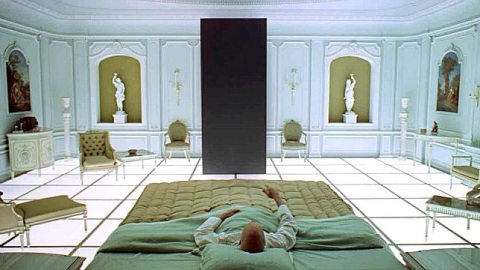
Cannes. Christopher Nolan will attend the Cannes Film Festival for the first time to present an unrestored 70 mm print of Stanley Kubrick’s 2001: A Space Odyssey on the occasion of the science fiction classic’s fiftieth anniversary. “For the first time since the original release, this 70 mm print was struck from new printing elements made from the original camera negative. This is a true photochemical film recreation. There are no digital tricks, remastered effects, or revisionist edits.” Nolan will also be taking part in a masterclass.
The festival has also announced that Ursula Meier (Home,Sister) will preside over the Caméra d’or Jury, which will select the best first film screening in the Official Selection of the seventy-first edition, running from May 8 through 19, the Semaine de la Critique (Critics’ Week) and the Quinzaine des Réalisateurs (Directors’ Fortnight).
The Semaine de la Critique, in the meantime, has named the jury for its fifty-seventh edition, running from May 9 through 17: Joachim Trier (president), Nahuel Pérez Biscayart, Eva Sangiorgi, Chloë Sevigny, and Augustin Trapenard.
For news and items of interest throughout the day, every day, follow@CriterionDaily.
Il 2 aprile del 1968 si teneva, a Washington, la prima mondiale di uno dei film più famosi e acclamati di tutti i tempi, un film diventato per tutti, anche per i non cinefili, sinonimo di "capolavoro": parliamo di 2001: Odissea nello spazio, di Stanley Kubrick.
Per festeggiare i cinquant'anni di questa pietra miliare dell'arte cinematografica, il Festival di Cannes 2018, che si terrà dall'8 al 19 maggio, ha deciso di proiettarlo il 12 maggio nella sua versione restaurata in maniera completamente analogica e in 70mm.
La proiezione sarà introdotta dal più kubrickiano tra i registi contemporanei, Christopher Nolan, che prenderà così parte per la prima volta al Festival francese. Nolan sarà anche protagonista di una Masterclass che si terrà il giorno successivo, nella quale parlerà dei suoi film e per la passione per il cinema di Kubrick.
Queste alcune dichiarazioni ufficiali riguardo la proiezione di 2001: Odissea nello spazio al Festival di Cannes:
Christiane Kubrick:
Sono felicissima che Cannes abbia deciso di onorare 2001: Odissea nello spazio. Se Stanley fosse vivo oggi, sarebbe di certo un grande ammiratore dei film di Christopher Nolan. E quindi, a nome della famiglia di Stanley, vorrei ringraziare personalmente Christopher per aver accettato d'introdurre questa specialissima proiezione.
Christopher Nolan:
Uno dei miei primi ricordi cinematografici è l'aver visto 2001: Odissea nello spazio di Stanley Kubrick, in 70mm, al Leicester Square Theatre di Londra con mio padre. L'oppurtunità di essere coinvolto nella ricreazione di questa esperienza per una nuova generazione, e di introdurre il nostro nuovo restauro in 70mm del capolavoro di Stanley in tutta la sua gloria analogica al Festival di Cannes, è un onore e un privilegio.
Thierry Frémaux:
Stanley Kubrickè nella Selezione Ufficiale! È un grande onore per il Festival di Cannes ospitare i festeggiamenti per il 50° anniversario di uno dei film più straordinari della storia del cinema. E di accogliere per la prima volta al Festival Christopher Nolan, la sua presenza crea un legame prezioso tra il passato e il presente, senza il quale il cinema non avrebbe una storia.
from ComingSoon.it - Le notizie sui film e le star https://ift.tt/2J6dAxx