Nel giro di poche ore la sempre più lanciata Zazie Beetz(Atlanta in TV, il prossimo Deadpool 2 nel ruolo di Domino) si è aggiudicata ben due ruoli in altrettanti film che si annunciano più che interessanti.
Partiamo con Pale Blue Dot, il dramma che vede protagonisti Natalie Portman e Jon Hamm. Diretto da Noah Hawley, il film racconterà di un'astronauta sposata (Portman) che dopo essere tornata sulla Terra da una missione inizia una relazione clandestina con un collega (Hamm). Pian piano la donna inizia a perdere connessione emotiva con la propria famiglia, vittima di una sindrome che colpisce chi passa troppo tempo nello spazio. Quando il suo amante inizia una nuova relazione amorosa con un'addestratrice (Beetz) ecco che la vita e soprattutto la psicologia della protagonista vanno in frantumi. Ricordiamo che Hawley è il creator di due serie di successo come Fargo e Legion.
L'atro progetto in cui la Beetz è entrata si intitola Against All Enemies e vede protagonista Kristen Stewart nei panni della mitica Jean Seberg. Al momento non si conosce quale ruolo sarà ricoperto dalla new entry, che così oltre alla star di Twilight raggiunge anche Jack O’Connell (Godless), Anthony Mackie (Captain America: Civil War), Margaret Qualley (The Leftovers) e Colm Meaney (Hell on Wheels). Questo progetto è in realtà un thriller incentrato su un agente dell'FBI incaricato di spiare la Seberg, impegnata nella battaglia per i diritti civili nella Los Angeles di fine anni '60. Alla regia l'esordiente Benedict Andrews.
Un altro lungometraggio di cui Zazie Beetz è già ufficialmente protagonista è infine il nuovo film di Steven Soderbergh High Flying Bird.
from ComingSoon.it - Le notizie sui film e le star https://ift.tt/2EewRtc
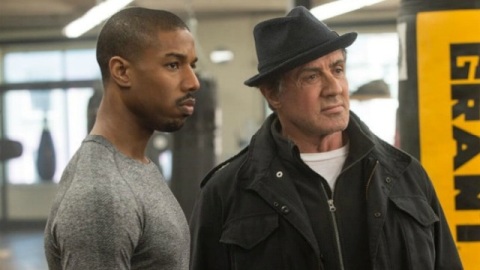
Sono iniziate a Philadelphia le riprese di Creed II, sequel del fortunatissimo spin-off del franchise di Rocky che vede protagonista Michael B. Jordan e come spalla di lusso proprio Sylvester Stallone ancora una volta nei panni del mitico pugile italoamericano.
Se il primo Creed era stato diretto da Ryan Coogler, adesso tocca a Steven Caple Jr., che due anni fa si è fatto notare con l'indipendente The Land. In un primo momento sembrava che dietro la macchina da presa del secondo episodio dovesse sedere proprio Stallone, che ha diretto diversi episodi della saga di Rocky a partire dal secondo. Lo stesso Coogler lavorerà la progeto come produttore esecutivo per la MGM. Uscito nel 2015, Creed aveva superato senza problemi i 100 milioni di dollari d'incasso negli Stati Uniti e aveva regalato a Stallone il Golden Globe come miglior attore non protagonista e la candidatura all'Oscar nella stessa categoria.
Oltre a Jordan e Stallone anche Tessa Thompson tornerà nei panni di Bianca, l'oggetto delle attenzioni amorose del protagonista Adonis. Da Rocky IV invece sbuca fuori Dolph Lundgren che riprende il ruolo di Ivan Drago, rivale oltrecortina di di Rocky Balboa che sul ring uccise proprio Apollo Creed, padre di Adonis. Il pugile Florian “The Big Nasty” Munteanu interpreterà Viktor, figlio di Ivan. Creed II arriverà nelle sale americane il 21 novembre 2018, con la MGM che lo distribuirà nel mercato interno e la Warner in quello internazionale.
from ComingSoon.it - Le notizie sui film e le star https://ift.tt/2q2j8jV
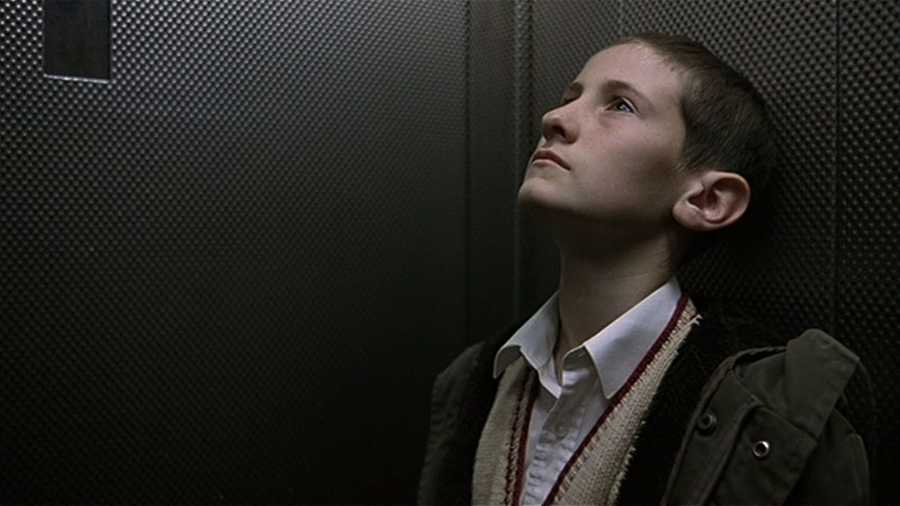
New York. The BAMcinématek series Tough Love: Cinema by Lynne Ramsay opens today with You Were Never Really Here, which scored a best actor award for Joaquin Phoenix and a best screenplay award for Ramsay (tied with Yorgos Lanthimos for The Killing of a Sacred Deer) when it premiered in Cannes last year. As Ben Kenigsberg notes in the New York Times, the retrospective, running through Thursday, “includes her shorts (on Monday and Wednesday); her debut feature, Ratcatcher (on Wednesday) [image above]; and perhaps her most acclaimed film, Morvern Callar (on Thursday), starring Samantha Morton as a woman sent spinning after her boyfriend’s suicide.”
Ramsay “focuses on the internal processes required of those trying to move forward in the wake of horror,” writes Willow Maclay in the Village Voice. “Where in her previous films Ramsay succeeded in portraying grief with nuance and grace, in [We Need to Talk About Kevin (2011)] she does away with such gentle notions, hammering the points of the text home with staggering brutality.”
Ahead of the North American premiere of Notes on an Appearance on Friday and Saturday as part of New Directors/New Films, director Ricky D’Ambrose will be at Spectacle on Wednesday, presenting and then talking about four earlier works: The Stranger (2011), which has never been publicly screened before, Pilgrims (2013), Six Cents in the Pocket (2015), and Spiral Jetty (2017).
“With its elliptical leaps between scenes and long, unbroken stretches of often-hectic overlapping dialogue that serve no function in advancing exposition, Personal Problems would likely be deemed bad television by most any network executive with an eye for the bottom line—either in 1980 or today—and it is also a startling, totally idiosyncratic work of art.” Writing for Artforum,Nick Pinkerton argues that Bill Gunn and co-creator Ishmael Reed’s work “is exceptional precisely because of its engagement with the unexceptional.” Personal Problems runs through Thursday at the Metrograph, which has posted an account of the making of this “meta-soap opera” by Nicholas Forster, who’s currently working on a biography of Bill Gunn.
Tina Fey makes her Broadway debut with Mean Girls, a musical adapted from her 2004 screenplay that’s opening on Sunday at the August Wilson Theater. For the New York Times,Laura Collins-Hughes talks with Fey, her husband Jeff Richmond, who’s composed the tunes with lyricist Nell Benjamin, and director Casey Nicholaw.
Val Guest’s The Quatermass Xperiment (1955) “is the first official ‘Hammer Horror,; adapted by Hammer Film Productions from the BBC miniseries and surprisingly successful at the box office despite (or due to) its X rating from the British Board of Film Censors,” writes Madelyn Sutton at Screen Slate. “While the majority of the violence itself is off screen, the pulsating, globular parasitic creatures and the gradual transformation of the host astronaut's body into a an unrecognizable, weeping mass with only a single, seeking and tragic eye to suggest its former humanity are truly gruesome, the typical limited Hammer budget here used to fantastic effect whose influence can be seen in later sci-fi-horror hybrids.” Screens tomorrow at the Alamo Drafthouse as part of the sidebar to Frank Henenlotter: NYC Exploitation Legend in which Henenlotter presents some of his favorites.
On Friday, Where is Kyra? (2017), starring Michelle Pfeiffer, shot by Bradford Young, and directed by Andrew Dosunmu (Mother of George) opens at the Quad. “Although the film might seem a departure for her,” writes Bilge Ebiri in the Village Voice, “watching it, I felt that Dosunmu had connected to something elemental within Pfeiffer, that solitude that brought subtle dimension to her earlier, more famous roles. This is the kind of part, and the kind of performance, that makes you see an actor’s entire career in a new light. And it’s probably the best she’s ever been.” Filmwax Radio host Adam Schartoff talks with Dosunmu—and with Lean on Pete director Andrew Haigh (62’14”).
Seattle. From Wednesday through Sunday, the Northwest Film Forum will present Future//Present: Canada’s New Wave, “six debuts and one sophomore feature that exemplify the best from an exciting new generation of Canadian independent cinema.”
Portland.Japanese Currents opens on Friday at the Northwest Film Center and runs through April 28.
UK. “The great success of [Tony] Richardson’s film version of Look Back in Anger [1959] is the amplification of the Ma Tanner figure . . . played by Edith Evans,” argues the Guardian’s Peter Bradshaw. “Evans’s performance humanises Jimmy Porter—and humanizes [Richard] Burton’s performance as well.” Now that it’s back in cinemas, Sight & Sound has posted Penelope Houston’s review from the June 1959 issue.
London. The BFI’s Sergio Leone season opens today and runs through the end of the month, and there’s a sidebar, too: Modern Westerns.
Bordeaux. From Wednesday through Sunday, Babette Mangolte will be at the CAPCmusée d’art contemporain de Bordeaux to present screenings and discuss her work on the occasion of the retrospective, which includes not only films but installations as well.
Brussels. Artist and filmmaker James Edmonds will be at Greylight Projects, presenting his work on Super 8 and 16 mm. This is the first event to be staged by a new initiative, Cinema Parenthèse.
Vienna. On Thursday, the Austrian Film Museum will present Maria Lassnig: Films in progress, a program of work “freely combining documentary footage of friends and colleagues, her studio and the streets of New York with animated techniques and drawing.” And Friday sees the launch of the Museum’s big springtime retrospective, The Cinema of Aki Kaurismäki, running through May 3.
For news and items of interest throughout the day, every day, follow@CriterionDaily.
About forty minutes into Maurice Pialat’s À nos amours (1983), fifteen-year-old Suzanne arrives home to her Paris apartment after curfew and tiptoes toward the kitchen, catching a glimpse of her dad stirring in the other room. Earlier that evening, he had been so enraged by her sketchy plans for the night, thinly veiled as a trip to the movies, that he’d struck her in the face.
“Stop treating me like some kind of idiot!” he’d said. “Do this again and I’ll strangle you!”
As Suzanne collects herself in the bathroom—removing her makeup and fixing her hair—Roger moves to the front room where he waits, hovering over a worktable. Pialat crosscuts between the spaces, and though they are separated by at least two walls and a hallway, he uses the characters’ furtive glances to connect them.
This kind of shot sequence, which builds suspense by showing the separate whereabouts of this character and then that one, is rare, if not entirely unique, in Pialat’s filmography. His scenes often forego introductory beats altogether, instead throwing the viewer into already-in-progress situations, with lively scenes of blunt, objective action covered by a single camera setup or two. Here, the alternating perspectives work to stir up the feeling of a coming collision.
And then it happens: Suzanne enters the room where Roger pretends to work, walking with a boxer’s swagger and eating a cold piece of ham.
Roger barely looks up. “Want some?” she asks.
What follows is an extraordinary setup for the middle action of À nos amours, a shrapnel-soft portrait of a teenager (Sandrine Bonnaire, in her film debut) whose sexual awakening coincides with her father leaving the home.
This scene, which culminates in Roger’s admission of an affair and his desire to leave, works to draw the characters (and us) into a kind of punch-drunk black hole of late-night intimacy. As Pialat moves from a wide two-shot into a beautiful series of pirouetting over-the-shoulders, the scene begins to take on the dreamy dizziness of love. When it lands with the pair elbowing the table in nothing-but-you close-ups, the effect is astonishing. Suzanne has become literally engulfed by her father. And so have we.
The emotional nuance of Pialat’s camera work—immediately on display here in that slithering, pins-and-needles tracking shot that moves from the sight of Suzanne entering and taking off her look to the room where Roger stirs—often goes largely ignored in favor of his more en vogue genius with performance. He was a master of directing improvisation, and his disdain for traditional performance is apparent in his sometimes unusual methods, as when he kept Roger’s return at the end of À nos amours a secret from the entire cast. But Pialat doesn’t get enough credit as a shot maker. His brand of pugilist naturalism often draws lazy (but understandable) comparison to John Cassavetes, which underlines Pialat’s work with actors while diminishing his specific formal genius. His painterly compositions somehow withstand the unpredictable chaos of his sets while simultaneously revealing the emotional crinoline of his dramas. A lover of the 1890s French artist group les Nabis and their post-impressionistic scenes of domestic togetherness (Bonnard is mentioned several times in À nos amours), he is nothing if not the best tabletop filmmaker this side of Lumière.
That his images are formal and specific and bring with them clear, sophisticated emotional ideas, and that these camera setups somehow remain loose enough to afford his brand of improvisation: this is the root of his genius and what allows each of his masterworks—We Won’t Grow Old Together (1972), The Mouth Agape (1974), Loulou (1980), À nos amours (1983), and Le garçu (1995)—to reach a cinematic language beyond words, a visual grammar that is as unique as the rough edge of a torn photo.
It is precisely this ability to use expressive camera design in contrast with action that feels untouched and accidental that serves as the diving board from which the “story” of À nos amours takes its leap. And because Pialat is playing Roger himself (!), he is able to direct the scene from the inside out, mirroring the waltz of the camera with a sometimes improvised conversation that rolls this way and that, finding little accidental miracles.
For instance: “Where’d the other go?” Roger asks toward the end of the scene, touching Bonnaire’s adorable single dimple.
“It got fed up and left,” she says.
This improvised response, which repeats a phrase her father used when describing his coming departure, is a stop-you-cold, one-in-a-million-takes moment of superstar intelligence.
And then he is gone.
Because this surprising moment of intimacy is made up of these kinds of miraculous unrepeatables, and because the camera has corkscrewed the two of them into overwhelming closeness and drilled us into place between them, the impression of Roger’s goodbye is so strong that we feel his absence like a pulled chair.
While he’s gone—for months or years, it’s difficult to say—the house goes to shit. Suzanne’s mother, discarded and furious, is unable to stomach the stench of her daughter’s burgeoning sexuality while Suzanne’s squealing older brother, with whom she shares a semi-incestuous relationship, becomes a kind of foot soldier to maman. He beats Suzanne for her promiscuity while braying awful things he thinks his dad might say.
The film’s tumbling middle—with its lonely sex and violence—is held taut by its resistance to all mentions of Roger’s desertion, save for its initial announcement and a later revealing line from Suzanne: “When I meet a guy, I think of my father.” Like her,we miss him.
After Roger returns to bring the picture to a close, the pair’s final scene together is made up mostly of callbacks and allusions to that earlier moment at the worktable. This time, however, it is Suzanne who is leaving.
After warmly hugging her father goodbye, Suzanne says, “This is the first time you haven’t pushed me away.”
“No,” Roger says, touching her dimple. “The second.”
Russell Harbaugh is the writer-director of Love After Love and teaches screenwriting at Hofstra University.
Updates are still coming into the first entry on this year’s New Directors/New Films running at the Film Society of Lincoln Center and the Museum of Modern Art in New York. This entry will take us all the way through to the end of the festival on April 8.
As noted in last week’s entry, though James Kang will sadly no longer be updating Critics Round Up, we still have the archives. The entry on Thierry de Peretti’s A Violent Life, which premiered at Critics’ Week in Cannes last year, points us to reviews in the Hollywood Reporter,Screen, and Variety.Fabien Lemercier has reviewed the film as well for Cineuropa.
Icarus Films notes that A Violent Life “focuses on the violent nationalist struggles that plagued director Thierry de Peretti’s native land Corsica in the 1990s. Stéphane (Jean Michelangeli) moves to Paris to flee his past. The death of a former comrade brings back memories of his transformation from a middle-class youth with conventional aspirations to a radicalized activist with dangerous ties. Stéphane returns to Corsica for his friend’s funeral, knowing that this trip could cost him his life.”
Cocote (Nelson Carlo de los Santos Arias)
April 3 and 4
“Oral tradition, the particular cadence and expressions of Spanish spoken in the Dominican Republic, syncretist death rituals, class politics, a rooster announcing the coming of Christ, and the remnants of colonialism—these are but some of the elements that encircle Nelson Carlo De Los Santos Arias’s Cocote,” writes Caroline Gil at Screen Slate. “Cocote, along with 2014’s Sand Dollars and 2016’s El sitio de los sitios, is further indication that Dominican film is undergoing a long-awaited flourishing as a powerful voice in Caribbean and world cinema.”
“The film follows Alberto (Vicente Santos), an evangelical Christian who returns to his hometown after receiving news of his father’s murder,” writes Lawrence Garcia at In Review Online. “Although Alberto intends only to be present for his father’s burial, he ends up participating in Rezos, a nine-day mourning ritual (which goes against his beliefs), and slowly getting drawn in by his family’s desire to punish the corrupt officials responsible for the murder.”
Cocote is “a dazzling collage of styles and approaches in which every scene—practically every shot—feels different from the one that came before,” writes Keith Watson at Slant. “Evoking the restless unpredictability of a late-period Jean-Luc Godard film, de Los Santos Arias's images shift form almost constantly—from film to video, from black and white to color, from widescreen to full frame—as the writer-director experiments with a vast array of aesthetic stylings, everything from slow-cinema stillness to ethnographic vérité to lustrous film noir. The result is an invigorating, if slightly exhausting, parade of near-perpetual innovation, in which the only constant is the filmmaker's stylistic dynamism.”
“No, the title is not a typo,” writes IndieWire’s David Ehrlich: “it’s a reference to a smartphone model, digital camera technology being at the cold, dark heart of Huang Hsin-yao’s morbidly funny fiction debut. Introducing us to a bored security guard named Pickle and his best friend Belly Button, the film kicks into gear when the two of them start watching the surprisingly high-quality dash cam footage that Pickle’s boss has stored in his Mercedes. What starts as a lark quickly gives way to an acidic swirl of high-class shenanigans, as the car’s hard drive is hiding all sorts of damning sleaze.”
“Using a moody, noirish monochrome palette (punctuated with garish swatches of color video) and mordant, monotone voice-over narration (interrupted by stretches of deadpan dialogue), Huang Hsin-yao composes a dark satire of corruption and class resentment in Taiwan,” writes A. O. Scott in the New York Times.
In Chicago, Asian Pop-Up Cinema will present The Great Buddha+ on Thursday and writing for the Cine-List, Scott Pfeiffer notes that it “begins like a playful, crass comedy. So how did it wind up stirring me so deeply? In 2017, this film won five coveted Golden Horses, including best new director and best cinematography, the latter for Chung Mong-hong's gorgeous deep-focus black-and-white imagery—stark and noirish. It plays at times like the missing link between the New Taiwanese Cinema of the '80s and Beavis and Butthead.”
“An unaddressed, unresolved, and unsettling aspect about the film that should be addressed is its female characters,” writes Rowena Santos Aquino at VCinema: “practically all the women in the film are sexual objects for high/er ranking men in politics and culture. If indeed Huang had meant for the film to be a kind of essay film about the Taiwanese economy, then perhaps this aspect is understandable; it could be read as a direct commentary on such treatment of women. Otherwise, it is sadly distasteful, presented in such a glaring way as a given.”
Huang “interjects his own literal voice throughout the film, as narrator, which helps elevate The Great Buddha+ from a mere exercise in cynicism to more of the director’s personal meditation on the helplessness he feels as a person and an artist working within a bleak sociopolitical system,” writes Paul Attard at In Review Online.
At Screen Slate, Danielle Burgos finds “plenty of open ends and supernatural overtones, but it’s the brief moments of human connection before the sad fates of people too small to count that ground” The Great Buddha+.
Djon África (João Miller Guerra and Filipa Reis)
April 4 and 6
“Guerra and Reis’s first feature riffs on their previous documentary Li Ké Terra, recasting protagonist Miguel Moreira as a fictional version of himself still getting by, living undocumented in Portugal,” writes Danielle Burgos. “Whatever names he uses here, Miguel, Tibar, Djon Africa, he’s marked by a man he never knew—strangers on the street recognize him as his father’s son. Curious about his heredity, perhaps curious for the first time in his laid-back life, Miguel heads to Cape Verde to track down his father based on grudging clues from his maternal grandmother, who chides he’s running away just when he could finally be of use.”
“A road movie that passes through the thickets of Portugal’s imperialist past and present-day Cape Verde, it mixes longing with exuberance, and finds an anarchic sense of possibility in a world of pain and injustice,” writes A. O. Scott.
“Wittmann’s sparse narrative of two friends before and after a weekend together along the North Sea serves as backdrop to her sonic and visual textures which hypnotically capture the terror and splendor of the tides,” writes Patrick Dahl at Screen Slate. “Without bludgeoning her audiences with truisms, Wittmann presents an invitation to consider our triangular relationship to other people and the Earth. Among countless gorgeous, mysterious images is a truly spellbinding final shot worth the price of admission alone.”
“In a move that reaffirms its structuralist concerns,” writes Carson Lund at Slant, “the film concludes on a bald-faced homage to Michael Snow's Wavelength: a scientifically precise zoom to a specified point on a wall that transports us back in time and space. Are we ever in only one place at any given moment? Drift offers stirring audiovisual evidence of the idea that, emotionally and spiritually, we never are.”
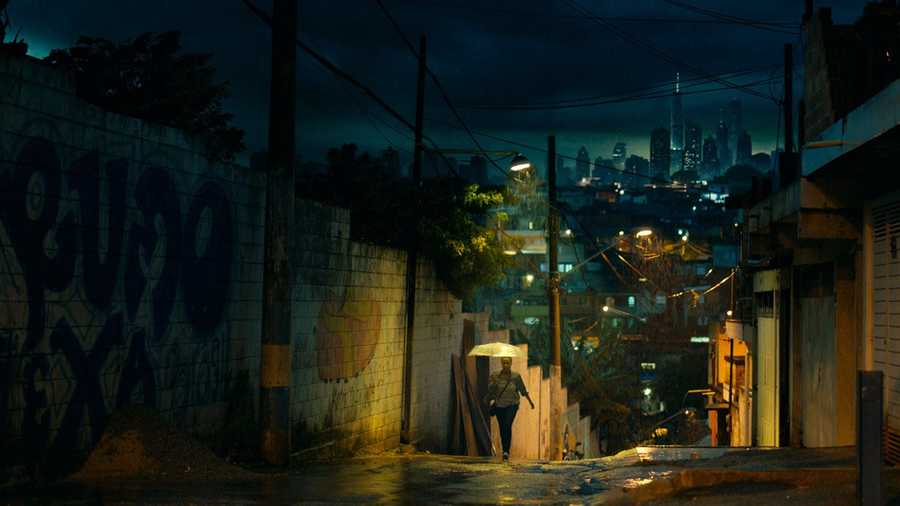
Good Manners (Marco Dutra and Juliana Rojas; image at the top)
April 5 and 6
“Even as Juliana Rojas and Marco Dutra’s rollicking second feature [after Hard Labor, 2011] revels in the classic tropes of horror and fantasy, it bends them into other genres with a freewheeling playfulness,” writes Devika Girish in the Notebook. “What starts as a slow-boiling social drama about two women from different ends of São Paolo’s class spectrum—the wealthy, white and pregnant Ana (Marjorie Estiano) and her newly-hired black maid Clara (Isabél Zuaa)—gradually segues into an intimate lesbian romance, and then transforms into a gory supernatural thriller.”
“Good Manners is a strange beast,” finds Jon Dieringer at Screen Slate: “a heartfelt social drama with major, albeit fleeting, genre elements and even a few musical numbers. This is to say nothing of the film’s intermittently idiosyncratic visual style, which rerenders parts of Sao Paolo’s cityscape with colorful matte paintings. Given the effectiveness of Rojas and Dutra’s more offbeat choices—which, at their best, suggest the dark fable-like quality of classic Disney films—one wishes the film wasn’t so evidently resistant to being pigeonholed and instead went full-bore on its weirdness. Instead we’re left with a mixed bag in which the themes of race and class seem underdeveloped beyond signifiers of outsiderness; the occasionally striking visually style is other times blandly static; and, at 135 minutes, it’s significantly overlong. But the lingering impression is of Zuaa’s excellence as a compassionate guardian.”
“Good Manners is an ambitious work not only in scope but design, influenced by Jacques Tourneur’s psychological horror noirs,” writes Jay Weissberg for Variety. “The ultra-high ceilings of Ana’s duplex recall Hollywood set designs from the 1940s, reinforced through the use of obvious matte backdrops for the view outside the balcony. Artificial lighting, especially in Clara’s neighborhood at night, helps to further create the sense of a hothouse environment.”
“Rui Pocas and Fernando Zuccolotto render the interiors and exteriors of Sao Paulo—its classes divided by the Pinheiros River—via suitably fable-like stylizations, the impact heightened by the sinisterly delicate fairy-tale tones of Guilherme and Gustavo Garbato's classy, harp-heavy score,” adds Neil Young in the Hollywood Reporter.
Cyril Schäublin’s “delightful dry comedy” Those Who Are Fine “is ostensibly about a woman who swindles the elderly out of their savings by posing as a wayward granddaughter,” writes Calum Marsh in the Village Voice, “but on the edges of the plot Schäublin stages long, placid conversations about long-distance calling plans and the range of mobile Wi-Fi hotspots and data packages. The sheer monotony of the chats is hilarious. In one scene a man describes to a painstaking extent which territories are included as part of his international roaming service; in another, a bank clerk reads a sixty-three-character Wi-Fi password aloud to a customer—and then reads it again in full when it doesn’t work. It rings true. Doesn’t so much of what we talk about now amount to the same garbled mundane code?”
“With its grifter narrative wrapped in a keenly tuned festival-movie aesthetic, Those Who Are Fine suggests a loose analogy to the Dardenne films infused with crime tropes,” writes Jon Dieringer, “albeit from a radically different, exacting formal approach. In its understated manner, Those Who Are Fine is blazingly insistent in its portrayal of modern alienation—the kind of movie that employs obliquely framed action isolated within harshly canted modern architecture in shots impeccably timed to last just a little too long before abruptly cutting to symmetrical closeups of affectless characters.”
Filmmaker’s Vadim Rizov finds it to be “a very Now movie in the most morbid sense. If anything, Schäublin is a little too clear about what’s going on: training his gaze on characters outdoors from beyond-surveillance-camera distances, he contrasts the elderly and none-too-tech-savvy getting defrauded with civilians pulled aside by police checking bags in the wake of a bomb threat, a juxtaposition in which both individual participants and systems can repeatedly invade the security of, harass or otherwise mess with a too-complacent populace. The point, however, is well-taken and the film morbidly amusing: the hell we live in now, but more so, captured with impeccably discipline for the mundane.”
“Those Who are Fine may be set in the present, but its subtle uncanniness makes it feel like near-future sci-fi,” writes Jessica Kiang for Variety. “The art background shared by Schäublin and his close collaborator and cinematographer Silvan Hillmann is in evidence in the film’s ascetic, stylized formalism, which contributes to the film’s icily dehumanized (in)expressiveness.”
“From the coffeeshops and bookstores of Brooklyn comes Ricky D’Ambrose’s austere, bewildering, and unyieldingly cerebral Notes on an Appearance, an anti-mystery in the tradition of L’Avventura assembled with the cool reserve of Robert Bresson,” writes Calum Marsh. “An exercise in patient observation, a study of faces and gestures and hand-written memoranda, the movie seems interested in the sorts of things other movies cut out—the gaps between actions, the things that might happen but don’t.”
“The spare, incident-by-incident diaries left behind by disappeared protagonist David (Bingham Bryant)—who literally walks out of the movie in an extended street shot one third of the way in—are contextualized by subway and city maps establishing each next location,” writes Vadim Rizov. “The subject of his friend’s study, super-agitationist philosopher Stephen Taubes (Stephen F. Cohen), makes up the other strand. There are home videos taken by Taubes and, rather dazzlingly, an array of mocked-up books written by and documentation on him: a New York Times obit by William Grimes, book reviews in the NYRB and another in Harper’s, Louis Menand in ‘Critic at Large’ mode in the New Yorker, down on through the Washington Post and New York Post. The amount of layout pastiche, all in a particular pocket of media consumption, is almost counterproductively impressive.”
“The paucity of expository detail in Notes . . . turns every image into a sign, offering temptingly bare, sunlit surfaces on which to project meaning,” writes Devika Girish in the Notebook. “As such, the film has been interpreted in varying ways by critics: as a skewering of the hermetic world of academia, an allegory about young people contending with late capitalism, and an ode to the ever-changing scape of New York City. As the plurality of readings indicates, the one thing Notes is inarguably concerned with is the act of meaning-making.”
“The conceit suggests a horror movie,” writes A. O. Scott. “A house in a small town on Japan’s coast has two sets of occupants—a single mother and her adolescent daughter; a single woman and a stranger afflicted with amnesia—who are unaware of each other’s existence. Are they ghosts? Inhabitants of different dimensions? It’s never made clear, and while the film, the feature debut of Yui Kiyohara, is haunting, it’s more disquieting than terrifying. Its texture is delicately emotional and boldly, eccentrically philosophical.”
“Kiyohara doesn’t betray her background as a student of Kiyoshi Kurosawa,” writes Jon Dieringer, “and while she already has a masterful command of alienation and dread, Our House never veers into abject horror; instead, it balances the antiseptic and strange with a sense of play and wonder—yet always seems to circle back to a tenor of melancholic longing. Even if this brisk feature occasionally feels like a sustained exercise in tone rather than a fully realized feature, it is a truly remarkable one, and I’ll eagerly follow Kiyohara wherever she heads next.”
“Whereas Lynch or Kurosawa might have doubled down on the nightmarish implications of an imploding multiverse,” suggests Dan Sullivan in Film Comment, “Kiyohara more restrainedly traces a bridge between two realities that reverberates with the ghostly echoes of what could have been, what might be, and what will or won’t be in an obscure future.”
Haven’t found a trailer with subtitles yet
“Having shaken her audience out of its grass-is-green complacency, Kiyohara is reluctant (or unable) to deliver the scares of a good genre exercise,” writes Mark Schilling in the Japan Times. “But her interests lie elsewhere, in depicting the ways loneliness and alienation can distort the field we call reality until the afflicted start to feel the presence of unseen others and experience what rationally shouldn’t exist. She does this with a quiet assurance, supported by subtly spooky lighting and crisply composed visuals in traditional Japanese spaces, as though she’s been channeling Yasujiro Ozu as well as Kurosawa.”
“Unanswered questions abound and potential plot threads dangle tantalizingly, recalling Fruit Chan’s The Midnight After, while the potential interrelations among possible realities point to a Hong Sangsoo comparison,” writes Sean Gilman at In Review Online. “Musical in structure and tone, the two stories weaving through each other and around a central lonely theme, director Yui Kiyohara cites Bach as an influence (there’s a bit of The Well-Tempered Clavier on the soundtrack).”
At the Film Stage, Jason Ooi finds that “the narrative comes off a bit monotonous. Still, with strong pacing and enough satisfying plot developments scattered throughout, it never overstays its welcome.”
“In recent years, Portugal has emerged as a laboratory for cinematic experimentation, yielding fascinating and ambitious hybrids of documentary and fiction that tackle the country’s colonial legacy, its cultural traditions, the state of its working class and much more,” writes A. O. Scott. “The Nothing Factory, an astonishing film by Pedro Pinho, extends this tradition. It’s an almost clinical study of working conditions and labor discontent, set at an elevator factory whose employees are in conflict with management. It’s also a musical. Mr. Pinho, shooting in 16-millimeter film, fuses nostalgia with a militant sense of novelty.”
The workers go on strike, but it soon “becomes clear that the selfishness of some in accepting payoffs will ruin the chances for collective bargaining to prevail,” as Diego Semerene explains at Slant. “This tale of worker dissatisfaction is built around the purposeful absence of heroes. Its main character is the factory, a site of nothingness in lieu of workers ceasing to act as a collective. . . . They argue about the logic of the commodity, machines, Marx, mass movements, micro decisions, ecologically sustainable capitalism, and alternatives to the barbarisms of the market. . . . Such a cerebral approach works better during sequences that are less dependent on narrative and more essayistic in nature.”
“Life is reduced to the tiniest details for eight-year-old Yael in Nervous Translation, an understated yet appealing imagined-memory piece set in Manila in the late 1980s,” writes Jay Weissberg for Variety. “Imagined because director-writer Shireen Seno evokes a time and place she never knew, with a young girl whose father works abroad and whose cold mother pines for her husband’s presence. Seno strips everything down to Yael’s experiences, keeping the focus on the world the young girl created and can control, unlike the world of adult dynamics that are so difficult to read for a lonely child who senses more than she understands. The result is a fragile, well-made and engaging film.”
“Yael’s world comprises the house–a physical space dressed up but without character–and her education,” writes Jason Ooi at the Film Stage. “A comfortable life unbesieged by the struggles of those poorer classes come at the cost of a broken family unit with a missing, invisible father who provides financially but fails emotionally. Her alienation from the setting is achingly clear, and soon, the vast spaces become claustrophobic. Seno’s formal experimentation does wonders, though occasionally feels too egregious, especially near the end.”
I put together a first round when Hale County premiered at Sundance, and there’s an entry at Critics Round Up, too.
The film “elliptically traces years in the lives of two African-American teenagers, Quincy Bryant and Daniel Collins,” writes Sierra Pettengill. “In fragmentary glimpses that feel both intimately lived-in and aesthetically experimental and avoid any traditional notions of neat resolution, Ross tackles history, birth, death and the body in imagery that’s radical in its banality, transmitting images rarely received of American black communities.”
“Mr. Ross focuses on work, school, parenthood and other ordinary experiences, but his method is the opposite of prosaic,” writes A. O. Scott. “He glimpses arresting, at times almost hallucinatory beauty in the rural Alabama landscape, and finds nuances of emotion that grow in intensity over seventy-five heady minutes. The movie is framed by a bluntly political question—as the film’s website puts it, ‘How does one express the reality of individuals whose public image, lives and humanity originate in exploitation?’—that yields pure cinematic poetry.”
“Hale County is most forthrightly an experiment in framing, as Ross, himself a former athlete, shot the documentary over five years while coaching basketball and teaching G.E.D. courses,” notes Christopher Gray at Slant. “And despite his evidently close relationships with his subjects, the film isn’t constructed around major life events or any easily identifiable A-to-B trajectory. The mere eschewal of narrative thrust itself has profound implications. . . . Much of the film transpires around social gatherings on public sites—parking lots, schools, churches, and front and backyards—and the interactions Ross captures suggest lives so intertwined that the presence of a camera and a filmmaker couldn't possibly alter or disrupt them.”
Devika Girish in the Notebook: “Even the more standard documentary elements of the film are impeccably stylized; when Daniel speaks into the camera about his aspirations and ambitions, he is shot in tight close-ups and lit in neon-purples and glistening pinks. This lush formalism has the effect of redirecting the viewer’s attention from the objects of the camera’s gaze to its modes of seeing, gesturing repeatedly towards Hale County’s central preoccupation with ‘framing’ as both a filmic and a cultural exercise.”
For news and items of interest throughout the day, every day, follow@CriterionDaily.
“Black Mother simultaneously elucidates and scrambles notions about class, gender, spirituality, and the history of a nation,” begins Christopher Gray at Slant. “The photographer turned director’s new documentary marks a striking advance from Field Niggas, which announced him as a sui generis talent. Filmed entirely at a single Harlem intersection, that 2015 film employed a radical formal gambit, melding photographs and videos of children, K2 addicts, police officers, and other community members with an asychronized soundtrack drawn from interviews Allah recorded with his subjects before or after shooting them. Though few people have seen Field Niggas, Allah’s distinctive close-ups and stream-of-conscience editing style will feel familiar to viewers of Beyoncé’s Lemonade film, on which Allah served as a director. Black Mother finds Allah doubling down on his established aesthetic to bold, hypnotic ends.”
“Maternity is both the guiding metaphor and one of the subjects of this lyrical, occasionally bombastic documentary essay,” writes A. O. Scott in the New York Times. “Gliding from color to black and white, from digital to analog, from grim realism to spiritual ecstasy, the film offers a song of praise to the island of Jamaica and a reckoning with its painful history and hard-pressed present.”
“Allah meshes personal experience and portraiture with myth and fantasy, religion and politics, to consider the exaltation and the degradation of women in Jamaican culture—and the very idea of black motherhood,” writes the New Yorker’s Richard Brody. “In the movie’s main thread, which follows one woman’s pregnancy through to the birth of her child, Allah fuses cultural and scientific observations into a warily hopeful vision of endurance and progress.”
Allah “seems to have picked up the gauntlet thrown by the contemporary cinema of Terrence Malick, which allows for a floating, ecstatic freedom of camera, of character, and of storytelling, and has re-invented it for the Vimeo era of gaspingly pretty, highly individualized art-filmmaking,” writes Daniel Kasman in the Notebook. “One image, slow motion, of the director standing by a flowing river as he rewinds the film in his Bolex, the camera gliding towards these two flows, that of film and of water, epitomize the personal vision of this enthralling work.”
“Allah’s eye doesn’t shy away from the political aftermath of colonization, nor waiver at the sights and sounds of prostitution, tending to all with the same even gaze,” writes Sierra Pettengill for frieze. “Black Mother is a spiritual project, collapsing the beautiful and the profane.”
“I absolutely am not a specialist in representations of black women, colonially-inflected or otherwise,” writes Filmmaker’s Vadim Rizov, and at True/False, “I heard all manner of responses (not precisely correlated to gender or race) to how this works in the film; my own thought is that even while the sex workers are given significant space to speak for themselves as both individuals and representatives of a particular professional class, that’s an awful lot of work for bodies to symbolically perform. The film is no less absorbing for it, and on a visceral level it’s extremely pleasurable; I’d be curious to hear more from others on this loaded question. I mean curious as in actually curious, not begging the question for an answer I’ve already settled on.”
Tayler Montague for Reverse Shot: “Khalik is a Five Percenter, part of the Nation of Gods and Earths, a religion deeply associated with Hip Hop: Rakim, Big Daddy Kane, Jay-Z, and Wu-Tang Clan, to name a few. Within this religion, a major theme in the film, Black men are Gods and Black women are Earths. The images of naked Black women holding the fruit of the Earth in the film are signifiers of these beliefs, not just totems for objectification. Black Mother is not a piece of art that can be separated from the artist, as he’s a figure present in every frame and historical reference on screen. Even when Allah isn’t physically there, his spirit is felt throughout. Black Mother is the beginning of a brand of Black auteurism exhibited by Allah and his contemporaries, including but not limited to Kahlil Joseph, whose film Fly Paper (which features Allah’s voice) is very much in conversation with Black Mother.”
Stanley Kubrick’s 2001: A Space Odyssey saw its world premiere on this day, April 2, in 1968 at the Uptown Theater in Washington, D.C. Two days later, it opened in two more theaters, one in Hollywood and one in New York. Kubrick cut nineteen minutes before 2001 rolled out in five more cities in the U.S. and, on the following day, five more overseas. It wouldn’t be until the fall of 1968 that the film would see a wide release with 35 mm prints making their way across the country. But audiences in that first round of cities would have been viewing 70 mm prints and, as you’ll have heard, Christopher Nolan will be in Cannes on May 12 to present a new one, “struck from new printing elements made from the original camera negative,” as the festival’s announced. “This is a true photochemical film recreation. There are no digital tricks, remastered effects, or revisionist edits. The original version will be presented to recreate the cinematic event audiences experienced fifty years ago.”
Good news from Michael Nordine at IndieWire: “You don’t have to go to Cannes to see 2001: A Space Odyssey in all its 70 mm glory. Stanley Kubrick’s sci-fi masterwork will also return to select theaters beginning May 18.” So this entry will gather all things 2001 for as long as this year’s anniversary is being celebrated.
“Kubrick’s project promised the moon and then some, but executives at Metro-Goldwyn-Mayer feared they had a disaster on their hands when the picture was finally ready for release,” writes Bruce Handy in a piece for Vanity Fair on the film’s making and reception. During a press screening, “press screening one skeptic was overheard sniping, ‘Well, that’s the end of Stanley Kubrick.’”
You might have thought escapism would be in vogue, and 2001 offered that, but moviegoers in this uneasy but heady era were also in a mood to be provoked and challenged, even baffled, and they had never seen anything like 2001—literally, in terms of the film’s painstakingly realistic portrayal of inter-planetary space travel, with special effects that still hold up, and figuratively, in the sense that 2001’s elliptical storytelling was as confounding to many viewers as, for others, the film’s cosmic scale, mythic reach, and wordless, psychedelic finale were exhilarating (if still confounding). An art film made on a big-boy budget, it became the highest-grossing picture of 1968—“perhaps the most offbeat blockbuster in the history of U.S. pic playoff,” as Variety put it in early 1969.
Handy has followed up on his epic account with “the ‘super-bonus extended director’s cut’ version of my story—featuring a testy Stanley Kubrick, an excellent Lost in Space dismissal, and some wonderfully passive-aggressive telegrams.”
For the BFI, Samuel Wrigley looks back on “five films that influenced Kubrick’s giant leap for sci-fi.”
The Guardian’s Phil Hoad talks with Keir Dullea, who played Dave Bowman: “I felt awed working with him and he picked up that I was tense—which is terrible for an actor. After a week, he took me aside and said: ‘Keir, you’re everything I’m looking for.’” And on the same page, Hoad talks with legendary visual effects supervisor Douglas Trumbull: “He was a genius but even he was right at his limit. He asked IBM to make an algorithm to help with the production process. They analyzed it for two weeks and said: ‘There’s no way, Stanley. There’s too many things changing every day.’”
HAL 9000 “was the film’s most expressive and emotional figure, and made a lasting impression on our collective imagination,” writes Gerry Flahive for the New York Times. “The story of the creation of HAL’s performance—the result of a last-minute collaboration between the idiosyncratic director Stanley Kubrick and the veteran Canadian actor Douglas Rain—has been somewhat lost in the fifty years since the film’s release . . . Mr. Rain’s HAL has become the default reference, not just for the voice, but also for the humanesque qualities of what a sentient machine’s personality should be. Just ask Amazon’s Alexa or Google Home—the cadence, the friendly formality, the pleasant intelligence and sense of calm control in their voices evoke Mr. Rain’s unforgettable performance. As we warily eye a future utterly transformed by A.I. incursions into all aspects of our lives, HAL has been lurking.”
On May 29, the fortieth International Conference on Software Engineering in Gothenburg, Sweden will host a symposium on HAL’s legacy. Meantime, the exhibition Kubrick’s 2001. 50 Years A SPACE ODYSSEY opened a little over a week ago at the Deutsches Filmmuseum in Frankfurt and will remain on view through September 23.
Anyone looking for further reading until the next update should begin at The Kubrick Site, which has indexed, among many other things, essays and articles. The 2001 section begins with Michel Ciment’s “Kubrick & The Fantastic,” excerpted from his 1982 book on Kubrick, and runs for a little over a dozen more articles.
The next deep dive would be Coudal Partners’ “Stuff About Stanley Kubrick,” surely the most fun of these archives to wander through. And then head over to Scraps from the Loft and have a look around in there.
For news and items of interest throughout the day, every day, follow@CriterionDaily.