lunedì 2 aprile 2018

[The Daily] Khalik Allah’s Black Mother

Blackmother04022018_large


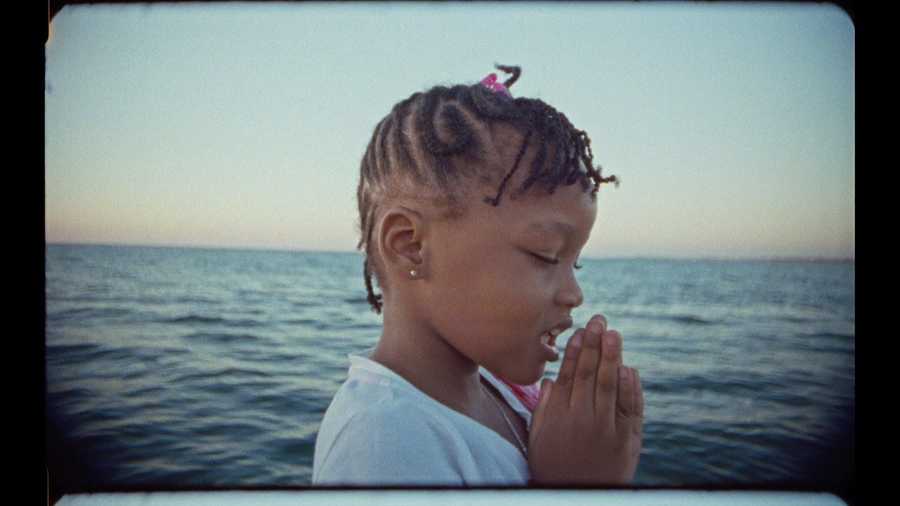
Khalik Allah’s Black Mother premiered at last month’s True/False Film Fest, saw its international premiere at CPH:DOX in Copenhagen, has just screened in Paris at the fortieth Cinéma du réel, and screens this week at New Directors/New Films in New York on Wednesday and Saturday before heading on to the Institute of Contemporary Arts in London later this month and to the Sheffield Doc/Fest in June.

Black Mother simultaneously elucidates and scrambles notions about class, gender, spirituality, and the history of a nation,” begins Christopher Gray at Slant. “The photographer turned director’s new documentary marks a striking advance from Field Niggas, which announced him as a sui generis talent. Filmed entirely at a single Harlem intersection, that 2015 film employed a radical formal gambit, melding photographs and videos of children, K2 addicts, police officers, and other community members with an asychronized soundtrack drawn from interviews Allah recorded with his subjects before or after shooting them. Though few people have seen Field Niggas, Allah’s distinctive close-ups and stream-of-conscience editing style will feel familiar to viewers of Beyoncé’s Lemonade film, on which Allah served as a director. Black Mother finds Allah doubling down on his established aesthetic to bold, hypnotic ends.”

“Maternity is both the guiding metaphor and one of the subjects of this lyrical, occasionally bombastic documentary essay,” writes A. O. Scott in the New York Times. “Gliding from color to black and white, from digital to analog, from grim realism to spiritual ecstasy, the film offers a song of praise to the island of Jamaica and a reckoning with its painful history and hard-pressed present.”

“Allah meshes personal experience and portraiture with myth and fantasy, religion and politics, to consider the exaltation and the degradation of women in Jamaican culture—and the very idea of black motherhood,” writes the New Yorker’s Richard Brody. “In the movie’s main thread, which follows one woman’s pregnancy through to the birth of her child, Allah fuses cultural and scientific observations into a warily hopeful vision of endurance and progress.”

Allah “seems to have picked up the gauntlet thrown by the contemporary cinema of Terrence Malick, which allows for a floating, ecstatic freedom of camera, of character, and of storytelling, and has re-invented it for the Vimeo era of gaspingly pretty, highly individualized art-filmmaking,” writes Daniel Kasman in the Notebook. “One image, slow motion, of the director standing by a flowing river as he rewinds the film in his Bolex, the camera gliding towards these two flows, that of film and of water, epitomize the personal vision of this enthralling work.”

“Allah’s eye doesn’t shy away from the political aftermath of colonization, nor waiver at the sights and sounds of prostitution, tending to all with the same even gaze,” writes Sierra Pettengill for frieze.Black Mother is a spiritual project, collapsing the beautiful and the profane.”

“I absolutely am not a specialist in representations of black women, colonially-inflected or otherwise,” writes Filmmaker’s Vadim Rizov, and at True/False, “I heard all manner of responses (not precisely correlated to gender or race) to how this works in the film; my own thought is that even while the sex workers are given significant space to speak for themselves as both individuals and representatives of a particular professional class, that’s an awful lot of work for bodies to symbolically perform. The film is no less absorbing for it, and on a visceral level it’s extremely pleasurable; I’d be curious to hear more from others on this loaded question. I mean curious as in actually curious, not begging the question for an answer I’ve already settled on.”

Tayler Montague for Reverse Shot: “Khalik is a Five Percenter, part of the Nation of Gods and Earths, a religion deeply associated with Hip Hop: Rakim, Big Daddy Kane, Jay-Z, and Wu-Tang Clan, to name a few. Within this religion, a major theme in the film, Black men are Gods and Black women are Earths. The images of naked Black women holding the fruit of the Earth in the film are signifiers of these beliefs, not just totems for objectification. Black Mother is not a piece of art that can be separated from the artist, as he’s a figure present in every frame and historical reference on screen. Even when Allah isn’t physically there, his spirit is felt throughout. Black Mother is the beginning of a brand of Black auteurism exhibited by Allah and his contemporaries, including but not limited to Kahlil Joseph, whose film Fly Paper (which features Allah’s voice) is very much in conversation with Black Mother.

Black Mother is one of the best films of 2018,” declares José Sarmiento Hinojosa at desistfilm. More from Stephen Saito and, at Vague Visages, Dan Schindel.

Interviews with Allah: Rooney Elmi (Film Comment) and Hannah Rodriguez (KBIA, 3’58”).

For news and items of interest throughout the day, every day, follow @CriterionDaily.


from The Criterion Current https://ift.tt/2uElqeK

[The Daily] 2001: A Space Odyssey at Fifty

2001a04022018_large


Stanley Kubrick’s 2001: A Space Odyssey saw its world premiere on this day, April 2, in 1968 at the Uptown Theater in Washington, D.C. Two days later, it opened in two more theaters, one in Hollywood and one in New York. Kubrick cut nineteen minutes before 2001 rolled out in five more cities in the U.S. and, on the following day, five more overseas. It wouldn’t be until the fall of 1968 that the film would see a wide release with 35 mm prints making their way across the country. But audiences in that first round of cities would have been viewing 70 mm prints and, as you’ll have heard, Christopher Nolan will be in Cannes on May 12 to present a new one, “struck from new printing elements made from the original camera negative,” as the festival’s announced. “This is a true photochemical film recreation. There are no digital tricks, remastered effects, or revisionist edits. The original version will be presented to recreate the cinematic event audiences experienced fifty years ago.”

Good news from Michael Nordine at IndieWire: “You don’t have to go to Cannes to see 2001: A Space Odyssey in all its 70 mm glory. Stanley Kubrick’s sci-fi masterwork will also return to select theaters beginning May 18.” So this entry will gather all things 2001 for as long as this year’s anniversary is being celebrated.

“Kubrick’s project promised the moon and then some, but executives at Metro-Goldwyn-Mayer feared they had a disaster on their hands when the picture was finally ready for release,” writes Bruce Handy in a piece for Vanity Fair on the film’s making and reception. During a press screening, “press screening one skeptic was overheard sniping, ‘Well, that’s the end of Stanley Kubrick.’”

You might have thought escapism would be in vogue, and 2001 offered that, but moviegoers in this uneasy but heady era were also in a mood to be provoked and challenged, even baffled, and they had never seen anything like 2001—literally, in terms of the film’s painstakingly realistic portrayal of inter-planetary space travel, with special effects that still hold up, and figuratively, in the sense that 2001’s elliptical storytelling was as confounding to many viewers as, for others, the film’s cosmic scale, mythic reach, and wordless, psychedelic finale were exhilarating (if still confounding). An art film made on a big-boy budget, it became the highest-grossing picture of 1968—“perhaps the most offbeat blockbuster in the history of U.S. pic playoff,” as Variety put it in early 1969.

Handy has followed up on his epic account with “the ‘super-bonus extended director’s cut’ version of my story—featuring a testy Stanley Kubrick, an excellent Lost in Space dismissal, and some wonderfully passive-aggressive telegrams.”

For the BFI, Samuel Wrigley looks back on “five films that influenced Kubrick’s giant leap for sci-fi.”

The Guardian’s Phil Hoad talks with Keir Dullea, who played Dave Bowman: “I felt awed working with him and he picked up that I was tense—which is terrible for an actor. After a week, he took me aside and said: ‘Keir, you’re everything I’m looking for.’” And on the same page, Hoad talks with legendary visual effects supervisor Douglas Trumbull: “He was a genius but even he was right at his limit. He asked IBM to make an algorithm to help with the production process. They analyzed it for two weeks and said: ‘There’s no way, Stanley. There’s too many things changing every day.’”

HAL 9000 “was the film’s most expressive and emotional figure, and made a lasting impression on our collective imagination,” writes Gerry Flahive for the New York Times. “The story of the creation of HAL’s performance—the result of a last-minute collaboration between the idiosyncratic director Stanley Kubrick and the veteran Canadian actor Douglas Rain—has been somewhat lost in the fifty years since the film’s release . . . Mr. Rain’s HAL has become the default reference, not just for the voice, but also for the humanesque qualities of what a sentient machine’s personality should be. Just ask Amazon’s Alexa or Google Home—the cadence, the friendly formality, the pleasant intelligence and sense of calm control in their voices evoke Mr. Rain’s unforgettable performance. As we warily eye a future utterly transformed by A.I. incursions into all aspects of our lives, HAL has been lurking.”

On May 29, the fortieth International Conference on Software Engineering in Gothenburg, Sweden will host a symposium on HAL’s legacy. Meantime, the exhibition Kubrick’s 2001. 50 Years A SPACE ODYSSEY opened a little over a week ago at the Deutsches Filmmuseum in Frankfurt and will remain on view through September 23.

Anyone looking for further reading until the next update should begin at The Kubrick Site, which has indexed, among many other things, essays and articles. The 2001 section begins with Michel Ciment’s “Kubrick & The Fantastic,” excerpted from his 1982 book on Kubrick, and runs for a little over a dozen more articles.

The next deep dive would be Coudal Partners’ “Stuff About Stanley Kubrick,” surely the most fun of these archives to wander through. And then head over to Scraps from the Loft and have a look around in there.

For news and items of interest throughout the day, every day, follow @CriterionDaily.


from The Criterion Current https://ift.tt/2Gv1MqQ

domenica 1 aprile 2018

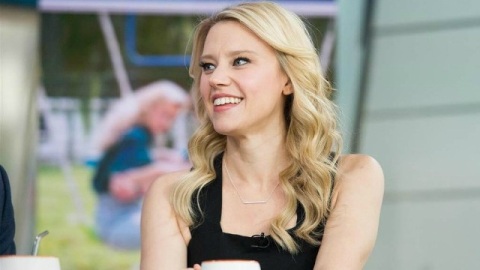
Kate McKinnon potrebbe entrare nel cast del prossimo film di Danny Boyle


L'attrice comica Kate McKinnon (Saturday Night Live in TV, il reboot al femminile d Ghostbusters) potrebbe entrare nel cast dell'attesa commedia prodotta dalla Working Title che sarà scritta da Richard Curtis e diretta dal premio Oscar Danny Boyle. Se le trattative andranno in porto (come speriamo visto il talento dell'attrice) la McKinnon raggiungerà ufficialmente i già confermati Lily James (Darkest HourBaby Driver) e Himesh Patel (Damned). Della storia fino a questo momento si sa davvero poco, tranne che sarà scandita da momenti musicali e sarà ambientata tra gli anni '60 e il decennio successivo. 

Non si sa se questo lungometraggio verrà realizzato da Boyle prima o dopo il nuovo film di James Bind, che il cineasta sembra sempre più vicino a dirigere. Intanto la McKinnon ha un'altra commedia in uscita, precisamente il prossimo agosto, almeno negli Stati Uniti: si tratta di The Spy Who Dumped Me, dove recita accanto a Mila Kunis e Justin Theroux. Il film sembra una parodia proprio delle pellicole di 007...


from ComingSoon.it - Le notizie sui film e le star https://ift.tt/2uBKFhR

via Cinema Studi - Lo studio del cinema è sul web

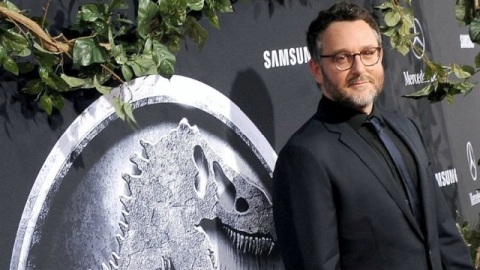
Colin Trevorrow tornerà alla regia di Jurassic World 3


"Colin Trevorrow scriverà e dirigerà Jurassic World 3." Se a confermarlo è il "papà" dell'intero universo di Jurassic Park Steven Spielberg, impossibile che non sia una notizia certa. Si poteva in fondo anche prevederlo, visto l'incredibile successo che Jurassic World - sempre diretto da Trevorrow nel 2015 - ha ottenuto in tutto il mondo. Il film con protagonisti Bryce Dallas Howard e Chris Pratt incassò infatto ben 1.671 milioni di dollari in tutto il mondo, quarto risultato di sempre nella storia del cinema. 

A scrivere la sceneggiatura del terzo episodio sarà lo stesso Colin Trevorrow insieme a Emily Carmichael, che ha firmato Pacific Rim Uprising, attualmente nelle sale, e il prossimo The Black Hole. Intanto si fa sempre più vicina l'uscita del secondo episodio della saga, Jurassic World: Il regno distrutto, che è stato diretto da Juan Antonio Bayona e arriverà nelle sale di tutto il mondo a partire dal prossimo 22 giugno. Nel cast oltre ai due protagonisti troveremo anche James Cromwell, Ted Levine, Justice Smith, Geraldine Chaplin, Daniella Pineda, Toby Jones, Rafe Spall, con BD Wong e Jeff Goldblum addirittura rientranti dalla trilogia di Jurassic Park. 

Ricordiamo che Colin Trevorrow all'inizio doveva dirigere Star Wars: Episodio IX, progetto che invece gli è stato sottratto dalla Disney/Lucasfilm per tornare nelle mani di J.J. Abrams


from ComingSoon.it - Le notizie sui film e le star https://ift.tt/2Ik4cVQ

via Cinema Studi - Lo studio del cinema è sul web

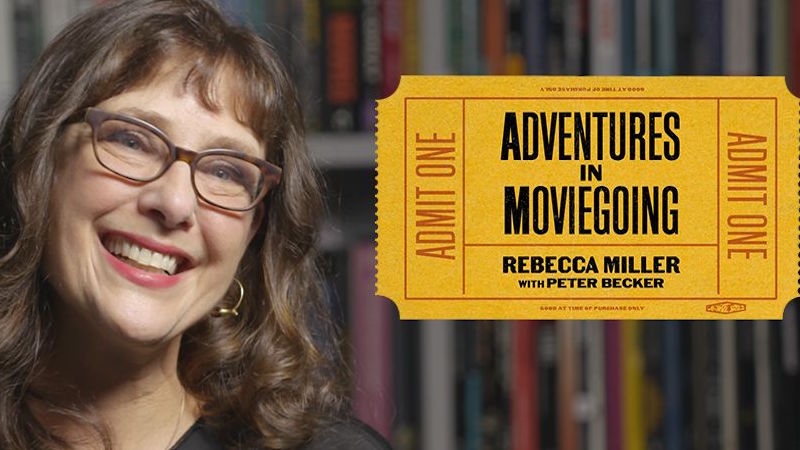
On the Channel: Adventures in Moviegoing with Rebecca Miller


Filmmaker Rebecca Miller has a passion for the arts in her blood. Growing up in a creative household with her parents, playwright Arthur Miller and photographer Inge Morath, she was introduced to film at an early age and saw classics of world cinema that would go on to shape her approach as an artist. For the latest episode of Adventures in Moviegoing, now streaming on the Criterion Channel on FilmStruck, Miller sat down with Criterion’s Peter Becker to chat about her formative experiences as a movie lover, which include encounters with such masterpieces as Federico Fellini’s La dolce vita and John Cassavetes’s Opening Night. In the video above, Miller describes what she’s drawn to in on-screen acting, zeroing in on the wide expressive range she admires in great female performers and citing classic Hollywood star Myrna Loy as a personal icon. For more from Miller, head to the Channel to watch two of her films—her 1995 directorial debut, Angela, and the 2005 drama The Ballad of Jack and Rose—along with a series of her all-time favorites.


from The Criterion Current https://ift.tt/2GpgGuY

A Special Announcement from Jim Jarmusch


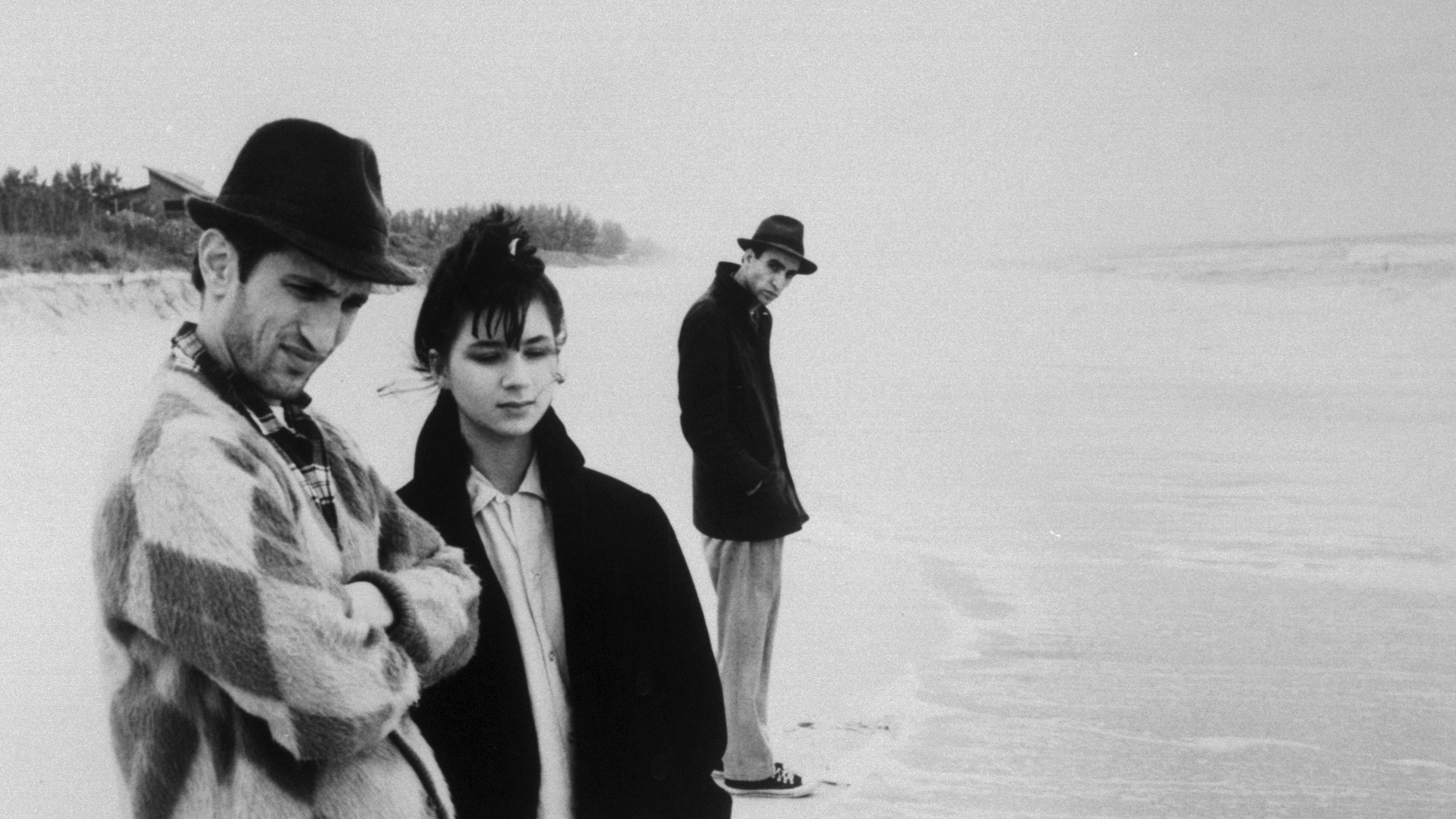
The Criterion Collection is proud to announce that it will be releasing one of the landmarks of independent cinema, downtown icon Jim Jarmusch’s epic ode to everything Stranger Than Paradise, in the form the filmmaker originally intended.

While working on Criterion’s upcoming release of Dead Man, Jarmusch revealed that his breakthrough film had originally been conceived as a 3D experience. “When we originally filmed the movie,” he said, “we tried duct-taping two Bolex cameras together, but at the time we just weren’t able to combine the two images correctly for 3D . . . until now!”

Criterion’s Jon Mulvaney says that by any measure this will be one of the company’s proudest achievements. “Here at Criterion, we’ve always been committed to presenting each film as its maker would want it seen, fully restored, in the correct aspect ratio, and so on, but this isn’t just a matter of a few dirt and scratch fixes or an alternate shot here and there. This is a chance to make a filmmaker’s dream come true.”

When it was released in 1984, Stranger Than Paradise set the standard for immersive indie experiences, but few knew that they had only seen half the film. The secondary camera reels, long thought lost, were discovered in Jarmusch’s basement in stunning mint condition. Scanned in 4K, the reels were composited using state-of-the-art 3D-Lineator® MARK IV™ software to create the ultra-real impression that Jarmusch always hoped for. You can practically smell the sidewalks of the East Village and the shores of Lake Erie! Look for STP3D at select theaters later this year.


from The Criterion Current https://ift.tt/2Ja6VCo

[The Daily] Interviews: Spielberg, Argento, and More

Spielberg04012018_large


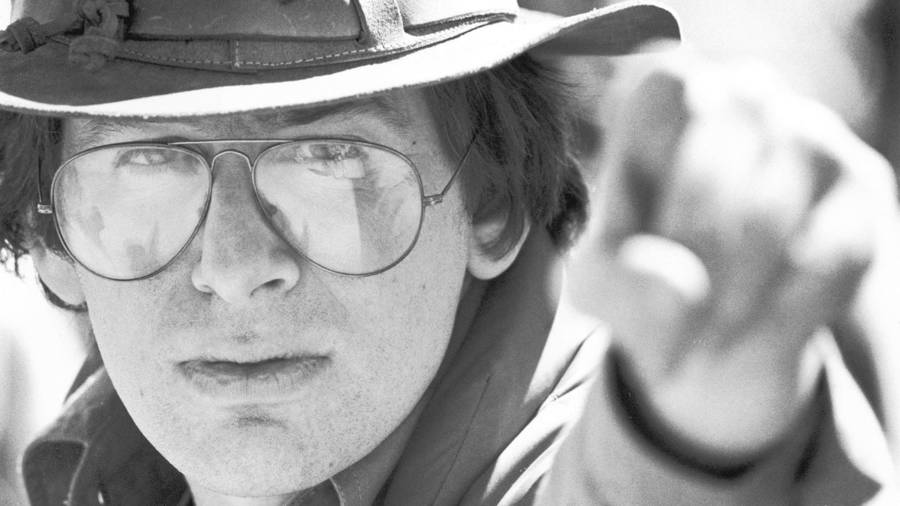
Empire has been rolling out interviews from its “Spielberg Takeover” issue, the one with five different covers, including a podcast (102’01”) that’s naturally not part of the print version, in which contributors talk with Steven Spielberg himself and with Simon Pegg about working on Ready Player One. What’s not online are tributes to Spielberg from the likes of Martin Scorsese, Christopher Nolan, Rian Johnson, and others, conversations with former child actors who’ve worked with Spielberg, the cast of Jurassic Park (1993), and Tom Hanks on Saving Private Ryan (1998).

In print, though, readers will find only a snippet of Edgar Wright’s talk with Spielberg about Duel (1971), whereas Empire’s put the full conversation online. “I still think,” writes Wright in his introduction, “even in the wake of his later classics, its still one of the greatest displays of Spielberg’s talent and a masterclass for young filmmakers.” So, yes, they talk about Duel (“I don’t know any of us made that movie in eleven days”), but also about Spielberg’s pilot for Columbo and the episode of Night Gallery with Joan Crawford.

“Every movie I’ve made, or most of the films I’ve made, have not been consciously based on some kind of a long-view game plan,” says Spielberg. “So many of them have combusted spontaneously. That’s only because the second I think about what I should do next, I’ll probably not do that next. The more I think about something, the greater the chance I’ll never make it. It’s the things I just impulsively commit to that somehow feel right to me. I let that pretty much guide me for the last forty-nine years of making TV and film.”

MORE INTERVIEWS

At Slant, Chuck Bowen’s given all the stars to Synapse Films’s 4K restoration of Dario Argento’s Suspiria (1977), the original uncut, uncensored Italian 35 mm camera negative. “Colors are not only breathtaking, they're viscerally present in the film as additional characters. . . . The soundtracks are even more revelatory.” All in all, it’s “overwhelming in the breadth and intensity of its aesthetic, offering a radical departure from the sporadic surreality of Argento's prior gialli.” For Another Man, Ben Cobb talks with Argento about those colors, about the cast—“all the heroes and villains are women, and the few men are either blind, mute or useless,” notes Argento—and about opening night: “People came running out, screaming, telling people in the queue ‘Don’t go in! Don’t go in! It’s all witches!’ It just made everyone in line want to get in even more . . . it was amazing.”

While Wes Anderson and much of the cast of Isle of Dogs were all in Berlin for the premiere in February, Anna Peele gathered the “swarm” for GQ to reminisce about working with the director for the first, second, or, as in the case of Bill Murray, eighth time. Also in the room or piping up from elsewhere were Tilda Swinton, Jeff Goldblum, F. Murray Abraham, Kunichi Nomura, Harvey Keitel, Courtney B. Vance, Bob Balaban, Liev Schreiber, Koyu Rankin, Greta Gerwig, Yojiro Noda, Akira Takayama, Roman Coppola, Jason Schwartzman, visual effects artist Jeremy Dawson, and composer Alexandre Desplat. The first Berlinale 2018 Diary entry has become the default gathering place for links to reviews, fresh video, and interviews such as Gail Tolley’s for Time Out in which Anderson says he’d “love to do a story that was set in Dickensian London.” He also wouldn’t be surprised to find himself working in television “at some point.” Sophie Bew, in the meantime, talks with Goldblum for Another Man.

“I wanted Gemini to be in the tradition of those films where it really matters that the film is set in Los Angeles—that it’s not just incidental,” Aaron Katz tells Filmmaker’s Scott Macaulay. “It goes back to what I consider the primary inspiration, which is thrillers from the ’80s and ’90s. I think of American Gigolo being kind of the beginning of that, and then films like Curtis Hanson’s Bad Influence. But also it goes back further. I recently rewatched In a Lonely Place—there’s that opening scene where [Humphrey Bogart] pulls up at a stoplight and a woman is like, ‘Hey, I was in the last picture that you wrote!’” For the Playlist, Lena Wilson talks with Katz and one of the stars of Gemini, John Cho. Katz has written up a list of his top ten Criterion releases and, at the Talkhouse, he writes about falling in, then out, and then back in love again with VHS.

Also at Filmmaker, Vadim Rizov’s conversation with Arnaud Desplechin about Ismael’s Ghosts eventually turns to Vertigo: “I can’t say if it’s Hitchcock’s best film. Is it the best film on earth? I don’t know. But it’s a film which invented a sort of definition of cinema itself.”

After making what Anne Thompson calls “six scruffy relationship dramedies,” Lynn Shelton found herself in demand as a television director. And “when Shelton finally reassembled her Seattle film crew to shoot her seventh movie, Outside In—produced, co-written and starring Jay Duplass opposite Edie Falco and Kaitlyn Dever—everything was different.” Shelton: “I realized I’m a completely different filmmaker than I was. I felt so at ease, and so confident. . . . With every television show, I’ve always learned something new.”

Talking with Falco for Vulture, Nate Jones eventually steers the conversation to Louis C.K.: “He’s someone who admitted that he did what he was accused of doing and admitted that it wasn’t right. If I was not given another chance a couple of times, there is no way we’d be having this interview right now. People who are committed to becoming aware of what they’ve done and changing, they can be our strongest proponents in an issue like this.” And Talk Easy host Sam Fragoso chats with Duplass (54’24”).

“And I kept writing, and lamenting, and mourning—writing funeral marches for my country. It’s very elegiac.” Lav Diaz tells Jordan Cronk about making Season of the Devil.

Also at Film Comment: “Those in charge of the media have historically felt that there was entertainment value in showing blacks as criminals,” Ishmael Reed tells Violet Lucca. The occasion for the interview is the revival at the Metrograph in New York of Personal Problems (1980), written by Reed and directed by Bill Gunn (Ganja & Hess).

Ryan Gilbey’s conversation with James Ivory for the Guardian covers a lot more ground than his screenplay for Call Me by Your Name, but this is the moment that’s been making the rounds: “When [director Luca Guadagnino] says he never thought of putting nudity in, that is totally untrue. He sat in this very room where I am sitting now, talking about how he would do it, so when he says that it was a conscious aesthetic decision not to—well, that’s just bullshit.”

Rolling Stone’s David Fear talks with Donald Sutherland about “his big break, borrowing cash to get to Hollywood, Altman, Gould, Fonda, Nic Roeg, good advice, bad decisions, body snatchers, Ordinary People, extraordinary performances and a lot more. ‘I knew I wasn’t going to be a sculptor,’ he says, in regards to his original bohemian career choice. ‘I needed the response. I needed an audience.’”

Tony Kushner was recently in Los Angeles to talk onstage with Sarah Vowell about Abraham Lincoln—Kushner, of course, wrote Spielberg’s Lincoln (2012). For the Los Angeles Times, Charles McNulty talks with him about the current revivals of Angels in America and about the next screenplay he’s writing for Spielberg: “I mean, it’s a little tricky with West Side Story, which was written by four Jewish guys. . . . There needs to be a commitment to the idea of culture not as a real estate battle, though sometimes battles have to be waged. But I think culture is happiest when it’s a dialogue. I’m aware of my privileged position, but do I believe I’m doing something wrong by writing West Side Story? I absolutely do not. I’m much more afraid of the musical theater queens.”

Joaquin Phoenix is on the cover of Interview, which has paired him with Will Ferrell, who asks, “How sick are you of the questions, ‘What drew you to the role? How did you prepare for it?’” Phoenix: “I understand why somebody would ask that question, but I don’t have a good answer because I don’t know how I choose; it just happens.”

Also in Interview, Ryma Chikhoune has Jessica Chastain, Christopher Nolan, Mike Newell, and Michael Radford put questions to Al Pacino. And on the Bill Simmons podcast (70’00”), Pacino and Barry Levinson discuss their new film, Paterno; the conversation then segues naturally enough to The Godfather.

“Paul Grimstad writes (Paris Review, New Yorker, London Review of Books, Times Literary Supplement, Music and Literature), teaches (Yale, NYU, Columbia), and composes film scores,” and for HeadStuff, Aaron Hunt talks with him about his songwriting and about working with the friends and filmmakers he’s written scores for: Ronald Bronstein, Frownland (2007); Josh and Benny Safdie, Heaven Knows What (2014); and Nathan Silver, Thirst Street (2017), among others.

LISTENING

As Michael Nordine reports at IndieWire, Catherine Breillat tells Murmur host Robert Milazzo that the downfall of Harvey Weinstein is a “loss” for European cinema, claims that Asia Argento is “a mercenary and a traitor,” and declares her opposition to the #MeToo movement. (57’35”). “It’s a compelling, increasingly out-there listen,” writes Nordine. And Deadline’s Andreas Wiseman reports that Argento “has hit back hard,” calling Breillat “the most sadistic and downright evil director I’ve ever worked with.” And that’s just the beginning of a furious thread recounting Argento’s experience with Breillat during the making of The Last Mistress (2007).

Filmwax Radio host Adam Schartoff talks with Annette Insdorf, author of Cinematic Overtures: How to Read Opening Scenes (60’30”) and, on another episode (73’35”), with Lynn Shelton about Outside In and with Sam Pollard about his three new documentaries.

For news and items of interest throughout the day, every day, follow @CriterionDaily.


from The Criterion Current https://ift.tt/2pXrqtg