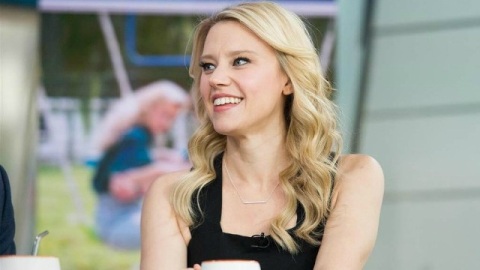
L'attrice comica Kate McKinnon (Saturday Night Live in TV, il reboot al femminile d Ghostbusters) potrebbe entrare nel cast dell'attesa commedia prodotta dalla Working Title che sarà scritta da Richard Curtis e diretta dal premio Oscar Danny Boyle. Se le trattative andranno in porto (come speriamo visto il talento dell'attrice) la McKinnon raggiungerà ufficialmente i già confermati Lily James (Darkest Hour, Baby Driver) e Himesh Patel (Damned). Della storia fino a questo momento si sa davvero poco, tranne che sarà scandita da momenti musicali e sarà ambientata tra gli anni '60 e il decennio successivo.
Non si sa se questo lungometraggio verrà realizzato da Boyle prima o dopo il nuovo film di James Bind, che il cineasta sembra sempre più vicino a dirigere. Intanto la McKinnon ha un'altra commedia in uscita, precisamente il prossimo agosto, almeno negli Stati Uniti: si tratta di The Spy Who Dumped Me, dove recita accanto a Mila Kunis e Justin Theroux. Il film sembra una parodia proprio delle pellicole di 007...
from ComingSoon.it - Le notizie sui film e le star https://ift.tt/2uBKFhR
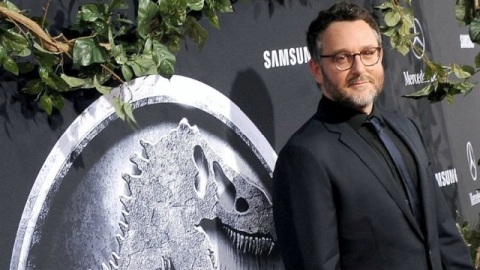
"Colin Trevorrow scriverà e dirigerà Jurassic World 3." Se a confermarlo è il "papà" dell'intero universo di Jurassic Park Steven Spielberg, impossibile che non sia una notizia certa. Si poteva in fondo anche prevederlo, visto l'incredibile successo che Jurassic World- sempre diretto da Trevorrow nel 2015 - ha ottenuto in tutto il mondo. Il film con protagonisti Bryce Dallas Howard e Chris Pratt incassò infatto ben 1.671 milioni di dollari in tutto il mondo, quarto risultato di sempre nella storia del cinema.
A scrivere la sceneggiatura del terzo episodio sarà lo stesso Colin Trevorrow insieme a Emily Carmichael, che ha firmato Pacific Rim Uprising, attualmente nelle sale, e il prossimo The Black Hole. Intanto si fa sempre più vicina l'uscita del secondo episodio della saga, Jurassic World: Il regno distrutto, che è stato diretto da Juan Antonio Bayona e arriverà nelle sale di tutto il mondo a partire dal prossimo 22 giugno. Nel cast oltre ai due protagonisti troveremo anche James Cromwell, Ted Levine, Justice Smith, Geraldine Chaplin, Daniella Pineda, Toby Jones, Rafe Spall, con BD Wong e Jeff Goldblum addirittura rientranti dalla trilogia di Jurassic Park.
Ricordiamo che Colin Trevorrow all'inizio doveva dirigere Star Wars: Episodio IX, progetto che invece gli è stato sottratto dalla Disney/Lucasfilm per tornare nelle mani di J.J. Abrams.
from ComingSoon.it - Le notizie sui film e le star https://ift.tt/2Ik4cVQ
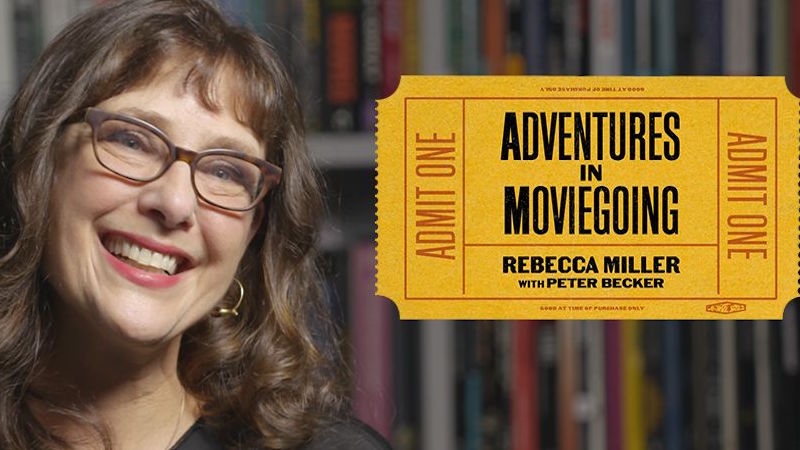
Filmmaker Rebecca Miller has a passion for the arts in her blood. Growing up in a creative household with her parents, playwright Arthur Miller and photographer Inge Morath, she was introduced to film at an early age and saw classics of world cinema that would go on to shape her approach as an artist. For the latest episode of Adventures in Moviegoing, now streaming on the Criterion Channel on FilmStruck, Miller sat down with Criterion’s Peter Becker to chat about her formative experiences as a movie lover, which include encounters with such masterpieces as Federico Fellini’s La dolce vita and John Cassavetes’s Opening Night. In the video above, Miller describes what she’s drawn to in on-screen acting, zeroing in on the wide expressive range she admires in great female performers and citing classic Hollywood star Myrna Loy as a personal icon. For more from Miller, head to the Channel to watch two of her films—her 1995 directorial debut, Angela, and the 2005 drama The Ballad of Jack and Rose—along with a series of her all-time favorites.
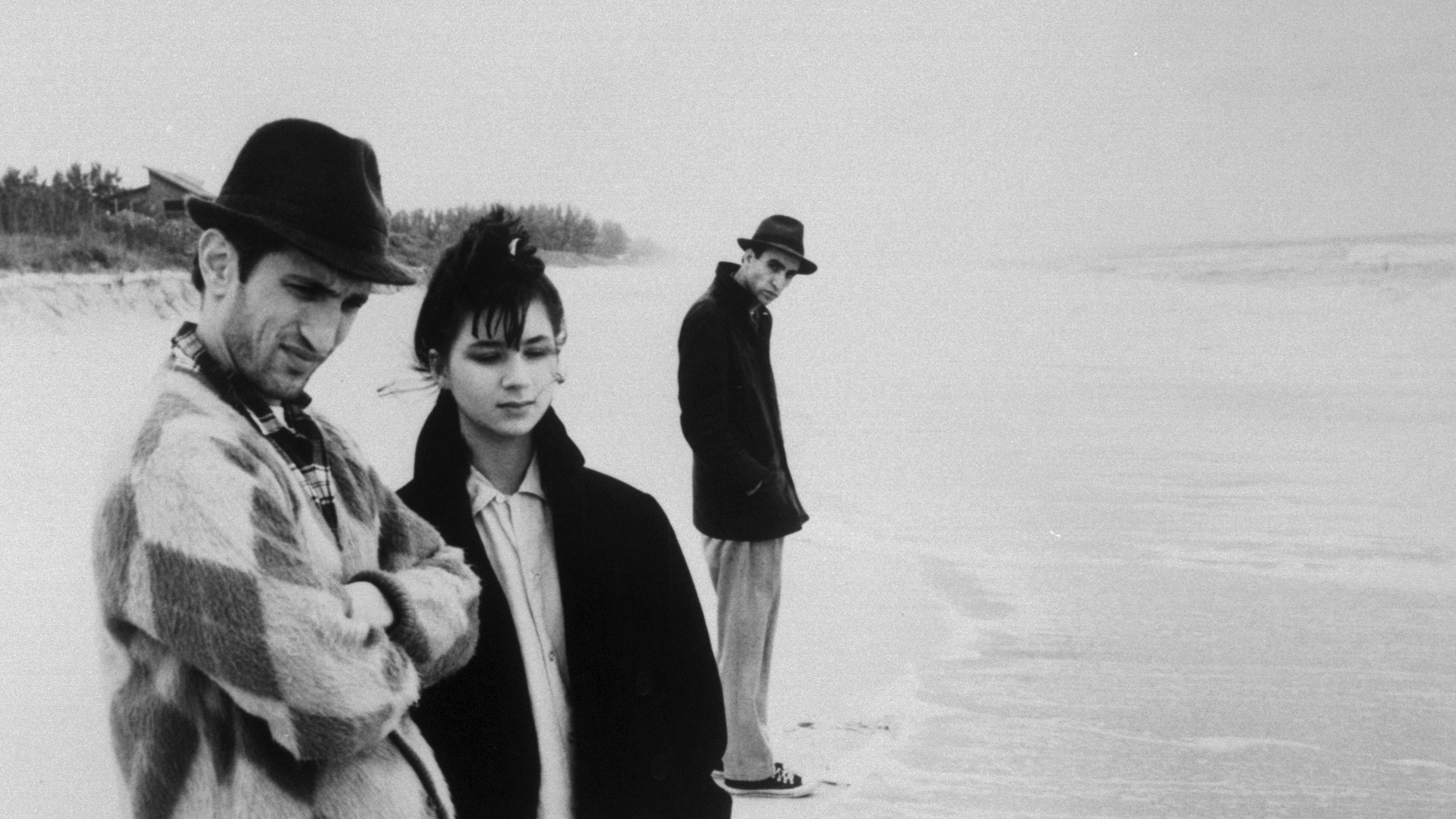
The Criterion Collection is proud to announce that it will be releasing one of the landmarks of independent cinema, downtown icon Jim Jarmusch’s epic ode to everything Stranger Than Paradise, in the form the filmmaker originally intended.
While working on Criterion’s upcoming release of Dead Man, Jarmusch revealed that his breakthrough film had originally been conceived as a 3D experience. “When we originally filmed the movie,” he said, “we tried duct-taping two Bolex cameras together, but at the time we just weren’t able to combine the two images correctly for 3D . . . until now!”
Criterion’s Jon Mulvaney says that by any measure this will be one of the company’s proudest achievements. “Here at Criterion, we’ve always been committed to presenting each film as its maker would want it seen, fully restored, in the correct aspect ratio, and so on, but this isn’t just a matter of a few dirt and scratch fixes or an alternate shot here and there. This is a chance to make a filmmaker’s dream come true.”
When it was released in 1984, Stranger Than Paradise set the standard for immersive indie experiences, but few knew that they had only seen half the film. The secondary camera reels, long thought lost, were discovered in Jarmusch’s basement in stunning mint condition. Scanned in 4K, the reels were composited using state-of-the-art 3D-Lineator® MARK IV™ software to create the ultra-real impression that Jarmusch always hoped for. You can practically smell the sidewalks of the East Village and the shores of Lake Erie! Look for STP3D at select theaters later this year.
Empire has been rolling out interviews from its “Spielberg Takeover” issue, the one with five different covers, including a podcast (102’01”) that’s naturally not part of the print version, in which contributors talk with Steven Spielberg himself and with Simon Pegg about working on Ready Player One. What’s not online are tributes to Spielberg from the likes of Martin Scorsese, Christopher Nolan, Rian Johnson, and others, conversations with former child actors who’ve worked with Spielberg, the cast of Jurassic Park (1993), and Tom Hanks on Saving Private Ryan (1998).
In print, though, readers will find only a snippet of Edgar Wright’s talk with Spielberg about Duel (1971), whereas Empire’s put the full conversation online. “I still think,” writes Wright in his introduction, “even in the wake of his later classics, its still one of the greatest displays of Spielberg’s talent and a masterclass for young filmmakers.” So, yes, they talk about Duel (“I don’t know any of us made that movie in eleven days”), but also about Spielberg’s pilot for Columbo and the episode of Night Gallery with Joan Crawford.
“Every movie I’ve made, or most of the films I’ve made, have not been consciously based on some kind of a long-view game plan,” says Spielberg. “So many of them have combusted spontaneously. That’s only because the second I think about what I should do next, I’ll probably not do that next. The more I think about something, the greater the chance I’ll never make it. It’s the things I just impulsively commit to that somehow feel right to me. I let that pretty much guide me for the last forty-nine years of making TV and film.”
MORE INTERVIEWS
At Slant, Chuck Bowen’s given all the stars to Synapse Films’s 4K restoration of Dario Argento’s Suspiria (1977), the original uncut, uncensored Italian 35 mm camera negative. “Colors are not only breathtaking, they're viscerally present in the film as additional characters. . . . The soundtracks are even more revelatory.” All in all, it’s “overwhelming in the breadth and intensity of its aesthetic, offering a radical departure from the sporadic surreality of Argento's prior gialli.” For Another Man,Ben Cobb talks with Argento about those colors, about the cast—“all the heroes and villains are women, and the few men are either blind, mute or useless,” notes Argento—and about opening night: “People came running out, screaming, telling people in the queue ‘Don’t go in! Don’t go in! It’s all witches!’ It just made everyone in line want to get in even more . . . it was amazing.”
While Wes Anderson and much of the cast of Isle of Dogs were all in Berlin for the premiere in February, Anna Peele gathered the “swarm” for GQ to reminisce about working with the director for the first, second, or, as in the case of Bill Murray, eighth time. Also in the room or piping up from elsewhere were Tilda Swinton, Jeff Goldblum, F. Murray Abraham, Kunichi Nomura, Harvey Keitel, Courtney B. Vance, Bob Balaban, Liev Schreiber, Koyu Rankin, Greta Gerwig, Yojiro Noda, Akira Takayama, Roman Coppola, Jason Schwartzman, visual effects artist Jeremy Dawson, and composer Alexandre Desplat. The first Berlinale 2018 Diary entry has become the default gathering place for links to reviews, fresh video, and interviews such as Gail Tolley’s for Time Out in which Anderson says he’d “love to do a story that was set in Dickensian London.” He also wouldn’t be surprised to find himself working in television “at some point.” Sophie Bew, in the meantime, talks with Goldblum for Another Man.
“I wanted Gemini to be in the tradition of those films where it really matters that the film is set in Los Angeles—that it’s not just incidental,” Aaron Katz tells Filmmaker’s Scott Macaulay. “It goes back to what I consider the primary inspiration, which is thrillers from the ’80s and ’90s. I think of American Gigolo being kind of the beginning of that, and then films like Curtis Hanson’s Bad Influence. But also it goes back further. I recently rewatched In a Lonely Place—there’s that opening scene where [Humphrey Bogart] pulls up at a stoplight and a woman is like, ‘Hey, I was in the last picture that you wrote!’” For the Playlist, Lena Wilson talks with Katz and one of the stars of Gemini, John Cho. Katz has written up a list of his top ten Criterion releases and, at the Talkhouse, he writes about falling in, then out, and then back in love again with VHS.
Also at Filmmaker,Vadim Rizov’s conversation with Arnaud Desplechin about Ismael’s Ghosts eventually turns to Vertigo: “I can’t say if it’s Hitchcock’s best film. Is it the best film on earth? I don’t know. But it’s a film which invented a sort of definition of cinema itself.”
After making what Anne Thompson calls “six scruffy relationship dramedies,” Lynn Shelton found herself in demand as a television director. And “when Shelton finally reassembled her Seattle film crew to shoot her seventh movie, Outside In—produced, co-written and starring Jay Duplass opposite Edie Falco and Kaitlyn Dever—everything was different.” Shelton: “I realized I’m a completely different filmmaker than I was. I felt so at ease, and so confident. . . . With every television show, I’ve always learned something new.”
Talking with Falco for Vulture, Nate Jones eventually steers the conversation to Louis C.K.: “He’s someone who admitted that he did what he was accused of doing and admitted that it wasn’t right. If I was not given another chance a couple of times, there is no way we’d be having this interview right now. People who are committed to becoming aware of what they’ve done and changing, they can be our strongest proponents in an issue like this.” And Talk Easy host Sam Fragoso chats with Duplass (54’24”).
“And I kept writing, and lamenting, and mourning—writing funeral marches for my country. It’s very elegiac.” Lav Diaz tells Jordan Cronk about making Season of the Devil.
Also at Film Comment: “Those in charge of the media have historically felt that there was entertainment value in showing blacks as criminals,” Ishmael Reed tells Violet Lucca. The occasion for the interview is the revival at the Metrograph in New York of Personal Problems (1980), written by Reed and directed by Bill Gunn (Ganja & Hess).
Ryan Gilbey’s conversation with James Ivory for the Guardian covers a lot more ground than his screenplay for Call Me by Your Name, but this is the moment that’s been making the rounds: “When [director Luca Guadagnino] says he never thought of putting nudity in, that is totally untrue. He sat in this very room where I am sitting now, talking about how he would do it, so when he says that it was a conscious aesthetic decision not to—well, that’s just bullshit.”
Rolling Stone’s David Fear talks with Donald Sutherland about “his big break, borrowing cash to get to Hollywood, Altman, Gould, Fonda, Nic Roeg, good advice, bad decisions, body snatchers, Ordinary People, extraordinary performances and a lot more. ‘I knew I wasn’t going to be a sculptor,’ he says, in regards to his original bohemian career choice. ‘I needed the response. I needed an audience.’”
Tony Kushner was recently in Los Angeles to talk onstage with Sarah Vowell about Abraham Lincoln—Kushner, of course, wrote Spielberg’s Lincoln (2012). For the Los Angeles Times,Charles McNulty talks with him about the current revivals of Angels in America and about the next screenplay he’s writing for Spielberg: “I mean, it’s a little tricky with West Side Story, which was written by four Jewish guys. . . . There needs to be a commitment to the idea of culture not as a real estate battle, though sometimes battles have to be waged. But I think culture is happiest when it’s a dialogue. I’m aware of my privileged position, but do I believe I’m doing something wrong by writing West Side Story? I absolutely do not. I’m much more afraid of the musical theater queens.”
Joaquin Phoenix is on the cover of Interview, which has paired him with Will Ferrell, who asks, “How sick are you of the questions, ‘What drew you to the role? How did you prepare for it?’” Phoenix: “I understand why somebody would ask that question, but I don’t have a good answer because I don’t know how I choose; it just happens.”
Also in Interview,Ryma Chikhoune has Jessica Chastain, Christopher Nolan, Mike Newell, and Michael Radford put questions to Al Pacino. And on the Bill Simmons podcast (70’00”), Pacino and Barry Levinson discuss their new film, Paterno; the conversation then segues naturally enough to The Godfather.
“Paul Grimstad writes (Paris Review,New Yorker,London Review of Books,Times Literary Supplement,Music and Literature), teaches (Yale, NYU, Columbia), and composes film scores,” and for HeadStuff, Aaron Hunt talks with him about his songwriting and about working with the friends and filmmakers he’s written scores for: Ronald Bronstein, Frownland (2007); Josh and Benny Safdie, Heaven Knows What (2014); and Nathan Silver, Thirst Street (2017), among others.
LISTENING
As Michael Nordine reports at IndieWire, Catherine Breillat tells Murmur host Robert Milazzo that the downfall of Harvey Weinstein is a “loss” for European cinema, claims that Asia Argento is “a mercenary and a traitor,” and declares her opposition to the #MeToo movement. (57’35”). “It’s a compelling, increasingly out-there listen,” writes Nordine. And Deadline’s Andreas Wiseman reports that Argento “has hit back hard,” calling Breillat “the most sadistic and downright evil director I’ve ever worked with.” And that’s just the beginning of a furious thread recounting Argento’s experience with Breillat during the making of The Last Mistress (2007).
This month, we’re bringing two heartrending masterpieces to the United Kingdom in their Criterion editions: Martin Scorsese’s The Age of Innocence, a tale of forbidden romance in Gilded Age Manhattan, and Edward Yang’s Yi Yi, an epic portrait of a family in contemporary Taipei.
Head over to Amazon to check out our full list of UK releases.
Since its under-the-radar release in 2007, Ronald Bronstein’s directorial debut, Frownland, has been admired by a generation of young filmmakers for its uncompromising vision, which has earned comparisons to the intense dramas of Mike Leigh and John Cassavetes. Shot on 16 mm, Bronstein’s film is a bleak but unforgettable character study about a New York door-to-door salesman, played with compassion and ferocity by Dore Mann. Watch this influential work of DIY cinema now in a new digital transfer on the Criterion Channel on FilmStruck, accompanied by a new, in-depth conversation between Bronstein and one of his New York film contemporaries, Josh Safdie.
Also up this week: a discussion of Wong Kar-wai’s Chungking Express; two otherworldly explorations of love and death by Thai master Apichatpong Weerasethakul and emerging Canadian filmmaker Connor Jessup, one long, one short; one of the greatest films of the silent era; a spotlight on filmmaker Rebecca Miller; and a double feature of brilliant comedies fueled by audacious narrative turns.
If you haven’t tried out FilmStruck, sign up now for your free 14-day trial. And if you’re a student, find out about our special academic discount!
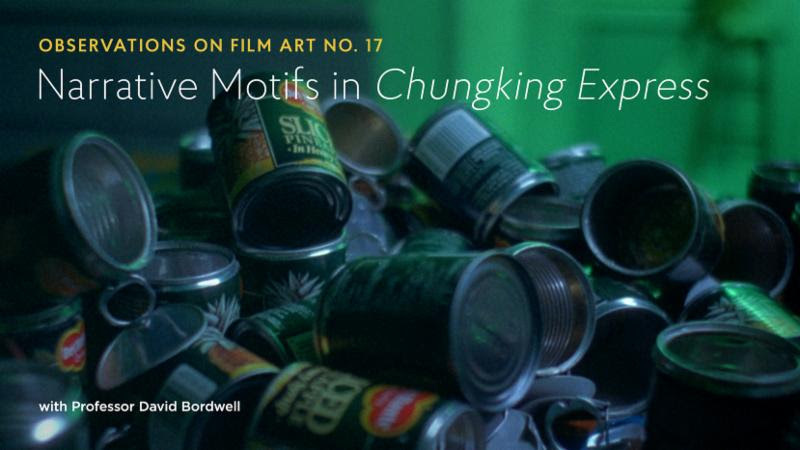
Observations on Film Art No. 17: Narrative Motifs in Chungking Express
Wong Kar-wai’s Chungking Express (1994) captures the whiplash rhythms and tenuous connections of urban life in a bifurcated story that follows two heartsick Hong Kong cops (Takeshi Kaneshiro and Tony Leung) who cross paths at the Midnight Express take-out restaurant stand, where the ethereal pixie waitress Faye (Faye Wong) works. In this month’s episode of Observations on Film Art, a Channel-exclusive series that takes a look at how great filmmakers use cinematic devices and techniques, scholar David Bordwell isolates the recurring motifs that wind throughout the film and shows how Wong uses them to unite the story’s seemingly unrelated halves.
*****
Tuesday’s Short + Feature: Lira’s Forest and Tropical Malady
Animal spirits enact rituals of love and death in this pair of sylvan fables by the director and the subject of this month’s new Meet the Filmmakers episode, Connor Jessup and Apichatpong Weerasethakul. Jessup’s short Lira’s Forest (2017) follows an ailing woman who receives a visit from a mysterious spirit and undergoes an otherworldly transformation. Apichatpong’s Tropical Malady (2004) chronicles the tender romance that blossoms between two young men in the Thai countryside, then plunges into the jungle where their love story is reconfigured as the tale of a hunter’s search for a legendary tiger. For more on these two filmmakers, check out our recent interview with Jessup on the Current.
*****
The Passion of Joan of Arc: Edition #62
Spiritual rapture and institutional hypocrisy come to stark, vivid life in one of the most transcendent masterpieces of the silent era. Chronicling the trial of Joan of Arc in the hours leading up to her execution, Danish master Carl Theodor Dreyer depicts her torment with startling immediacy, employing an array of techniques—expressionistic lighting, interconnected sets, painfully intimate close-ups-to immerse viewers in her subjective experience. Anchoring Dreyer’s audacious formal experimentation is a legendary performance by Renée Falconetti, whose haunted face channels both the agony and the ecstasy of martyrdom. SUPPLEMENTAL FEATURES: three scores: Richard Einhorn’s Voices of Light, one by Goldfrapp’s Will Gregory and Portishead’s Adrian Utley, and one by composer and pianist Mie Yanashita; an audio commentary from 1999 by film scholar Casper Tybjerg; an interview from 1995 with actor Renée Falconetti’s daughter and biographer, Hélène Falconetti; and more.
*****
Adventures in Moviegoing with Rebecca Miller
Filmmaker, visual artist, actor, and novelist Rebecca Miller sat down with us to share a personal history of moviegoing that stretches back to childhood. Miller’s parents, playwright Arthur Miller and photographer Inge Morath, initiated her into art-house cinema at an early age, fostering the eclectic taste that would go on to inform her creative life. Miller is fascinated with movies that stay anchored in emotional realism while violating the codes of naturalism. Here she explains how her work in various art forms has influenced her filmmaking, and selects a series of favorites that speak to her abiding interest in evoking psychic states on-screen, including John Cassavetes’s Opening Night, Agnès Varda’s Vagabond, and Jane Campion’s Sweetie.
*****
By Rebecca Miller
In conjunction with our latest Adventures in Moviegoing episode, we’re presenting two films by director Rebecca Miller, who transitioned from visual art to filmmaking with her 1995 directorial debut, Angela, a haunting tale of a young girl who retreats into her fantasies to cope with her emotionally volatile mother. Miller’s vivid evocations of complex psychological states are a hallmark of her subsequent features, including the 2005 drama The Ballad of Jack and Rose, a devastating look at the twilight of the 1960s counterculture in which Daniel Day-Lewis plays a Scottish farmer whose discovery of new love throws his intensely close relationship with his teenage daughter into chaos.
*****
Friday Night Double Feature: The Phantom of Liberty and Tampopo
When Juzo Itami set out to make a movie about human appetite and culinary culture, he couldn't figure out how to string together the episodes he had imagined, until he remembered The Phantom of Liberty, which struck him as “the kind of film where the last thing of the scene before leads to the next event—that kind of quick-change thing.” Luis Buñuel’s penultimate film is an audacious satire of bourgeois norms, from the hypocrisy of conventional morality to the arbitrariness of social arrangements, as told through a series of non sequiturs. Inspired by Buñuel’s “quick-change” structure, Itami interspersed the story of Tampopo’s eponymous heroine with the erotic exploits of a gastronome gangster and a string of standalone skits, spicing the broth of his “ramen western” with comic flavor.



_large.jpg)
_large.jpg)
_large.jpg)
_large.jpg)
_large.jpg)