venerdì 30 marzo 2018

[The Daily] Goings On: Action Figures and More

Emperornorth03302018_large


New York. “Today’s manliest movie stars—mostly buffed-up superheroes like your Chrises Hemsworth, Pratt, and Evans—are scientifically enlarged and formed by state-of-the-art training and diet regimens,” writes Vern in the Village Voice. “Guys like Steve McQueen, Lee Marvin, Charles Bronson, and Jim Brown arrived in Hollywood already hardened and callused. Marvin and Bronson both earned Purple Hearts in World War II. McQueen had been a Marine, a carnival barker, and a lumberjack. Brown’s physique was forged in the gauntlet of professional and college football. These guys don’t look sculpted—they look chiseled out of a boulder. . . . Their ‘era of onscreen machismo’ (1960–1975), as a release terms it, is the topic of the Quad’s exciting series Action Figures: Prime Cuts From McQueen, Marvin, Bronson, and Brown, featuring fifteen crime, western, and war films, all but a few of them screening on 35 mm.” Today through April 12.

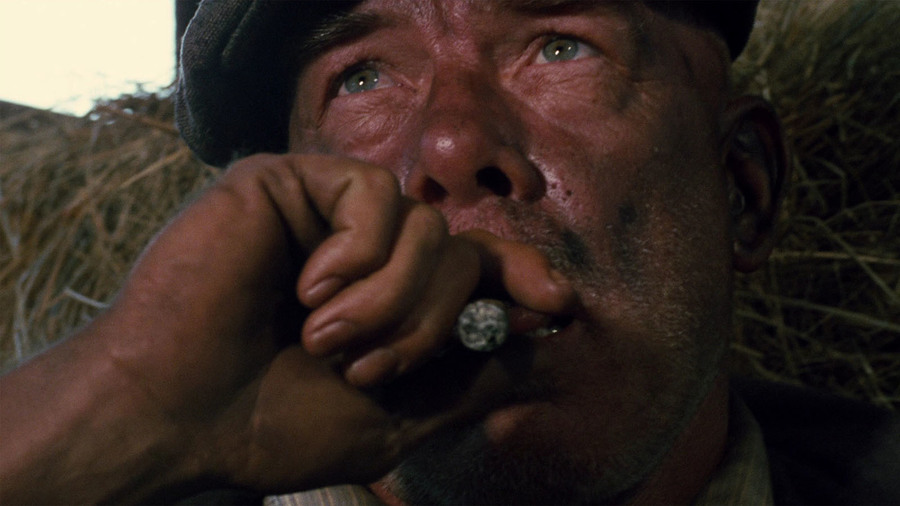
“There's something preternaturally destructive about Lee Marvin, something dangerous,” writes Greg Cwik in the Notebook. “For all the pain he inflicted on screen, he seemed to be carrying his own, an ineffable kind, something that seeped into his performances. He could play a cipher, a heavy, a gruff hero, and to these roles he brought a sort of unspoken set of morals. He always had an impetus in which his character believes, a reason to kill and steal. He always had a palpable motivation.” Above: Marvin in Robert Aldrich’s Emperor of the North (1973).

“Even though experts selected Alfred Hitchcock’s 1958 masterpiece as the greatest film of all time in Sight & Sound magazine’s decennial poll, there is considerable controversy over the best way to see it,” writes Ben Kenigsberg in the New York Times. “If you really want to see Vertigo as original audiences saw it, you have to catch it in I.B. Technicolor, an obsolete 35-millimeter process in which colors were applied directly to film prints using dyes, yielding rich images that have barely faded over time. The Metrograph offers purists a chance to see Vertigo in this format starting on Sunday.”

The Tribeca Film Festival’s added a few events to the lineup of its seventeenth edition running from April 18 through 29:

  • The world premiere of Steven Sebring’s Horses: Patti Smith and Her Band will be followed by a live performance
  • Partnering with Time’s Up, the festival will “host a day of conversations with the outspoken women playing a pivotal role in raising awareness about inequality in the workplace”
  • ESPN’s Enhanced, about innovations in athletics
  • And the VR animation Jack: Part One

With Blue My Mind (2017), screening tomorrow at the IFC Center as part of the What The Fest!? genre festival running through Sunday, Lisa Brühlmann “constructs a violent, yet beautiful vision of teengirl-dom that is surprisingly gory, and still emotionally resonant,” writes Dana Reinoos at Screen Slate.

Yesterday’s “goings on” roundup opened with reviews of Personal Problems, “a ‘meta-soap opera’ from 1980 by writer Ishmael Reed, producer Steve Cannon, and director Bill Gunn that is only now getting its first theatrical release—in a brand-new restoration at Metrograph,” as Michael Blair describes it for BOMB.

Bedatri D. Choudhury for the Notebook: “Personal Problems was made on a tiny budget with an all African American crew—an assortment of people who were never black enough or light enough or easy enough for mainstream Hollywood. . . . Of course, Personal Problems is a narrative on the 1980s New York City and its African American life, but it also documents the systemic exclusion of colored bodies from mainstream American cultural products.”

For Jon Dieringer at Screen Slate, “within its long list of interpersonal concerns, Personal Problems is notable for its mellow pace, with each roughly ninety-minute segment containing only a dozen or so scenes. Whether they play with stage-like dramatic precision or a vibrant improvisation, the effect is always incisively truthful and alive. It's a necessary work, and one of the major repertory revivals of this or any other year.”

Ongoing: New Directors/New Films 2018.

Los Angeles. Dilcia Barrera, Associate Curator for Film Programs at LACMA, talks with Landon Zakheim, festival co-director of the Overlook Film Festival, about the selection of four classic horror movies screening on each Tuesday in April at the museum. Zakheim notes that his team “decided to take a bit of a chronological tour through some of the anniversaries of rarely screened haunted classics”:

New Orleans. “As Overlook has evolved, our focus has turned to new independent voices presenting fresh work, but we always love being able to share old favorites,” Zakheim tells Barrera. The Times-Picayune’s Mike Scott has the lineup for the second edition: “In all, forty films—twenty-three features and seventeen shorts—will screen as part of Overlook 2018, which is scheduled to run from April 19 to 22. The festival, headquartered at the Bourbon Orleans Hotel in the French Quarter—and which organizers describe as a ‘horror summer camp’—will also include parties, interactive events, virtual reality and live performances.”

Chicago. Wang Bing may be at the Courtisane Festival in Ghent right now, but his 2016 documentary Bitter Money sees a week-long run starting today at Facets Cinémathèque. “Wang considers the textile industry in the eastern city of Huzhou, where (according to a final title card) more than 300,000 laborers live,” writes the Reader’s Ben Sachs. “Despite its air of desperation, Bitter Money is never less than engrossing. Wang keeps you on your toes by shifting focus from one subject to another when you least expect it, and the cumulative effect of the various portraits is an eye-opening.”

Meantime, for Newcity, Ray Pride picks out five highlights from the April calendar.

Houston. In the New York Times, Michael Hoinski notes that “before he wrote The Looming Tower: Al-Qaeda and the Road to 9/11, winner of the 2007 Pulitzer Prize for nonfiction, and before he wrote Going Clear: Scientology, Hollywood, & the Prison of Belief, a 2013 National Book Award finalist, [Lawrence] Wright was working on Cleo, a play about the sordid love affair between Elizabeth Taylor and Richard Burton during the filming of the 1963 epic Cleopatra. . . . On April 6, Cleo will finally debut onstage, when the Alley Theater, in Houston, hosts the theatrical world premiere. The production, directed by Bob Balaban, the theater and screen actor, shall sate one of Mr. Wright’s earliest desires.”

Toronto. Radical Empathy: The Films of Agnès Varda, the retrospective running at TIFF Cinematheque through April 17, features a sidebar of four films by her husband Jacques Demy. “Demy’s marriage to Varda formed not only an unequaled partnership in the history of cinema—other filmmakers have coupled, but none has produced anything like their combined body of work—but also a felicitous balancing of nouvelle vague and Left Bank Group sensibilities,” writes James Quandt. “Varda was more associated with the latter, which included Alain Resnais, Chris Marker, and Georges Franju, while Demy was frequently bracketed with the former, sometimes uncomfortably—especially when his films, beloved and championed by Godard, exhibited a gay sensibility.”

Cannes. “Martin Scorsese will receive the Carrosse d’Or (also known as the Golden Coach), handed out by the French Directors’ Association (SRF), at the opening ceremony of the fiftieth Directors’ Fortnight,” reports Fabien Lemercier for Cineuropa. This year’s edition runs from May 9 through 19.

Lemercier also notes that Cristian Mungiu will “serve as the godfather” of the Institut français’s Fabrique Cinéma, celebrating its tenth anniversary this year at the seventy-first Cannes Film Festival running from May 8 through 19.

Brussels. Cinea has announced that this year’s Summer Film School, happening from July 8 through 14, will present “rare 35 mm prints from the extensive collection of the Royal Belgian Film Archive” with the selection focusing on Brian De Palma and Éric Rohmer. “In a special evening program, Prof. David Bordwell will present four master classes on four of his favorite film historical topics.”

Cairo. “Egyptian independent producer Mohamed Hefzy has been appointed president of the Cairo Film Festival with a mandate to revamp and relaunch the prominent Arab fest which has been losing luster due to political turbulence, terrorism, and the recent launch of a rival event in a Red Sea resort.” Nick Vivarelli reports for Variety. The fortieth anniversary edition of the festival will run from November 15 through 24.

For news and items of interest throughout the day, every day, follow @CriterionDaily.


from The Criterion Current https://ift.tt/2pWSwlp

Now You Has King of Jazz

Current_29389id_366_large

When Universal Pictures released King of Jazz into cinemas across the United States in 1930, producer Carl Laemmle Jr. and everyone else involved thought, or at any rate hoped, that they had made a must-see prestige musical about the most popular bandleader of the day: Paul Whiteman, the king of the title. Junior Laemmle, as he was called by everyone in Hollywood, had been given the post of head of production at Universal two years earlier, at age twenty, by his father, Carl Sr., as though this massive job were a pony or a Meccano set. Now, like the inveterate poker player he was, Junior took what he thought was a good hand with King of Jazz—a big name for the marquee, a flashy hook in the form of early Technicolor, a chance to ride the “revue” craze that was sweeping Hollywood—and pushed in all his chips.

And what Universal and Junior and Whiteman and everyone else got was a busted flush. As James Layton and David Pierce write in their soup-to-nuts production history, the final bill for King of Jazz was a staggering two million in 1930 dollars, and while every cent is visible on-screen, the movie stiffed cold. It was a costly mistake for Universal, a studio whose finances always provided its biggest cliff-hangers.

But over the years, King of Jazz has come to be loved as a unique piece of Hollywood recklessness, as a record of stage acts whose memory might otherwise have died with their audience, as the apex of early Technicolor and a time capsule of American popular music. A succession of musical and comic acts staged and strung together with vivid originality by Broadway veteran John Murray Anderson (for his sole screen-directing credit), the film has historical importance for several reasons, one being that it’s the movie debut of a crooner named Bing Crosby. Der Bingle sings “Music Has Charms” (“though it’s classy or jazz”) over the credits and appears in several sequences with the Rhythm Boys, a vocal group that often performed with Whiteman. Crosby might have made an even bigger impression had he not gone on a bender during filming, cracked up his car (on Hollywood Boulevard, no less), and been sentenced to sixty days in jail, having had the poor judgment to crack wise with the judge. A furious Whiteman replaced him with the decidedly less charismatic John Boles for what would have been the singer’s one solo, “The Song of the Dawn.” Still, those ears, that ease of manner, and that glorious voice make the rest of the Rhythm Boys recede into the background.

And Crosby is far from the movie’s only claim to significance. The five-minute opening sequence consists of the first Technicolor cartoon, animated by Woody Woodpecker creator Walter Lantz; it shows Whiteman on a lion hunt in Africa, soothing the beast with a solo supplied by famed jazz violinist Joe Venuti. Another landmark: when Whiteman’s orchestra appears inside a gigantic piano, and chorus girls dance in perfect synchronization for the grand “Rhapsody in Blue,” we are hearing and watching that George Gershwin composition being performed with the same conductor and by nearly the same musicians who played its debut, the main difference being no Gershwin at the piano.

Anderson had made his name with innovative theatrical revues that challenged conventions at every turn, with intricate lighting design and poetic concepts for indi­vid­ual numbers. He was known for a fanatical (and expensive) attention to detail, down to spending long days of rehearsal time teaching his chorus girls the precise way he wanted them to walk. King of Jazz reflects many of Anderson’s most cherished stage ideas, including the “scrapbook” construction, which came from a production called Murray Anderson’s Almanac. (In a bit of foreshadowing that no one heeded, that revue, while highly regarded, had also flopped.) The movie also utilizes Anderson’s longtime collaborator Herman Rosse as production and costume designer. For this project, Rosse created elaborate, soaring sets that contained few props or furniture, the better to focus attention on the performers.

Together, the duo used early color supremely well, although the two-color process takes some getting used to. The Technicolor company usually insisted that all light be white, for fear the colors would shift, but Anderson and Rosse demanded colored lights, a technique they had frequently used in their stage shows, to deepen and intensify the pastel hues characteristic of two-color. The forerunner of the beloved three-strip Technicolor used for much of the classic-film era, two-color renders white actors’ complexions in rosy shades of pink and does a great job with greens and reds. But most yellows are impossible, and true blue is basically out of the question, which is why “Rhapsody in Blue” is rendered in silver and teal. The effect is somewhat abstract but, when restored to its original luster, also very beautiful. As Layton and Pierce point out, Rosse’s costumes for the film use multiple shades of the same color to bring out textures and contrasts. This paid off particularly well for “Rhapsody in Blue,” where he used gray and silver throughout the set to make the various shades of teal and turquoise more suggestive of the title hue.

The final film unspools like an impossibly huge stage production, complete with Irish vaudevillian Charles Irwin acting as emcee, as well as humorous “blackout” skits between the production numbers, which onstage would have permitted scenery and costume changes. Many performers came from the stage and did numbers that they had honed for years. One such example is “My Ragamuffin Romeo,” performed by Marion Stadler and Don Rose: a rag-doll number—a sort of acrobatic dance—that finds Stadler being pushed, pulled, and otherwise contorted into a number of jaw-droppingly flexible positions. Another is “Happy Feet,” a dance performed by the Russell Markert Dancers (who later became Radio City’s Rockettes) and the Sisters G, Berlin cabaret stars who dance energetically and sing in a mix of English and German. Their presence offers a spooky dose of Weimar in this otherwise aggressively American production.

Other showstoppers include “Monterey,” a romantic Mexican number with John Boles and the Markert Dancers, with the object of Boles’s affections played and sung by the stunning Jeanette Loff, who at the time seemed destined for a stardom that never came (her career fizzled, and she died twelve years later); and “A Bench in the Park,” which features the Rhythm Boys as well as the Brox Sisters, a celebrated vocal act of the twenties. “My Bridal Veil” is rather static but may be the best showcase for Rosse’s costume designs, featuring a series of wedding dresses through the years, and climaxing with Loff walking up a staircase wearing a veil made of real Brussels lace—the whole thing a treat for any student of fashion history.

Undeniably, King of Jazz comes with the limitations of its time. The most obvious problem for any modern audience is that it’s disconcerting, at a minimum, to encounter a film with the word jazz in its title with no visible acknowledgment of African American musicians, and the music’s black roots alluded to only in the highly stereotypical cartoon and the introduction to “Rhapsody in Blue,” when the dancer Jacques Cartier does a “voodoo” number in head-to-toe black body paint. Admittedly, the movie was in tune with the prevailing contemporary attitude. George Gershwin may have asserted that jazz “is black and white. It is all colors and all souls unified in the great melting-pot of the world.” But the big “Melting Pot” finale (a version of which Anderson had done onstage before) winds up being a tour of Europe, as Germans in lederhosen, Scots in kilts, Volga boatmen, and various other European nationalities in matching parade costumes come on-screen in succession. Each group performs an ethnic number of some sort, after which the designated ethnicity descends into a literal, gigantic, gold-painted pot. Certainly this is rare cinematic spectacle; it was filmed on one of the largest indoor sets ever constructed, and Layton and Pierce estimate that each nationality winds up with about 125 dancers onstage, plus the entire Whiteman orchestra on a revolving platform. Nevertheless, it’s hard to get over a melting pot whose sole ingredient is vanilla. And there’s the uneasy matter of the Cartier performance, a version of which he’d presented in two different Broadway shows. His dancing is remarkable—he had even drawn a good review from Harlem Renaissance poet Countee Cullen—but Cartier’s role as the painted representative of jazz’s African origins reminds modern audiences of the way black performers were sidelined to accommodate the era’s stereotypes.

Meanwhile, though Whiteman frequented Harlem clubs and counted Duke Ellington, Fletcher Henderson, and Eubie Blake as friends, music scholars still debate whether what the man known as King of Jazz played was actually jazz. He limited improvisation and arranged his numbers in the style he preferred. “I could never understand why jazz had to be a haphazard thing,” he said. When the movie was made, Whiteman’s style of what he called “symphonic jazz” was at its height: he offered syncopated dance music, popular songs given the orchestral treatment, and orchestral music lightly jazzed up. Whiteman is a classic example of the mainstreaming of something that began as edgy, bohemian, and black. When his orchestra played Paris in 1926, one American journalist wrote earnestly, “It is to be hoped that all French and other misguided jazz-players will go to hear Mr. Whiteman, and learn that jazz is not a riot of noise but something much more insinuating and subtle.” In later years, that kind of praise would sound damning. Whiteman, however, filled his band with talented jazz musicians and paid them high salaries. The cornetist for a time was the great Bix Beiderbecke, but alas, he had departed before the movie was made.

But it was that very mainstream palatability that Universal was banking on when it signed Whiteman to a contract in 1928 and put its prolific comedy director Wesley Ruggles
in charge of draping a movie around the portly star. Whiteman disliked the first script, a considerably fictionalized biopic, complete with a romance. His primary objection: he didn’t want to act. During the ensuing arguments, Ruggles jumped ship for RKO, where, Layton and Pierce write, his own musical film Street Girl “was shot, cut, and released before any cameras would roll on King of Jazz.

Next in the director’s chair was Paul Fejos, the “Magyar Genius,” who’d helmed the poetic Lonesome (1928), a triumph of location shooting, and had just shot the dazzling Broadway for Junior. Unfortunately, Fejos also didn’t have much affinity for the Whiteman project, although at least he agreed a love story wasn’t the way to go. “But what on earth will you do with him?” Fejos asked about Whiteman. “He’s a man inordinately fat.” Time ticked on and costs mounted, even after Fejos departed and Anderson was brought on to create a revue, Universal having given up on making an actor out of Whiteman.

In the end, those production delays cost the movie more dearly than anyone could have foreseen. By the time King of Jazz made its bow, Hollywood had indulged its eternal tendency to run a trend into the ground, and revues were such a drug on the market that some other musicals were being advertised with taglines like “Positively not a revue!” There was also the little matter of what happened on Wall Street on October 29, 1929. The worst of the Great Depression was in the future, but the effects of the crash were already being felt.

The critics were mostly dismissive, although the frequently dunderheaded Mordaunt Hall of the New York Times liked it, and Herman Rosse wound up winning an Oscar for his work. But the wide audience the big budget anticipated simply wasn’t there. Universal didn’t release another musical until the exotically titled Moonlight and Pretzels in 1933.

The revue format did allow Universal to recut the film for foreign markets, splicing in the likes of Bela Lugosi, Swedish and Hollywood star Nils Asther, and Japanese character actor Tetsu Komai to introduce the numbers for various countries. The movie was surprisingly successful abroad, helping to salve some of the financial wounds. In 1933, as Universal’s finances remained precarious, King of Jazz was recut for the American market and rereleased, and while it once again failed to set the box office on fire, this time it did turn a profit.

The experience did nothing to alter Junior’s taste for bold projects, as demonstrated by James Whale’s 1931 Frankenstein, which wasa spectacular success, and the artistic daring of movies like Frank Borzage’s Little Man, What Now? (1934), a scathing critique of fascism produced well before Hollywood became comfortable with anti-Nazi themes. In hindsight, however, the Whiteman project was another instance of Junior’s persistent budget creep. Universal’s deficits grew over time until another out-of-control musical, Whale’s Show Boat, caused a chain reaction that in 1936 resulted in the Laemmles’ losing control of the studio they’d built. Meanwhile, John Murray Anderson went back to the theater, returning to Hollywood occasionally for jobs such as staging the finale of Esther Williams’s first starring feature, Bathing Beauty (1944).

As for King of Jazz, Junior and Anderson’s grand mutual folly: it disappeared. The film never circulated on the 16 mm nontheatrical market. It was never licensed for television. In 1971, Whiteman’s widow, Margaret Livingston, asked Universal about the status of King of Jazz and was told the studio had neither a print nor a printable negative—since the two-color process was obsolete, the fact that the company still had a negative, albeit from the shorter 1933 rerelease, didn’t matter. If you wanted to watch King of Jazz, that was that. You couldn’t. When the British Film Institute held a season of musicals in 1954, all it could show was a four-minute trailer.

But passionate archivists and private collectors persisted in searching for this legendary piece of music and film history. When King of Jazz began to resurface in the sixties, it came back in fragments that were gradually reassembled like a dinosaur skeleton. Each rediscovered scene whetted appetites for more. One nitrate print was used by British late-night film host and collector Philip Jenkinson to make 16 mm copies; that print later turned up in the holdings of Raymond Rohauer, the controversial collector known for acquiring the libraries of artists such as Buster Keaton. Meanwhile, a shortened, cobbled-together VHS release in the eighties widened the film’s fan base but failed to do its beauty justice.

A movement to name King of Jazz to the National Film Registry, spearheaded by writer and film historian David Stenn and Ron Hutchinson of the Vitaphone Project, resulted in the film’s addition to the list in 2013. That in turn helped justify the expense of a restoration by NBCUniversal, which involved evaluating some sixteen different picture elements (four of which were used) from about ten different sources. I saw the film in 2016 at the Museum of Modern Art in New York with a capacity crowd that applauded every number as though they were back on Broadway in 1930. Many films have cults; few films have been saved from oblivion by those cults. It’s safe to say that King of Jazz is at last finally receiving the rapturous reception it was denied for more than eighty years.

Farran Smith Nehme has written about film and film history for the New York Post, Barron’s, the Wall Street Journal, Film Comment, the Village Voice, and Sight & Sound. She writes about classic film at her blog, Self-Styled Siren. Her novel, Missing Reels, was published in 2014.


from The Criterion Current https://ift.tt/2GmwheC

X-Files (Stagione 11)

"Voglio ricordarmela cosí com'era. Voglio ricrodare ogni cosa cosí com'era."
- Dana Scully

Rimettere mano dopo quindici anni dalla sua apparente conclusione a un oggetto di culto assoluto come lo è X-Files è molto più pericoloso di quanto se ne possa immaginare. Anche se l'artefice di tale revival è lo stesso ideatore Chris Carter che ha saputo riportare sul piccolo schermo l'intero cast, assicurando un certo livello di qualità artistica allo show e scuotendo nuovamente la passione sopita, ma mai esaurita di tutti i fan della serie. Ora che il revival conta due nuove stagioni, dopo l'entusiasmo e l'incoraggiamento scaturito dalla visione della decima stagione, è necessario indagare con accuratezza sui pregi e i difetti di questa undicesima.

Quel che maggiormente aveva sorpreso in maniera positiva era il profilo a volte esplicitamente canzonatorio che Chris Carter aveva tenuto nel corso della decima stagione, nella quale aveva sapientemente ricollocato gli agenti Mulder e Scully (esiste in televisione una coppia di protagonisti più famosi dei due interpretati da David Duchovny e Gillian Anderson?) al centro della sezione X-Files, mai del tutto chiusa, e di una trama orizzontale incentrata sulla sorte di loro figlio William (Miles Robbins), dato in adozione da Scully per salvaguardarlo dagli indecifrabili piani del governo; un personaggio, quello di William, che diventa di colpo il cuore pulsante della storyline, ragazzo ribelle e incompreso, in perenne conflitto con un mondo che non gli appartiene e dal quale desidera allontanarsi prima che accada il peggio. Il giovane è dotato di incredibili poteri, è un esperimento di laboratorio partorito dalla cinica mente di C.G.B. Spender, in arte ‘l'uomo che fuma' (William B. Davis), che vuole condannare l'umanità a un atroce destino, verso una nuova colonizzazione di matrice aliena.

Carter rinnova e tenta di rafforzare il rapporto genitoriale tra Mulder, Scully e William, strutturato prima mediante una forsennata ricerca del figlio perduto e suggellato da una definizione dolorosa e, al netto di quanto proposto, forse inutile, sicuramente grossolana: una sceneggiatura fin troppo logica e prevedibile, capace di attrarre l'interesse dello spettatore solo nei minuti finali di stagione, non valorizza quanto di buono costruito nelle ultime due stagioni (va inclusa anche la nona, l'ultima prima che venisse proposto il revival, considerato che il leggendario ‘gran finale aperto' chiosava sui tre in attesa di comprendere cosa avesse in riservo per loro il futuro), in cui si auspicava una risoluzione ben assimilata al tessuto poetico e introspettivo di cui la serie tutta s'è da sempre vestita. Perché è questo ciò che maggiormente viene meno con questa undicesima stagione, ovvero quel velato e fascinoso lirismo, quell'attitudine ad appigliarsi alla meraviglia, al piacere e al rischio della scoperta, anche sfruttando elementi di genere abbastanza abusati (il progetto del super-soldato). Stavolta Carter si accontenta di poco, del minimo, e la narrazione scivola via senza attecchire, senza sorprendere, sicuramente priva di quella vibrante verve: William non ci pensa su due volte a far esplodere (letteralmente!) i suoi inseguitori, Mulder e Scully si concedono il lusso di non dannarsi l'anima per la perdita del loro amato figlio (ma nessuna paura, perché Dana è di nuovo incinta e questa volta il padre è davvero Fox), mentre la risoluzione finale tra Mulder e l'acerrima nemesi, ‘l'uomo che fuma', spazza via ogni tentativo di costruire un climax degno dell'evento come una leggera e improvvisa folata di vento.

Questa undicesima stagione di X-Files non ha peso, non intriga, non strazia l'anima come dovrebbe. Ci riesce solo nei classici episodi autoconclusivi (che, per fortuna, rappresentano la maggioranza, ma in questo modo si rischia di ridurre la serie a prodotto per i soli fan insaziabili di amarcord), nei quali la penna di Chris Carter riesce sempre a sprigionare quella agognata magia. Ma non basta. Così come non basta l'ennesimo finale aperto, perché un personaggio come il William qui visto a X-Files non serve affatto; perché pare che sia stato confermato l'addio dalla serie di Gillian Anderson e un X-Files senza l'agente Scully perderebbe la propria essenza logica e concettuale; perché il sentimento è vivo e pulsa, ma uno show di tale caratura presuppone sempre una scrittura all'altezza. Così si rischia di rovinare tutto, così si rischia di uccidere personaggi ancora oggi amati. E' questa la triste Verità. Speriamo almeno che l'agente Scully torni sulla sua decisione e ci ripensi…

(The X-Files); genere: fantascienza, thriller, mistery; sceneggiatura: Chris Carter; stagioni: 11 (in forse); episodi undicesima stagione: 10; interpreti: David Duchovny, Gillian Anderson, Mitch Pileggi, Joel McHale, William B. Davis, Miles Robbins; musica: Mark Snow; produzione: Ten Thirteen Productions, 20th Century Fox Television, 20th Century Fox Television; network: FOX (U.S.A., 3 gennaio-21 marzo 2018), FOX (Italia, 29 gennaio-2 aprile 2018); origine: U.S.A., 2018; durata: 60' per episodio; episodio cult undicesima stagione: 11x10 – My struggle IV (11x10 - Il figlio perduto)


from Close-Up.it - storie della visione https://ift.tt/2pNMOCg

Sei passeggiate nei boschi cinematografici della Passione

La Passione rappresenta l'espressione più alta della fede che si realizza attraverso il sacrificio del figlio di Dio per gli uomini. Si può essere credenti o meno ma nessuno può negare una grandissima forza narrativa agli eventi che duemila anni fa si svolsero a Gerusalemme legati al martirio di Cristo. Momenti che hanno ispirato ed influenzato per secoli migliaia di artisti: forse perchè il destino di un Dio che si spoglia del suo carisma per umiliarsi tra gli uomini è quanto di più vicino all'ambizione di ogni artista che aspira alla creazione -quasi divina- attraverso una sua opera d'arte.
Anche il Cinema non ha potuto non confrontarsi con il mito della Passione, e qui di seguito troviamo alcuni spunti cinematografici che segnalano come la settima arte abbia arricchito anche l'immaginario- già forte e radicato- della Settimana Santa.

1. MATERA
Il paese lucano, prossima capitale europea della cultura, dove per secoli si incontrarono nei suoi Sassi e nelle sue chiese rupestri i culti di Oriente ed Occidente fu scelta da Pasolini come location ideale per fare da sfondo agli eventi della Passione per il finale del suo Vangelo secondo Matteo. Sempre a Matera girò La Passione di Cristo anche Mel Gibson.

2. MARIA MADDALENA
Nel percorso di Dio che si fa Uomo un ruolo centrale è rappresentato dal personaggio femminile della Maddalena, che veicola da sempre il significato più sottile e profondo della fragilità della tentazione e della vanità. L'opera magistrale a riguardo è L'Ultima tentazione di Cristo di Martin Scorsese. Trenta anni fa quando il film uscì stimolò un grande dibattito. Interessante sull'argomento è da vedere anche Mary di Abel Ferrara. Uscito una dozzina di anni fa ci offre altri spunti di riflessione interessanti.

3. SPIN-OFF
Se nel curioso Il Ladrone diretto da Festa Campanile con Enrico Montesano si racconta la storia del “ladrone buono” crocifisso insieme a Gesù Cristo e redento dalla misericordia divina, nel kolossal Barabba la vicenda trae spunto da chi fu graziato dal popolo di Gerusalemme e preferito al Nostro Signore.

4. RAPPRESENTAZIONI POPOLARI
Anche le processioni e le celebrazioni popolari legate alla liturgia della Settimana Santa hanno offerto motivo di spunto a differenti soggetti cinematografici. Se ne La Passione del compianto Mazzacurati il tema centrale del film ruota proprio intorno al “backstage” di una processione del Venerdì Santo in un paesino dell'entroterra toscano, sempre in Toscana e ambientato sullo sfondo di una Via Crucis troviamo anche l'episodio di Amici Miei Atto Secondo che ironizza sul personaggio del Melandri che scopre la fede in età matura solo perchè innamoratosi di una ragazza baciapile. Completamente diverso è il ruolo semantico delle celebrazioni pasquali che accompagnano il racconto nel recente L'Attesa, così come per il prezioso Acto da Primavera - girato dal maestro Oliveira nei primi anni Sessanta - che ci racconta il rito della Via Crucis secondo la tradizione lusitana.

5. NOIR
Nel film Semana Santa ambientato a Siviglia sullo sfondo delle celebrazioni liturgiche della Passione avvengono una serie di omicidi a colpi di “banderillas” compiuti dal misterioso membro di una Confraternita. Non possiamo non citare anche Il padrino parte III quando la resa dei conti finali della saga dei Corleone avviene al teatro Massimo di Palermo durante una rappresentazione di Cavalleria Rusticana, l'opera lirica verista di Mascagni che si svolge proprio nei giorni di Pasqua.

6. BUNUEL
Il regista aragonese fu sin da bambino affascinato dal rito del Venerdi Santo caratteristico del suo paese di origine, Calanda, quando ancora oggi si suonano per 24 ore centinaia di tamburi nella piazza centrale del borgo. La registrazione audio di parte di questo culto la troviamo montata nella colonna sonora di Nazarin. Se ne L'Illusione viaggia in tranvai troviamo proprio in una sequenza un “pastoral - una sacra rappresentazione messa in scena secondo il canone messicano - non possiamo non chiudere questo articolo senza citare il finale di Viridiana, quando i mendicanti a tavola nel surreale finale del film ricalcano con un geniale “detournament” le pose plastiche del Cenacolo di Leonardo da Vinci.


from Close-Up.it - storie della visione https://ift.tt/2IgYTq6

Philippe Boa premiato come miglior attore al Reggio Calabria FilmFestival

L'attore francese Philippe Boa, protagonista di “Sogni a Orologeria” nato da un'idea di Vitaliano Loprete con la sceneggiatura e la regia di Francesco Colangelo è stato premiato come miglior attore al Cortoreggio 2018 del Reggio Calabria FilmFest.

Il corto s'interroga su cosa accade nella vita di un personaggio famoso quando si spengono i riflettori attraverso la storia di Boa, che vanta una straordinaria carriera di attore alle spalle che lo ha visto protagonista di fiction e film come “Il mercante di stoffe”, “Un caso di coscienza” e “Il maresciallo Rocca” per diverse stagioni, trasmettendo al pubblico le più intime emozioni di un uomo che lotta per realizzare il proprio sogno, ci riesce, e poi viene tradito dalla sorte che gli toglie tutto.

Un racconto che attraversa, con raffinata delicatezza, tematiche forti come l'amicizia, la solidarietà, l'amore tradito, il dolore per la caduta e il desiderio di morte e l'inizio di una rinascita.

Oltre al protagonista, Philippe Boa, che recita sé stesso, la pellicola, girata interamente a Roma in location originali come il Contesta Rock Hair, marchio italiano dall'anima rock che conta undici saloni dedicati all'hair styling, è interpretata da un cast di giovani attori di assoluto talento come Enrico Oetiker, Alessandro Massini, Georgia Manci, Veronica Bettarelli, Alessandro Coppola, Daniela Ayala, Ivo Ambrosi, Giuseppe Vancheri, la ballerina della Rai, Miriam Della Guardia. Valentina Morgia è l'aiuto regia, straordinaria la fotografia, a cura di Federico Annicchiarico, e suggestive le musiche del cantautore The Niro.


from Close-Up.it - storie della visione https://ift.tt/2GW9bMZ

Ritorna su Rai1 “Questo nostro amore 80” Manuela Ventura racconta la “sua” Teresa Strano nelle trasformazioni degli anni ‘80

Da domenica 1 aprile 2018 torna su Rai1 l'attesissima terza edizione della fiction “Questo nostro amore 80”,regia di Isabella Leoni, con protagonista Manuela Ventura, ancora una volta nei panni di Teresa Strano. Dodici episodi in sei puntate.

La ricordiamo sin dal debutto della prima serie la signora Strano, moglie-madre siciliana emigrata a Torino negli anni del boom del Belpaese.

E' la signora della porta accanto Teresa che si affaccia al mondo emancipato e più moderno con il pudore e la paura di mostrare persino la propria femminilità, a far breccia nei telespettatori.

Emerge pian piano fino ad assurgere un ruolo di prim'ordine, con sorprendenti risvolti che nel corso del tempo hanno catturato il pubblico che l'ha amata sin da subito.

Magnifica interprete, l'attrice catanese Manuela Ventura è molto legata al personaggio che l'ha resa popolare al grande pubblico: “Teresa è un personaggio scritto bene, a cui viene data una sorprendente possibilità di cambiamento, un ruolo che mi ha permesso di utilizzare sfumature diverse.

In lei ho ritrovato quella riservatezza e quella determinazione, in perfetto equilibrio, che fanno anche parte di me. Anche il rapporto che s'instaura tra Teresa Strano ed Anna Ferraris è motore di tanti cambiamenti, un rapporto che ci permette di parlare di solidarietà femminile, di comprensione e di sostegno tra donne. Direi un bell'argomento.

Poi la grande curiosità e ironia che anima questo personaggio che adoro, una donna che senza troppo timore va incontro alla vita, con la giusta dose di coraggio e semplicità che spero continui ad essere la chiave di relazione con il pubblico.”.

L'attrice non rivela anticipazioni, cosa accadrà in casa Strano negli anni '80 sarà una sorpresa riservata ai telespettatori. Di certo sarà un periodo intenso, in un'altalena di gioie e difficoltà, che interesserà tutti i protagonisti: “Assisteremo a numerosi stravolgimenti, ritrovandoci negli anni '80 faremo un salto temporale di dieci anni rispetto alla serie precedente, con nuovi personaggi, i piccoli che diventano grandi e altri aspetti che si trasformano. Entriamo in un periodo di mutamento degli stili e delle prospettive di vita. Una storia comunque che continuerà a coinvolgerci, a stupirci e a commuoverci.”.

Nel cast tutti gli altri protagonisti Anna Valle, Neri Marcoré, Nicola Rignanese, Dario Aita, Aurora Ruffino, Marzia Ubaldi, affiancati da nuovi personaggi, giovani e promettenti attori.

“Su questo set per la famiglia Strano le novità sono proprio all'interno del nucleo familiare, i gemelli e Cicciuzzo li troveremo già cresciuti e poi l'arrivo di una nuova figlia, la bellissima Rosa”.

E' cambiata la regia, la terza serie è diretta da Isabella Leoni: “E' stata un'emozione e al tempo stesso una scommessa quella di continuare con la terza serie –ammette la Ventura- però 'QUESTO NOSTRO AMORE ' si è rivelata una fiction capace di creare un legame quasi affettivo con i personaggi e le loro avventure tra quanti ne hanno seguito le vicende attraverso il piccolo schermo. Tutti noi del cast eravamo molto legati al progetto costruito durante le serie precedenti grazie all'ottimo lavoro fatto con il regista Luca Ribuoli col quale sono nate le basi, sono cresciute le storie, le relazioni, la scoperta di questi protagonisti.

Ora è un nuovo film, diverso com'è giusto che sia. Sono contenta di essere stata ancora su questo set che mi ha dato tanto, stavolta con la guida di Isabella Leoni. Il suo sguardo è stato fondamentale. Il suo è stato un approccio attento al lavoro svolto prima e proprio per questo ha saputo, con grande sensibilità e intuito, condurci per mano creando una squadra affiatata, affrontando con cura i nuovi snodi, dando il suo personale contributo nel raccontare, attraverso i microcosmi familiari, l'inizio di un nuovo decennio con i relativi mutamenti culturali e sociali.”

Conclude l'attrice: “Sono sicura che questa terza serie piacerà ancora all'affezionato pubblico di Rai 1”.

- Con Anna Valle vi siete ritrovate la scorsa estate sul palco del Teatro Antico di Taormina…

“Sì, condividiamo il Tao Award che ci è stato attribuito. E' sempre bello ritrovarsi con Anna, è una donna e un'attrice che stimo molto, segno di un'amicizia nata tra Teresa Strano e Anna Ferraris ma che ci accomuna anche oltre il piccolo schermo”.


from Close-Up.it - storie della visione https://ift.tt/2J7DEZ6

Roma, 10 aprile: evento EscaMontage AperitivoCinePoetico

Associazione Culturale No Profit
Presidente Iolanda La Carrubba, Vicepresidente Emiliano Scorzoni
è lieta di invitarvi all'AperitivoCinePoetico
un evento in collaborazione con Angela Donatelli
presente la RadioWeb Valigia Blu
a cura di Fabio Sebastiani e Emiliano Scorzoni
CLUB 55 via Perugia 14 Pigneto (Rm)
INGRESSO LIBERO
Tessera associativa annuale del CLUB 55 euro 2,00

PROGRAMMA:

Moderano Iolanda La Carruba, Emiliano Scorzoni, Angela Donatelli

Presentazione EscaMontaEditorial Plaquette Poetica “Emozioni e pensieri di versi” di Carlo Bernardi in copertina opera di Mario La Carrubba Plaquette Poetica “Inconcludendo” di Irene Sabetta prefazione a cura di Tiziana Colusso in copertina opera di Alessio Marzilli presenti gli autori

Info sul progetto EscaMontaEditorial: https://escamontage.wordpress.com/2...

Musica Live a cura del Cantutore Amedeo Morrone e presentazione del progetto “PoesiCanzone” https://escamontage.wordpress.com/2...

Ospite in Musica: Alessandro Salvioli

Ospite in poesia: Giorgio Linguaglossa CinemArte incontro con l'Artista e Storico d'Arte Valerio d'Angelo Incontro con il regista e autore Marco Tullio Barboni leggerà uno stralcio dal suo ultimo libro “A spasso con il Mago” Viola editrice vincitore del Premio della giuria Città di Cattolica ed. 2018 Proiezione del cortometraggio “Il grande forse” con Philippe Leroy e Roberto Andreucci

Reading con i poeti: Silvia Bove, Marzia Badaloni, Alessandra Carnovale, Claudio Comandini, Davide Cortese, Roberto Maggi, Luciana Raggi, Monica Martinelli,Maurizio Marzucco e i poeti presenti in sala

Presentazione del progetto Editoriale “AntologiaDoppia Botta e Risposta” da un'idea di Angela Donatelli e Iolanda La Carrubba due poeti si confrontano su un argomento scelto da uno dei due…

Nell'Antologia sono previsti diversi poeti. A voi la scelta dell'argomento e del duo!

Un sentito ringraziamento a tutti coloro che hanno arricchito le diverse attività EscaMontage tra gli altri: Giorgio De Rossi e la sua Galleria d'Arte a Trevignano Romano, la Biblioteca Aldo Fabrizi di Roma, Diego Abatantuono, Vincenzo Salemme, Silvia Scola, Antonio Catania, Stefano Fresi, Alessandro Benvenuti, Fulvio Grimaldi, Mariella Anziano, Nicola Acunzo, Silvano Agosti, Aureliano Amadei, Mario Carbone, Davide Demichelis, Giuseppe Bonito, Marco Tullio Barboni, Mauro Casciari, Giò Di Giorgio, Germain Droogenbroodt, Ugo De Angelis,Eleonora Mazzoni, Agostino Raff, Fabio De Luigi, Lisa Bernardini, Alexian Santino Spinelli, Ginco Portacci, Carlo Dutto, Iole Chessa Olivares, Emanuele Carioti, Massimo Pacetti, Anita Tiziana Napolitano, Gianni “Marok” Maroccolo, Simonetta Bumbi, Fabio D'Alessio, Rita Pacilio, Giovanni Cavaliere, Francesco Del Grosso, Roberto Piperno, Lina Morici, Stefano Grossi, Gaetano Di Vaio, Daniele Ferrari, Mario La Carrubba, Marco Onofrio, Daniele De Angelis, Davide Cortese, Giorgio Ginori, Angela Donatelli, Massimo Lauria, Amedeo Morrone, Dona Amati, Ciro De Caro, Alessandro greyVision, Fabio Traversa, Antonio Natale Rossi, Tiziana Lucattini, Serena Maffìa, Ugo Magnanti, Rosario Romeo, Tomaso Binga, Luigi Sardiello Tiziana Marini, Francesco Spagnoletti, Monica Martinelli, Cinzia Marulli Ramadori, Marco Pagliarin, Valerio Di Gianfelice, Debora La Monaca, Antonella Rizzo, Matteo Mingoli, Alessandro Da Soller, Domenico Sacco, Nicola Macchiarlo, Mauro Morucci, Chiara Mutti, Giuseppe Nibali, Alessandro Salvioli, Mauro Corona, Luigi Corsi, Fernando Della Posta, Patrizia Nizzo, Alcidio, Davide Matera, Flaminia Cruciani, Marcello Matera, Lucia Pompili, Tommaso Putignano, Daniela Quieti, Laura Quinzi, Cosimo Ruggieri, Silvana Baroni, Marzia Spinelli, Angelo Onorato, Patrizia Stefanelli, Fabio Morici, Renato Fiorito, Luca Benassi, Antonella Covatta, Valerio d'Angelo, Simone Di Conza, Irene Sabetta, Luca Masculo Legato, Manuela Faini, Silvia Capo, Alphaville Cineclub

Un ringraziamento a tutti gli Sponsor:

Cris Colombo http://www.criscolombo.com/

B&B "Roma città aperta" https://www.facebook.com/pg/viamont...

Outlaw bistrot cult-pub http://www.outlawcult.com/

Bando “EscaMontage a corto 2018” https://wordpress.com/post/escamont...

Info e contatti: escamontage.escamontage@gmail.com

N.B. il programma può subire variazioni


from Close-Up.it - storie della visione https://ift.tt/2pQEl0j