domenica 1 marzo 2020

SimulWatch: le proiezioni pubbliche della settimana del 2 marzo suggerite da Comingsoon.it


Nuovi suggerimenti per sfruttare al meglio le possibilità offerte dalla nostra app.

Anche questa settimana, arriva puntuale l'elenco delle "proiezioni pubbliche" organizzare dalla nostra redazione per darvi modo di testare e sfruttare al meglio le potenzialità di SimulWatch, la app sviluppata da Coming Soon grazie alla quale potete cercare sulle varie piattaforme di streaming attive in Italia il film che avete voglia di vedere e di commentarlo coi vostri amici grazie alla chat integrata e alla possibilità di organizzare appuntamenti condivisi e per vederlo nello stesso giorno e alla stessa ora.
Questi sono gli appuntamenti che già abbiamo fissato e organizzato per voi.

Lunedì 2 marzo, ore 21:30: Terapia d'urto

Premiato protagonista dello splendido Diamanti grezzi che vi abbiamo suggerito qualche settimana fa, e che trovate ancora disponibile su Netflix, un Adam Sandler all'apice della sua popolarità comica si è trovato, nel 2003, a dividere il set con una leggende vivente di Hollywood e del cinema mondiale come Jack Nicholson. Il film, che si chiama da noi Terapia d'urto (ma in originale fa Anger Management), gioca coi temperamenti cinematografici dei due attori, mettendo Sandler nei panni di un uomo mite che, dopo un'occasionale sfuriata, si ritrova a dover frequentare obblogatoriamente un corso di gestione della rabbia, e Nicholson in quelli dello psichiatra che lo tiene, destinato ovviamente a pedere le staffe. In questa divertente commedia sono numerosi i cammei eccellenti: John C. Reilly, Woody Harrelson, John Turturro ma anche, nei panni di loro stessi, teste calde come John McEnroe, Bob Knight e Rudy Giuliani.

Martedì 3 marzo, ore 21: Troy

Ancora più ricco è il cast di Troy, il film diretto nel 2004 da Wolfgang Petersen che si è posto l'ambiziosissimo obiettivo di una delle opere letterarie più note e ammirate della storia tutta dell'umanità: l'Iliade di Omero. David Benioff è stato lo sceneggiatore che si è caricato sulle spalle l'ingrato compito di adattare il poema omerico, mentre sul fronte degli attori, Brad Pitt è Achille, Eric Bana Ettore, Orlando Bloom Paride, Diane Kruger Elena, Sean Bean fa Ulisse, Brian Cox Agamennone, Peter O'Toole Priamo, Brendan Gleeson Menelao, Saffron Burrows è Andromaca, Rose Byrne Briseide, Julie Christie Teti, Garrett Hedlund Patrocolo. Gli esterni della città di Troia sono stati girati tra Malta e il Messico, mentre gli interni vennero ricreati in studio nei pressi di Londra.

Mercoledì 4 marzo, ore 18: I gemelli

Di strane coppie è piena la storia del cinema. Quella di I gemelli, commedia diretta nel 1988 dall'Ivan Reitman di Ghostbusters, è una delle più strane e divertenti in assoluto. Nel film, infatti, s'immagina che a trentacinque anni dalla loro nascita, si incontrino due gemelli separati al momento del parto, nati da un esperimento scientifico nel quale una donna era stata fecondata con il seme di sei uomini dai geni straordinari. Ebbene, i due gemelli sono Arnold Schwarzenegger da un lato, quello che ha preso ovviamente tutte le parti fisiche del selezionatissimo DNA dei padri ma non è una cima, e Danny De Vito dall'altro, che invece fisicamente è quello che è ma ha una mente brilantissima e geniale (spesso utilizzata per fini non proprio onestissimi).

Giovedì 5 marzo, ore 22: Phenomena

Un film dell'orrore, nella nostra selezione settimanale dei film da vedere e commentare assieme su SimulWatch, non ce lo facciamo mai mancare. E questa settimana tocca a uno degli horror più belli, popolari e amati firmati dal grande Dario Argento, nonché il preferito dello stesso regista. Come in Suspiria, anche in Phenomena la protagonista è una ragazza americana mandata a studiare in un collegio europeo - svizzero, per la precisione - che si trova al centro di una spaventosa vicenda di morti e ossessioni. La protagonista è una giovane Jennifer Connelly, e nel cast ci sono anche la grande Daria Nicolodi, Donald Pleasance, una splendida Dalila Di Lazzaro. Fiore Argento, figlia del regista e della Nicolodi, sorella di Asia, interpreta il ruolo della prima vittima del folle serial killer. Leggendaria la colonna sonora firmata da Claudio Simonetti, con anche brani dei Goblin (ovviamente) degli Iron Maiden e dei Motörhead.

Venerdì 6 marzo, ore 20:30: Giochi di potere

Diretto nel 1992 da Phillip Noyce, Giochi di potere è il secondo film a portare al cinema il personaggio di Jack Ryan, l'analista della CIA nato dalla penna di Tom Clancy la cui più recente incarnazione è quella di John Krasinski nella serie televisiva disponibile su Amazon Prime Video che si chiama, appunto, Jack Ryan. Il primo film era stato Caccia a Ottobre Rosso, in cui il personaggio protagonista di numerosi libri di Clancy era interpretato da Alec Baldiwn, mentre qui Jack prende le fattezze di Harrison Ford, che riprenderà il personaggio anche in Sotto il segno del pericolo. Alla base di Giochi di potere c'è il romanzo "Attentato alla corte d'Inghilterra", e al fianco di Ford, in questo avvincente thriller, ci sono Anne Archer, Patrick Bergin, Sean Bean, Thora Birch, Richard Harris e Samuel L. Jackson.

Sabato 7 marzo, ore 17: Surf's Up

Sotto-genere molto amato dagli appassionati di quello sport ma non solo, capace di produrre capolavori come Un mercoledì da leoni di John Milius e Point Break di Kathryn Bigelow, il surf movie ha avuto anche una declinazione in chiave cartoonistica. Dopo che George Miller (proprio quello di Mad Max) aveva raccontato di pinguini canterini in Happy Feet, nel 2007 Ash Brannon e Chris Buck ne hanno fatti salire molti sulle tavole da surf, partendo dall'Antartide per arrivare fino a una splendida isola in stile hawaiano. A rendere ancora più divertente e particolare Surf's Up, il fatto che la storia dei protagonisti viene raccontata come un mockumentary, ovvero di un falso documentario che racconta le gesta di Cody Maverick e del suo leggendario eroe, Big Z.

Domenica 8 marzo, ore 15:30: La profezia dell'armadillo

Quello di Emanuele Scaringi che porta al cinema l'omonimo libro a fumetti di Zerocalcare, non è un film d'animazione. Anzi, per mettere in scena l'armadillo del titolo, interpretato da Valerio Aprea, si è ricorso ad un curioso costume prostetico. In carne e ossa sono invece i protagonisti di La profezia dell'armadillo, ovvero Simone Liberati e Pietro Castellitto, rispettivamente nei panni di Zerocalcare e del suo fedele amico Secco. Nel cast ci sono anche Laura Morante, Kasia Smutniak, Claudia Pandolfi, Diana Del Bufalo e l'ex difensore della Roma Vincent Candela. Col contributo in sceneggiatura dello stesso Michele Rech, di Valerio Mastandrea, Oscar Glioti e Johnny Palomba, il film è stato presentato in anteprima nella sezione "Orizzonti" al Festival di Venezia 2018.


from ComingSoon.it - Le notizie sui film e le star https://ift.tt/3ahktZF

via Cinema Studi - Lo studio del cinema è sul web

Irradiés - Berlino 2020

Le mani di un uomo assemblano con molta attenzione una casa modello, nella quale colloca un tesoro salvato come in un santuario: una foto di famiglia. Inizia così Irradiés, ovvero “irradiato”, l'ultimo film del regista cambogiano Rithy Panh, presentato nella sezione in concorso del festival del cinema di Berlino. Si tratta di un viaggio nel dolore e della disperazione; utilizzando filmati d'archivio il regista descrive la devastazione materiale e morale prodotta dalle guerre del XX secolo. Le immagini spaziano senza un percorso cronologico lineare da Hiroshima e Nagasaki alla prima guerra mondiale, dai Lager nazisti al genocidio dei Khmer rossi in Cambogia, da Hitler a Mao Tse-tung. A tratti sono inserire anche sequenze di film famosi, come Hiroshima, mon amour di Alain Resnais. Dal punto di vista tecnico-formale la particolarità più evidente consiste nello schermo suddiviso in tre quadri di eguali dimensioni, ciascuno dei quali ripete la medesima sequenza in contemporanea, oppure alle volte immagini diverse, ma collegate tra loro. L'idea è di trasmettere attraverso la tripartizione dello schermo un ritmo più incalzante, per cui ogni tragedia rievocata, pur essendo in sé qualcosa di unico, viene presentata in un inquietante moltiplicarsi o “irradiarsi” di fronte al pubblico.

Questo è il punto cruciale del film: l'irradiazione della testimonianza e del ricordo è possibile grazie alle persone che sono sopravvissute all'irradiazione fisica e psicologica della guerra, ed è raccomandata a coloro che credono di esserne immuni. «Ciò che significa essere un sopravvissuto non può essere espresso con parole. Per vivere, per entrare in contatto con queste irradiazioni, per le quali può non esserci una causa, di cui non c'è nulla da sapere, ma da cui non c'è protezione. Il male si irradia. Fa male anche alle generazioni successive. Ma al di là di quel dolore c'è l'innocenza», ha spiegato Pahn.

Originario di Phnom Penh, fuggito dal regime die Khmer rossi (che ha massacrato i suoi genitori e molti altri membri della sua famiglia) e rifugiatosi a Parigi nel 1980, Pahn si è formato all'Institut des Hautes Études Cinématographiques e si è affermato come uno dei più significativi documentaristi europei, con un'attenzione particolare per i crimini commessi da Pol Pot alla fine degli anni Settanta, crimini che il regista ha rivisitato in varie opere (si ricordano in particolare Bophana, une tragédie cambodgienne, del 1996 e S21, la machine de mort Khmére rouge, del 2003). Inoltre il suo film del 2013, L'image manquante, è stato il primo film cambogiano a ricevere la nomination per l'Oscar.

Con Irradiés ha girato un film estremo e di grande impatto emotivo, capace di penetrare la mente e il cuore dello spettatore con una forza irresistibile (alle volte è davvero impossibile tenere gli occhi aperti davanti all'orrore che viene mostrato). Diversamente da altri suoi precedenti documentari l'approccio in questo caso consiste nel presentare riprese di guerre, bombardamenti, massacri e torture con l'accompagnamento di una voce fuori campo (quella dell'attore francese André Wilms) che leggendo testi dello stesso Pahn, di Agnès Sénémaud e Christophe Bataille commenta le sequenze con uno stile espressivo un po' poetico e un po' trasognato, il che alle volte produce un certo stridore rispetto alla crudezza delle immagini. Un altro punto debole è l'assenza di didascalie che esplicitino il riferimento storico a quanto si vede, sicché i bombardamenti degli Alleati sulle città tedesche e quelli americani sui villaggi del Vietnam si susseguono senza soluzione di continuità suggerendo una sostanziale analogia storica. Se è vero che il regista mirava a proporre una meditazione sulla sofferenza della guerra, è altresì vero che un minimo inquadramento storico sarebbe stato utile per lo spettatore, disorientato di fronte al quel susseguirsi senza sosta di brutalità e violenza.

(Irradiés); Regia: Rithy Panh; sceneggiatura: Rithy Panh, Agnès Sénémaud, Christophe Bataille; fotografia: Prum Mesa; montaggio: Rithy Panh; musica: Marc Marder; interpreti: Bion (Butoh-Künstler), André Wilms (Lui), Rebecca Marder (Elle); produzione: CDP, Boulogne; origine: Francia, Cambogia 2020; durata: 88' stelle su 5


from Close-Up.it - storie della visione https://ift.tt/2PA3Kck

When Hollywood ruminates: Calm after THE MORTAL STORM

The Mortal Storm (1940).

DB here:

We don’t usually think of classic studio cinema as particularly contemplative. But many films open up spaces for quiet reflection on what we’re seeing, or have seen. In the 1940s, that tendency owed a good deal to the ways that Hollywood became, to put it roughly, more novelistic.

Movies had been based on novels for many decades, but in Reinventing Hollywood: How 1940s Filmmakers Changed Movie Storytelling, I claimed something more specific. I think that many 1940s filmmakers became more acutely aware of sound film’s capacities for manipulating time and point of view. These are novelistic techniques par excellence, distinctly different from the largely “theatrical” conceptions of presentation that we find in most studio cinema of the 1930s. Films turned inward, probing perceptions, memories, and dreams. If you need a storytelling twist, one journalist cracked, just call it psychology, and it will get by.

Of course, there are plenty of precedents for time and POV shifts in early decades. Still, I wanted to show that between 1939 and 1952 many major options emerged and were developed in ambitious directions. The results left a legacy. Today, when flashbacks are common and we easily grasp elaborate shifts in viewpoint, our films rework the possibilities refined and consolidated in the 1940s.

One stretch of the book considered some films from early-to-mid 1940 that offered glimpses of innovations we’d see in later years. Married and in Love, One Crowded Night, Stranger on the Third Floor, and Edison, the Man previewed techniques that would dominate the next decade. Particularly chock-full of storytelling ideas, I argued, was Our Town, a daring transposition of 1930s theatrical devices into the key of cinema.

Missing from my roster, though, is The Mortal Storm, a film that went into release in June of 1940. I had neglected to rewatch it when writing the book. A couple of weeks back I caught up with it during a screening at our Cinematheque. Restored by UCLA, it fairly shimmered off the screen.

How could I not have remembered the stunning closing sequence? It’s a bundle of narrative strategies that would get elaborated in the years to come. And it achieves its effect from being somber, slow, and based on human absence. In this epilogue, the movie pauses to think.

To talk about this passage and its counterparts, I have to parade plenty of spoilers. Sorry. But at least you get video.


Emptying the nest

The Mortal Storm.

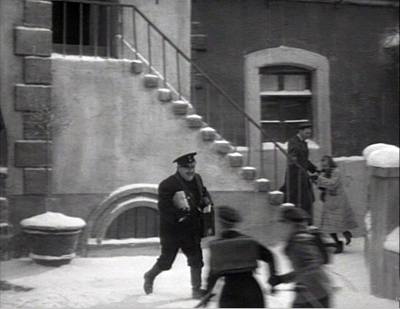
The plot starts in Germany at the moment of Hitler’s ascension to power in 1933. Elderly Viktor Roth is a much-loved Jewish professor of medicine. His household includes his stepsons Otto and Erich, his wife Emilia, and their daughter Freya. Two other young men are close to the family: Fritz, who aspires to marry Freya, and Martin, a farm boy training to be a veterinarian.

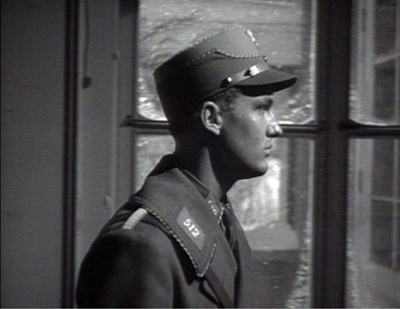
Otto, Erich, and Fritz become enthusiastic Nazis, but Freya draws closer to Martin, who quietly resists the growing bigotry in their small town. Professor Roth is arrested and killed. Martin and Freya, now deeply in love, try to escape by ski to Austria. A squad of soldiers, under Fritz’s direction, fires on them. Freya is killed.

In the crucial scene, Fritz returns to the family home to tell Otto and Erich.

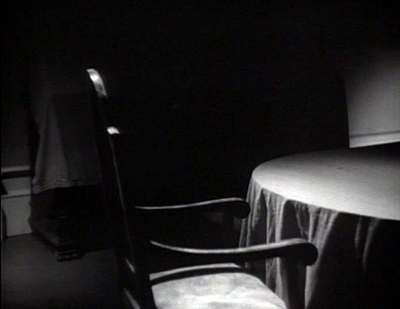
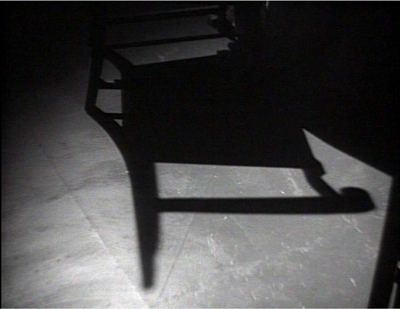
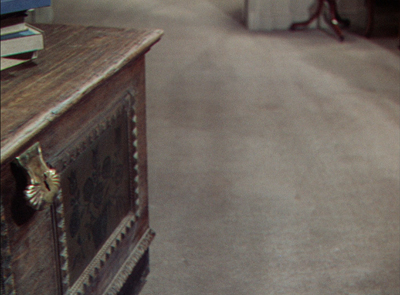
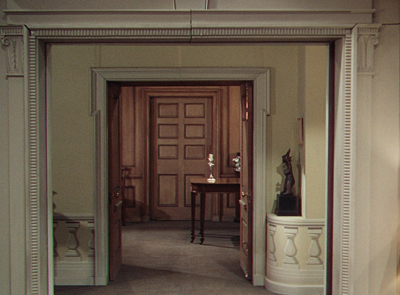
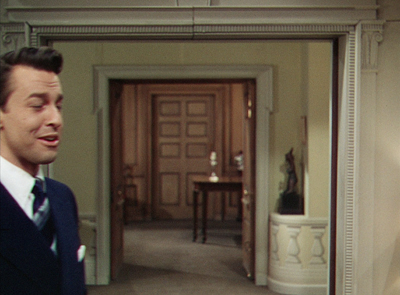
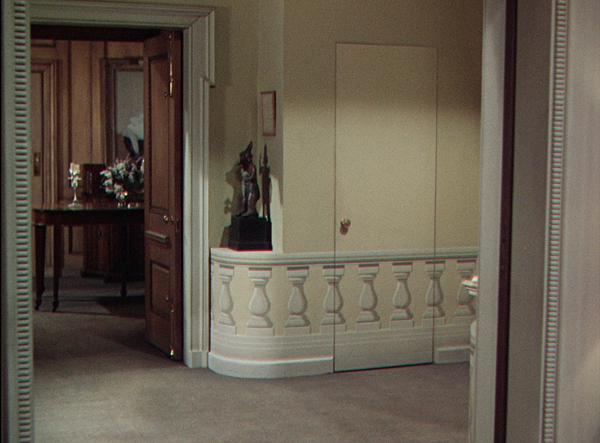
The sequence blends several narrational choices. Most obvious is the camera movement that seems to drift off on its own. It is, we might say, semi-subjective. It suggests Otto’s slow walk through the now-empty home, but it isn’t clearly marked as his optical POV. The opening stretch of the shot shows him pacing more or less obliquely to us, before the camera pans and tracks to the table and beyond.


The framing insistently keeps Otto offscreen. Only the sound of his footsteps and pauses suggest that he’s present, off left or behind us, at each station of the shot.

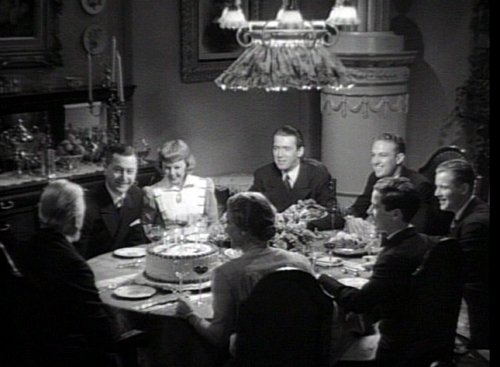
As the camera drifts along, we get auditory flashbacks to earlier scenes, three at the table, and one echoing the Professor at his lectern. Flashbacks are characteristic features of 1940s cinema, and purely auditory ones will come into prominence, as in The Fallen Sparrow (1943). Since we’ve seen the action these flashbacks evoke, they’re as much flashbacks for us as for Otto. Indeed, Otto has been a minor character in the story. His walk triggers them, but his absence from the frame makes it easier for us to project our memories onto these spaces.

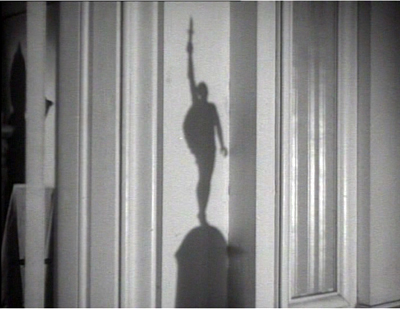
The transition among the flashbacks prepares for Otto’s defection. The voice shifts from Freya, whose death Otto is grieving, to the men challenging authority. We hear Professor Roth urge youth forward, and Martin advocating peace and free thought. These later moments seem to crystallize Otto’s change of heart. Dwelling a bit on the statuette of Youth carrying the torch of knowledge suggests that Otto may become inspired to take up his father’s commitment to humanism.

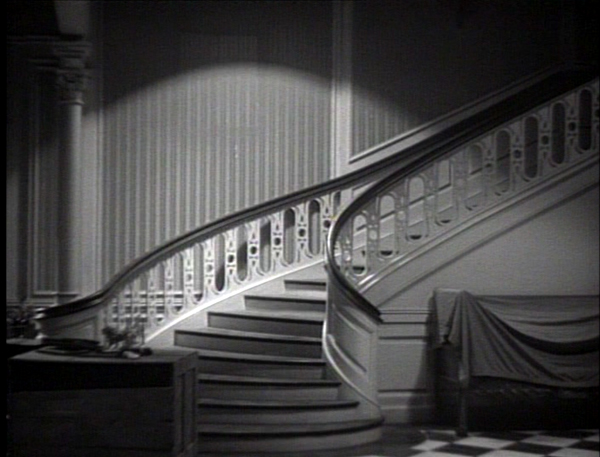
At the climax of the shot, the camera frames the staircase (another icon of 1940s cinema) and starts to back up. This can hardly be Otto’s optical viewpoint. The rapid footsteps suggest that he has left the house by striding out, as it were, behind us. The sound of a closing door confirms our inference. He has left us behind.

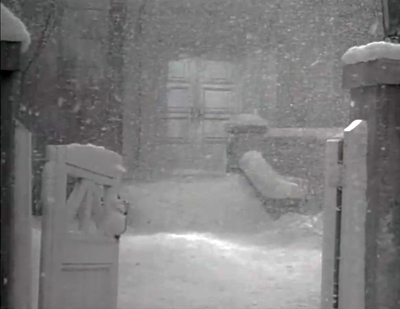
As he does in the final moments, when Otto’s flight is depicted as footprints in the snow. Perhaps, now that he has become revolted by the cruelty of Fritz and the Nazi regime, he will take up resistance in Martin’s spirit.

Accompanying the shots of the footprints is the voice-over narrator whom we heard at the film’s start. (Such narrators proliferate in 1940s movies.) His speech, from a poem called “The Gate of the Year,” echoes the visuals: a man “at the gate,” the prospect that one may “tread safely into the unknown.” In giving up Nazism, Otto is giving up home.

The camera tilts up to show the empty house.  The snow-encased home is quite different from the bustling view we saw at the film’s start, when the postman delivered gifts for Professor Roth.


Hitler has destroyed the family. Still, as the snow buries the footprints, the narrator urges that divine guidance can provide safety for Otto’s escape, and perhaps a decision to fight Nazism.

We don’t normally think of MGM as a hotbed of cinematic innovation in the studio years. But the company had its moments (here and there), and this is one of them. The Mortal Storm‘s play with time (flashbacks, the solemn duration of the house tour) and viewpoint (Otto triggering some bits of remembered dialogue) resembles what we might get in a psychologically slanted novel of the time. We’re given a few minutes to breathe deeply and think about what we’ve seen, and to build up expectations about what Otto may do.


The house as memory vessel

The Miniver Story (1950).

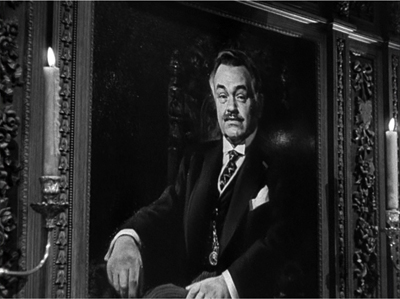
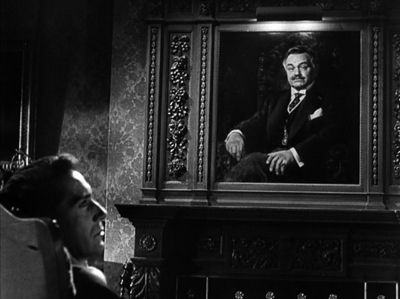
One section of Reinventing Hollywood analyzes Enchantment (1948), a film narrated by a house. The house presents itself as a cozy repository of the memories of several generations. More generally, houses are powerful images in 40s films; think of Tara, Manderly, the estate in Dragonwyck, and the Gothic mansions of Jane Eyre, Gaslight, and The Spiral Staircase. Often they’re presided over by ominous portraits, as Steven Jacobs and Lisa Colpaert have shown.

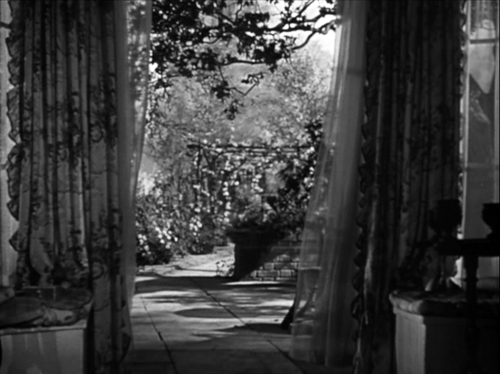
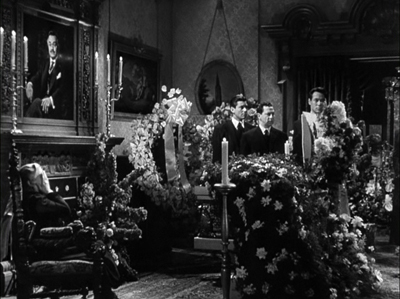
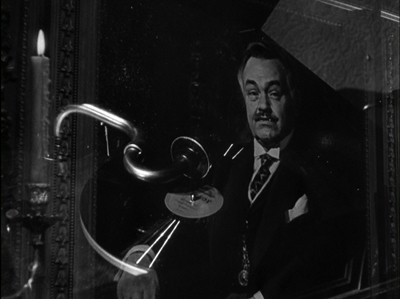
One lesser-known example is House of Strangers (1949), directed by Joseph Mankiewicz. This story of an Italian immigrant who has become the head of a big bank is framed by his son Max returning to their massive home. The bulk of the film is given in flashback, but the flashback is launched by a wandering camera accompanied by “M’apparti tutt’amor” (from the opera Martha) playing on the phonograph. After a trip up the stairs we are taken via dissolve to the patriarch singing it in his bath.

The plot’s central section treats the lyric (“You all seem to love me”) with doubled implication: Gino’s reckless loans endear him to his customers, but his sons resent his power over them. The long flashback ends at Gino’s funeral, passing from the portrait in the past to the phonograph and to his son Max, brooding under the looming picture.


The huge Minafer mansion is practically a character itself in The Magnificent Ambersons (1942). One of Welles’ late script versions  envisioned a climax in which George, distraught by the shabbiness of their neighborhood, would pass numbly through the house, and our sense of it would be given through his eyes.

145 FULL SHOT of the Amberson Mansion, seen from behind George who is standing in front of camera. He starts walking toward the mansion. CAMERA FOLLOWS, moving faster than he does and soon is so close to him that his body creates a dark screen for a DISSOLVE TO:
146 CAMERA is on the steps of the Amberson Mansion, MOVING up to the door and STOPPING. George’s hands enter the scene, insert a key in the lock, turn it —
147 On the Narrator’s words, “move out” the door opens and CAMERA MOVES thru it into the house.
MOVING SHOT as CAMERA WANDERS SLOWLY about the dismantled house — past the bare reception room; the dining room which contains only a kitchen table and two kitchen chairs, up the stairs, close to the smooth walnut railing of the balustrade. Here CAMERA STOPS for a moment, then PANS down to the heavy doors which mask the dark, empty library. HOLD on this for a short pause, then CAMERA PANS back and CONTINUES, even more slowly, up the stairs to the second floor hall where it MOVES up to the closed door of Isabel’s room. The door swings open and we see Isabel’s room is still as it always has been; nothing has been changed. FADE OUT

This passage is strikingly similar to what we see in The Mortal Storm. True, the cues for George’s optical viewpoint are more explicit than what Borzage gives us for Otto. But Welles is subtler along another dimension. He counts on our remembering earlier scenes without benefit of auditory flashbacks. The camera revisits the reception area we saw during the ball, the dining room where George challenged Eugene Morgan, and the staircase where George and Fanny quarreled, before coming to rest in Isabel’s room, where we saw her waste away and die. We are asked to supply our own flashbacks.

Some of this POV passage might have been filmed, but it wasn’t retained in Welles’ final version, even before RKO’s mangling. In the film as we have it, only Welles’ lead-in and conclusion remain. The narrator supplies a moving-camera montage, as George registers the changes in Amberson Avenue.

The street sequence ends in darkness and tracks back from George kneeling at the bed begging forgiveness. The fact that the shot starts from his darkened head reinforces the subjectivity of the montage.

Welles’s handling is novelistic in the sense of wrapping a character’s flowing impressions inside an omniscient verbal commentary using free indirect discourse (“Tomorrow they were to move out”). George’s moments of rueful meditation are moments for us as well.

Like the narrator that closes The Mortal Storm, this voice is external to the story world. But the same house-haunting effect can be achieved by a narrator who lives in that world. Coupled with the wandering camera, this can turn our view of a scene in the present into a view of the past–or of an eternal future.

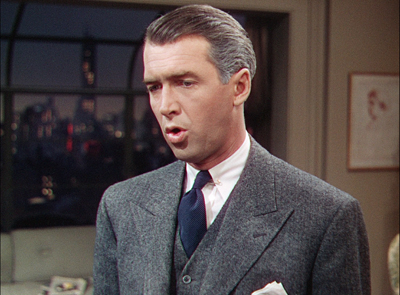
The example I have in mind is from The Miniver Story (MGM again, 1950). In Reinventing, I analyze a sequence that creates layers of time: Clem Miniver’s voice-over in our present, an image of he and Kay in the past, and references in the commentary to periods still earlier than what we see. (The clip of this sequence is online here.) At the end of the film, after the Minivers have married off their daughter Judy to Tom, they must face Kay’s impending death from cancer.

The final sequence shifts from the day of the wedding to a kind of timeless realm in which Kay’s spirit lives on. Again, camera movement suggests an invisible presence.

By 1950, we’ve had several permutations. The camera wanders without verbal narration (music alone in House of Strangers). It does so with auditory flashbacks (The Mortal Storm). It does so with a nondiegetic (external) narrator (The Magnificent Ambersons). And it does so with a diegetic (story-world) narrator (The Miniver Story). I try to show in the book that 1940s filmmakers swiftly expanded, even exhausted, menu options involving many storytelling techniques.

Trust Hitchcock to give us yet another variant, and in a tour de force at that.


Enough rope

In the eleven shots of Rope (1948), set almost completely in an apartment, the camera’s peregrinations are usually motivated by character movement or simple track-ins and track-outs. At the climax, though, the camera cuts loose. Sort of.

Brandon and Phillip have strangled their friend David and hidden his body in a chest in their living room. They’ve ghoulishly used the chest as a buffet table for their afternoon party. After the party, one guest, their prep school teacher Rupert Cadell, has returned. He suspects that something bad has happened to David. Rupert challenges the pair and sketches out how they might have murdered their friend.

His reconstruction isn’t wholly correct. David wasn’t bludgeoned, and apparently the armchair played no role. What’s fascinating is that the camera supplies a hypothetical, virtual flashback. As in our earlier examples, David becomes an invisible guest, summoned up by the mobile frame.

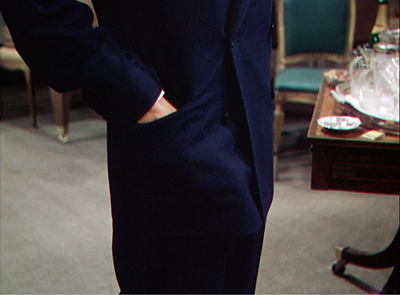
The camera traces out the action Rupert posits, emphasizing the hall closet (where Rupert earlier discovered David’s hat) and edging eventually toward the chest. At that point Brandon steps in, with his hand tensing around the pistol in his pocket. He stands in front of the drinks table.


That’s the climax of the shot. Cut to a shot of Rupert. He seems to intuit that he should avoid mentioning the chest, so he proposes that they might have carried the body out of the building. As the camera traces out that possibility, Brandon steps back into the frame to confront Rupert.


Here I think Hitchcock made a mistake. At the end of the first shot, Brandon and his pistol are quite close to Rupert, near the drinks table. But in the followup shot, he’s not visible when the camera pans left past the table to enact the scenario Rupert is considering. Brandon would have had to skip backward like the Road Runner to get as far away as he is when he steps back into the frame in the second shot.

Still, the important effect is the representation of Rupert’s thinking. Goaded by Brandon, he ponders how the crime might have been committed, and the camera carves into space to reveal the scheme he conjures up. A sort of flashback? Yes, but an unreliable replay, left largely to our imagination. Semi-subjective? Yes, since when we cut to Rupert he seems to be staring down at the chest. Yet the camera is too free-ranging to be purely Rupert’s optical POV. He’s not moving around, as Otto is in the Mortal Storm sequence.

In this most “theatrical” of movies, Hitchcock manages to give us a verbal-visual flow that is something like a cinematic equivalent of the novelist’s conditional perfect tense. If Brandon and Phillip had killed David, they could have done it this way. The camera enacts a speculative train of thought. Call it psychology.


One thing I shouldn’t ever forget: Hollywood in the Forties is a booming rush of visual, auditory, and narrative ideas. In the approximately 5,655 features released in the period I marked off, there are surely many other startling instances of creative craft. I’ll keep looking.


Thanks as ever to our Wisconsin Cinematheque for fine programming under the auspices of Jim Healy, Mike King, and Ben Reiser and excellent projectionist Roch Gersbach. Thanks as well to Joe McBride for sharing material on The Magnificent Ambersons. More on Ambersons can be found here and here.

The Mortal Storm‘s “novelistic” final moments owe nothing to its source, Phillis Bottome’s The Mortal Storm (1938). An earlier version of my ideas about Enchantment are here.

Chapters 4 through 6 of Patrick Keating’s The Dynamic Frame: Camera Movement in Classical Hollywood offers a careful survey of creative choices facing filmmakers of the period, along with explications of their “practical theories” about cinematography.

For earlier blogs on related subjects, see the category 1940s Hollywood.

Rope (1948).


from Observations on film art https://ift.tt/39dwpM1

American History X: dopo... Edward Norton non è mai più stato lo stesso

Le ragioni per cui il film che ha portato l'attore alla candidatura all'Oscar come miglior protagonista lo ha cambiato per sempre.

Come scrive una giornalista sul sito looper.com, dopo American History X, Edward Norton è cambiato per sempre. Alcune cose successe mentre si avvicinava al personaggio o durante il montaggio del film hanno fatto sì che il suo rapporto con il cinema cambiasse, e a mutare è stata anche l'opinione che Hollywood aveva di lui.
Con American History X, uscito nel 1990 e diretto da Tony Kaye, Norton ci ha regalato una delle sue migliori interpretazioni, e non a caso ha ottenuto la candidatura all'Oscar come miglior attore protagonista. Nei panni di un ex skinhead 88 che finisce in prigione, si pente e tenta di convincere il fratello a non seguire le sue orme, il regista di Motherless Brooklyn ha dato una svolta alla propria carriera. Subito dopo, infatti, è arrivato per lui Fight Club, seguito dalla sua prima regia Tentazioni d'amore e da Red Dragon. Ma siamo sicuri che il film interpretato anche da Edward Furlong gli abbia portato solo vantaggi?

American History X e la lite fra Edward Norton e il regista in fase di montaggio

Tony Kaye era un regista che veniva dalla pubblicità e, mentre montava American History X, si scontrò duramente con la New Line Cinema che non voleva assolutamente dargli il final cut. Secondo lo sceneggiatore David McKenna, il regista aveva trasformato il film in uno spot pubblicitario, e così toccò alla vedette Edward Norton cercare di risolvere la situazione. L'attore decise di affiancare Kaye nel montaggio e di consigliarlo, ma fra i due scoppiò il finimondo. Una volta uscito American History X, Kaye non lo riconobbe come una sua creatura e se ne andò in giro a parlare male di Norton, chiamandolo "un buffone" e definendolo "un artista a cui importa più del suo tempo sullo schermo che non della qualità del film e della collaborazione con il cast e la troupe" . Questi commenti cattivi e fuori luogo si rivelarono svantaggiosi per il nostro caro Edward, che diventò per tutti "la star dal pessimo carattere con cui è difficile lavorare". Edward Norton non ha mai dimenticato la querelle, e torna spesso a ripetere: "Difficile è un aggettivo che nel mio campo può voler dire rigoroso, impegnato. E comunque nessuno dei talentuosi registi con cui ho lavorato dopo American History X mi ha mai definito difficile".

American History X è stato un film guerriglia

Per Edward Norton le esperienze sul set sono impegnative, ma possono riservare anche momenti di leggerezza, di divertimento. E’ stato così per molti film, ma American History X è stato per l'attore "una guerra, anzi una guerriglia". Norton ha dovuto innanzitutto trasformarsi in una montagna di muscoli per dare credibilità al suo personaggio, e per lui che di natura è mingherlino non è stato semplice aumentare le dosi di cibo e in particolare di proteine. Inoltre ha dovuto "fare un bagno nella vulnerabilità". Per non rendere il suo Derek un villain da fumetto, ha dovuto innanzitutto trovare del buono in lui, compito che si è rivelato arduo, e per far emergere le di lui incertezze e debolezze, ha dovuto scavare nel proprio vissuto, e anche questo è stato un percorso doloroso. Lo sforzo è stato premiato, perché Edward ha concesso al pubblico la possibilità di empatizzare con il personaggio e di capire a quali estreme conseguenze possano portare rabbia e aggressività. L'impatto del film, inoltre, è stato fortissimo, tanto che Norton, quando ripensa ad American History X, afferma: "Niente mi dà più soddisfazione della consapevolezza di aver fatto un film capace di far dire alla gente: ecco cosa sentiva in quel momento la nostra generazione".

American History X e Norton secondo il pubblico

Dopo la visione di American History X, l'immagine che gli spettatori avevano di Edward Norton è cambiata. Immediatamente l'attore è assurto al rango di macho se non di sex symbol. La sua presenza scenica, insomma, ne ha guadagnato. "E’ incredibile" - ha detto in proposito - "il modo in cui quel film e la magia della macchina da presa e del bianco e nero (il film era in bianco e nero, ndr), hanno fatto credere alla gente che fossi un tipo massiccio".

American History X ha distolto Norton dai film mainstream e per forza al cinema

Quando è uscito, American History X ha incassato negli Stati Uniti solo 6.7 milioni di dollari (24 in tutto il mondo), ma con l'arrivo in home video il film ha davvero "fatto il botto", diventando un vero e proprio oggetto di culto. Forse è anche per questo che oggi Edward Norton è tra i fan più accaniti di Netflix, perché sa quanto possa essere difficile per un film che non è un blockbuster farsi strada. Per lui è giusto che i registi abbiano a disposizione nuove piattaforme dove essere apprezzati da un pubblico più vasto e variegato. Il successo di un film, insomma, non può essere determinato esclusivamente dal boxoffice, nemico impietoso dei prodotti indipendenti o con qualcosa di sperimentale.


from ComingSoon.it - Le notizie sui film e le star https://ift.tt/2PS8pXh

via Cinema Studi - Lo studio del cinema è sul web

Suicide Squad 2: James Gunn annuncia la fine delle riprese!


I Programmi in tv ora in diretta, la guida completa di tutti i canali televisi del palinsesto.


from ComingSoon.it - Le notizie sui film e le star https://ift.tt/2Tavw1a

via Cinema Studi - Lo studio del cinema è sul web

James Caan infuriato col Daily Mail che l'ha paparazzato in sedia a rotelle


Un articolo indiscreto e decisamente irrispettoso manda su tutte le furie l'attore de Il padrino, Rollerball e Misery, che risponde per le rime su Twitter.

p>Da sempre,

James Caan

è uno dei nostri attori preferiti. Come non amare il Sonny de

Il Padrino

, il giocatore di

Rollerball

o lo scrittore finito nelle grinfie della sua fan numero 1 in

Misery non deve morire

?

Caan

compirà 80 anni il prossimo 26 marzo e anche se ha continuato stabilmente a lavorare, è un pezzo che non lo si vede in film di alto profilo. Di recente operato alla schiena, al momento è costretto in sedia a rotelle. Ed è così che è stato paparazzato dal solito gossipparo

Daily Mail

inglese, che ha pubblicato un articolo a dir poco irrispettoso che lo ha fatto infuriare.

Pubblicando le foto in cui si vede l'attore sulla sedia spinta dal figlio minore, Jacob, che ha 21 anni, mentre andavano a cena insieme, il Daily Mail insiste parecchio sul fatto che James Caan appare molto fragile.

Questa la risposte dell'attore - di cui ricordiamo il carattere esplosivo - pubblicata su Twitter:

Fragile? Potrei essere sotto terra ed essere ancora più uomo della persona che ha rubato le foto di me e mio figlio a cena fuori. La mia sedia a rotelle è provvisoria ma le tue tendenze da feccia sono eterne. Fine del tweet.

Sinceramente non ci sentiamo di dargli torto: quanto al paparazzo, gli è andata pure bene. Sappiamo come sarebbe finita se James Caan fosse stato saldo sulle gambe e si fosse accorto di quello che stava succedendo... in quel caso, conoscendolo, la sedia a rotelle sarebbe servita all'incauto fotografo.


from ComingSoon.it - Le notizie sui film e le star https://ift.tt/3ajduQ8

via Cinema Studi - Lo studio del cinema è sul web

Il principe cerca moglie: tutto quello che sappiamo sul sequel della celebre commedia con Eddie Murphy


A trentadue anni di distanza dalla leggendaria commedia diretta da John Landis, l'attore americano sta per tornare a vestire i panni del Principe di Zamundia Akeem Joffer, e viaggiare alla volta degli USA Sempre accompagnato dal fedele Semmi di Arsenio Hall.

Stella indiscussa e talentuosissima del Saturday Night Live nei primissimi anni Ottanta, Eddie Murphy era diventato una star cinematografica internazionale grazie a 48 ore di Walter Hill e, soprattutto, Una poltrona per due di John Landis e Beverly Hills Cop di Martin Brest.
Gli anni Ottanta sono stati il suo decennio di massimo splendore, coronati nel 1988 con la sua seconda e finora ultima collaborazione con Landis, che è uno dei re indiscussi della commedia hollywoodiana dei nostri tempi: Il principe cerca moglie.

Il film originale

Nato da un soggetto dello stesso Murphy, sceneggiato da David Sheffield e Barry W. Blaustein, il film lo vedeva nei panni del Principe Akeem Joffer, erede al trono dell'immaginario e ricchissimo paese africano di Zamundia. Costretto dal padre, il Re Joffy Joffer, a un matrimonio regale e combinato con una donna educata fin da piccola a esaudire ogni suo desiderio che lui non ha mai incontrato, prima delle nozze Akeem lascia il paese di nascosto accompagnato dal fedele servo Semmi, e parte alla volta degli Stati Uniti, dove spera di trovare una donna in grado di amarlo per quello che è davvero, e non per il status di reale. Una donna, per dirla come Akeem, in grado di "stimolare il mio cervello almeno quanto i miei testicoli."
Sbarcato nel Queens (scelto dai due per il nome, senza sapere che era, allora, uno dei quartieri più poveri di New York), Akeem s'innamora a prima vista di Lisa McDowell, figlia del proprietario di un fast food nel quale riesce a farsi assumere per corteggiarla quotidianamente, e fidanzata con un damerino di nome Darryl. Ovviamente tiene nascosta la sua vera identità, e tutto questo darà il via a un esilarante gioco degli equivoci.

Il sequel: Il principe cerca moglie 2

Straordinario successo mondiale, capace d'incassare ai tempi quasi 290 milioni di dollari in tutto il mondo, Il principe cerca moglie sta per avere un lungamente atteso sequel, intitolato Il principe cerca moglie 2, che arriverà nei cinema italiani il prossimo 25 dicembre, distribuito da Eagle Pictures / Paramount Pictures Italia.
Ecco tutto quello che sappiamo di questo sequel.

La trama

Il Principe Akeem sta per essere incoronato Re di Zamunda, quando scopre di avere un figlio di cui non aveva mai saputo niente in America: un furbo ragazzo di strada del Queens di nome Lavelle. Per onorare il desiderio espresso dal padre sul letto di morte, Akeem e Semmi partono nuovamente per gli Stati Uniti, per trovare il ragazzo e crescerlo come un principe ereditario.
Anche in questo caso il soggetto è farina del sacco di Murphy, mentre la sceneggiatura è di Kenya Barris, autore della sit-com Black-ish, che ha lavorato su un copione inizialmente firmato da David Sheffield e Barry W. Blaustein.

Il regista

Dietro la macchina da presa, in Il principe cerca moglie 2, non ci sarà di nuovo John Landis. Il suo posto è stato preso da Craig Brewer, regista di film come Hustle & Flow, Black Snake Moan e il remake di Footloose, con cui Eddie Murphy ha lavorato nell'acclamato film Netflix Dolemite is my Name, in cui Murphy interpreta il ruolo di Rudy Ray Moore, comico e attore simbolo della blaxploitation degli anni Settanta grazie alla serie di film di Dolemite.

Il cast del film Il principe cerca moglie

Questo sequel, che si stava cercando di mettere in piedi dal 2017, non sarebbe stato possibile senza il ritorno di Eddie Murphy nei panni di Akeem. Assieme a lui, Arsenio Hall torna in quelli di Sammi.
Confermati, nei ruoli del primo film, anche Shari Headley (Lisa McDowell), John Amos (suo padre), Paul Bates (Oha, un servitore reale), James Earl Jones (Re Joffy), Louie Anderson (un impiegato del fast food del padre di Lisa), Vanessa Bell Calloway (Imani Izzi, nel primo film la promessa sposa di Akeem).
Nuove entrate sono invece quelle di Jermaine Fowler (che sarà Lavelle, il figlio di Akeem), Wesley Snipes (il Generale Eazie, capo del governo di un paese confinante con Zamundia), Tracy Morgan, KiKi Layne, Leslie Jones, il rapper Rick Ross (che ha messo a disposizione per le riprese la sua gigantesca villa in Georgia), Nomzamo Mbatha, Luenell, Rotimi, Teyana Taylor e  Michael Blackson.
Non potrà invece esserci nuovamente Madge Sinclair, l'attrice che nel film di Landis interpretaca la Regina Aoleon, madre di Akeen, morta nel 1995.
Non ci sarà nemmeno Samuel L. Jackson, che apparve in un piccolissimo ruolo nel film originale quando era all'inizio della sua carriera.

Eddie Murphy in ruoli multipli?

Il principe cerca moglie è stato il primo film in cui Murphy ha fatto una cosa che diverrà caratteristica del suo cinema degli anni Novanta: interpretare vari personaggi. Nel film originale, infatti, oltre ad Akeem, l'attore ha interpretato anche il ruolo di Randy Watson, cantante soul della band immaginaria chiamata Sexual Chocolate; Clarence, il proprietario di un negozio di barbiere del Queens; e Saul, un ebreo bianco cliente fisso di quel barbiere. Anche Arsenio Hall, oltre a quello di Semmi, interpretò altri tre ruolo.
Al momento, però, non è dato sapere se questo che è stato uno degli elementi caratteristici del film originale verrà ripreso e ripetuto anche nel sequel.

Il titolo originale

Negli USA e nei paesi di lingua anglosassone, il titolo di Il principe cerca moglie era Coming to America, ovvero "venendo in America". Il sequel, in originale, gioca col quel titolo diventando Coming 2 America.
Da noi rimane ovviamente Il principe cerca moglie 2, sebbene questo titolo non abbia poi particolare legame logico con la trama del film.


from ComingSoon.it - Le notizie sui film e le star https://ift.tt/2VAyOwo

via Cinema Studi - Lo studio del cinema è sul web